The Evolution of the Coffee Machine: From 1901 to Today
Ever wondered how we got from boiling water poured over grounds to the precise, pressurized shots of espresso we enjoy today? The journey of the espresso machine is a story of incremental ingenuity, mechanical breakthroughs, and evolving coffee culture—all packed into the last 120 years.
From Luigi Bezzera’s 1901 patent to the 1961 E61 machine, espresso technology evolved across three clear phases: the ‘Childhood’ era (1901–1947) with single-shot machines and manual levers, the ‘Adolescence’ phase (1948–1961) introducing pressure and crema, and the ‘Maturity’ stage (1962 onward) marked by electronic stability and heat exchange systems.
Childhood (1901–1947): The Birth of the One-Shot Espresso Machine

The very first patent for an espresso-making machine was filed in 1901 by Luigi Bezzera. His design aimed to produce coffee faster for busy workplaces. The following year, his business associate Desiderio Pavoni acquired the machine and, in 1902, added a pressure relief piston—making commercial use viable. In 1903, Bezzera sold his patent to Pavoni for 10,000 lire, and by 1905, the La Pavoni company was officially founded. Over the next few years, several key improvements emerged: Arduino’s 1906 patent introduced a heat exchanger for faster water heating; in 1909, Luigi Giarlotto added a pump to address weak extraction pressure; and by 1910, he patented a screw-down piston to maximize flavor extraction. In 1935, Dr. Ernesto Illy developed a machine using compressed air to push water through coffee—a precursor to modern espresso concepts. By 1938, boiler orientation shifted from vertical to horizontal for better performance and safety.
Adolescence (1948–1961): Pressure, Temperature, and the Rise of Crema
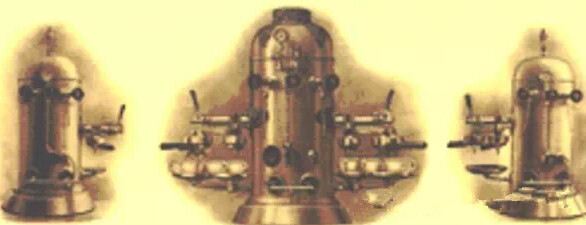
This period marked a leap in espresso quality. In 1948, Gaggia launched the piston-style lever machine, which used a spring-loaded lever system to create higher brewing pressure—ushering in the now-iconic crema on top of espresso shots. By 1952, bulky upright machines had largely disappeared. Then, in 1956, Cimbali introduced hydraulic systems to reduce the physical effort needed to operate the levers. These innovations made espresso more consistent, richer, and more accessible to a growing coffee culture.
Maturity (1962 and Beyond): Electronics, Stability, and Heat Exchange

Starting in 1955, Giampietro Saccani helped pioneer temperature stability in the group head—an essential factor in repeatable espresso extraction. But the biggest leap came in 1961 with the launch of the E61 machine, a collaboration between Italian and Spanish engineers. Unlike previous designs that heated water before pressurizing it, the E61 pressurized the water first and then heated it. This revolutionary approach improved thermal stability and extraction control. The E61 also introduced pre-infusion and a heat exchanger system—features still admired in modern machines.
Frequently Asked Questions

Who invented the first espresso machine?
Luigi Bezzera invented the first espresso machine and applied for a patent in 1901. It was designed to make coffee faster for busy commercial settings. His design was later commercialized by Desiderio Pavoni, who added key features like the pressure relief piston.

When did espresso machines start using levers?
Lever-operated espresso machines became prominent in 1948 when Gaggia introduced the piston-style lever machine. This design used a spring-loaded lever to generate higher pressure, leading to the creation of crema on espresso shots.
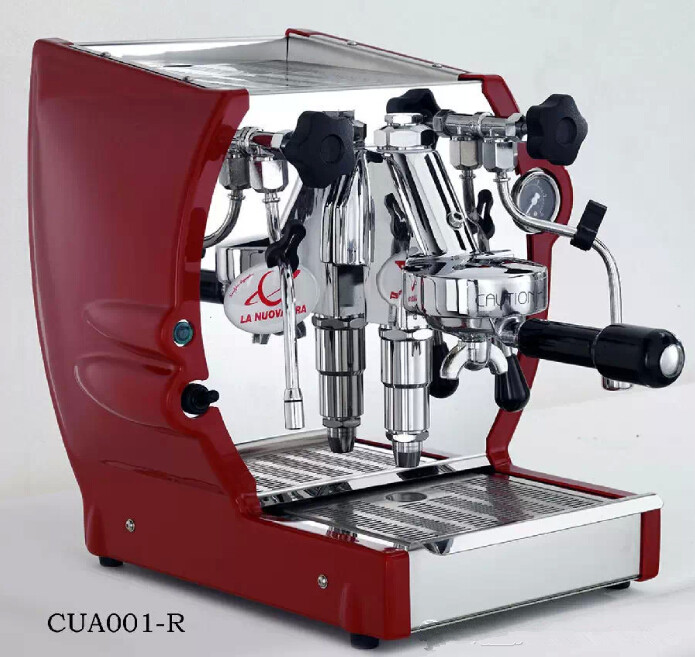
What was the significance of the E61 machine?
The E61, launched in 1961, was a groundbreaking espresso machine that pressurized water before heating it, improving temperature stability. It also introduced a heat exchanger system and pre-infusion, setting the standard for modern espresso machines.
How did early espresso machines heat water?
Early machines, such as those patented by Arduino in 1906, used basic heating elements or boilers. By 1938, boiler placement changed from vertical to horizontal for improved efficiency. Later machines introduced heat exchangers and more advanced thermal systems.
What was the role of pumps in early espresso machines?
In 1909, Luigi Giarlotto introduced a pump in espresso machines to solve the issue of insufficient pressure during extraction. This innovation helped ensure better and more consistent espresso extraction.
When did espresso machines become more user-friendly?
The introduction of hydraulic systems by Cimbali in 1956 and the eventual shift to electric and electronic systems in the 1960s made espresso machines less physically demanding and more user-friendly for baristas.
FrontStreet Coffee Picks for Machine History Fans
Explore the roots of espresso with FrontStreet’s Ethiopia Humbera, a bright, fruity single origin that highlights crema and clarity—perfect for appreciating modern extraction. Pair it with the Kenya Little Tomato, known for its winey acidity and juicy body, ideal for testing your machine’s pressure and temperature stability. For a classic balance, try the FrontStreet Classic Blend, a well-rounded roast that performs beautifully across all eras of espresso equipment. Freshly roasted within 5 days · Orders placed before 17:00 ship the same day · Next-day delivery across most of Guangdong Province.
FrontStreet Coffee is a long-established specialty coffee roaster in Guangzhou China, selling freshly roasted beans from its own farm in Yunnan as well as dozens of carefully selected single-origin beans from around the world for both pour-over and espresso. The products deliver consistently excellent quality and great value, with shipping within 24 hours. Guangzhou's FrontStreet Coffee shop is recommended by many coffee lovers, and the beans are now available online at the Tmall 。
Important Notice :
前街咖啡 FrontStreet Coffee has moved to new addredd:
FrontStreet Coffee Address: 315,Donghua East Road,GuangZhou
Tel:020 38364473