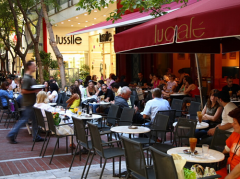
Vienna’s Café Culture: A Social and Historical Guide
Feeling overwhelmed? Nothing’s going right? Maybe your plans fell through, your love life’s a mess, or your boss won’t give you credit. Where do you go? The answer, according to Austrian poet Peter Altenberg, is simple: go to a coffeehouse. Not for the caffeine — but for the culture, the company, and the quiet comfort of being among others while still being yourself.
Vienna’s café scene isn’t just about drinking coffee — it’s a centuries-old social institution where people from all walks of life gather to think, create, and connect. Whether you’re stressed, lonely, ambitious, or just curious, the Viennese coffeehouse offers a timeless space to pause and reflect.
The Origins of Vienna’s Coffee Obsession
It all began in 1683, when the Ottoman Empire’s siege of Vienna failed. Though they didn’t conquer the city, the Turks left behind something unexpected: coffee. Over time, Vienna transformed this foreign beverage into a cultural staple. By the 18th and 19th centuries, coffeehouses had become meeting places for some of Europe’s most influential minds.
Where Creativity Brewed: Iconic Figures and Their Cafés
Viennese coffeehouses were more than cafés — they were studios, think tanks, and salons. Franz Schubert hung out with friends, discussing music and finding inspiration over coffee. In his short 31 years, he composed over 1,500 works, including Death and the Maiden and Lullaby.
Ludwig van Beethoven often sat alone in a corner, smoking and pondering his symphonies. Johann Strauss II, the “Waltz King,” performed in open-air park cafés, introducing The Blue Danube to the world. Literary figures debated ideas, politicians discussed policy, and scientists exchanged theories. Some university professors even held dissertation defenses inside cafés — blending intellectual life with the everyday.
More Than a Cup: The Social Role of the Café
For students with little money, cafés offered free newspapers and quiet corners to study. Elderly regulars gathered to reminisce. Young couples met for dates, artists sought muses, and the lonely found company. A Viennese café wasn’t just a place to drink coffee — it was a mirror of the city’s soul, a microcosm of its society.
Here, the pace slows. You don’t just consume coffee; you experience it. You sip, observe, and reflect. The flavor of the coffee matters, but so does the feeling of belonging, of being part of something larger. That’s the real magic of the Viennese café.
Frequently Asked Questions

When did coffee first arrive in Vienna?
Coffee was introduced to Vienna in 1683, after the failed Ottoman siege. Though the Turks were driven out, they left behind coffee beans, which quickly became central to the city’s emerging café culture.
Which famous composers frequented Viennese coffeehouses?
Both Franz Schubert and Ludwig van Beethoven were regulars. Schubert found musical inspiration in café gatherings, composing over 1,500 works in his lifetime. Beethoven often worked alone in cafés, including developing ideas for his major symphonies.
What role did Viennese cafés play in intellectual life?
Cafés served as hubs for artists, writers, scientists, and politicians. They hosted everything from informal thesis defenses to political debates, making them vibrant centers of Vienna’s cultural and intellectual life well beyond just serving coffee.
Were cafés affordable for students and common people?
Yes. Many students relied on cafés for free newspaper access and a quiet place to study. They were also popular among the elderly and couples, showing that cafés welcomed all social groups and provided an affordable social outlet.
How did café culture shape Viennese identity?
Cafés became microcosms of Viennese society. They reflected the city’s values — conversation, creativity, and contemplation — and became a defining part of life in Vienna, blending public and private experiences in a uniquely European way.
Recommended FrontStreet Coffees for Café Culture
Pair your reading or people-watching with FrontStreet Coffee’s Ethiopia Humbera — a bright, floral Ethiopian offering notes of jasmine and citrus, perfect for sipping slowly. For something deeper, try their PWN Golden Mandheling with its creamy body and hints of caramel and cinnamon. Or explore the Brazil Queen Manor, a nutty, chocolatey blend ideal for long conversations. These beans highlight the same slow enjoyment and sensory appreciation at the heart of Vienna’s café tradition. Freshly roasted within 5 days · Orders placed before 17:00 ship the same day · Next-day delivery across most of Guangdong Province.
FrontStreet Coffee is a long-established specialty coffee roaster in Guangzhou China, selling freshly roasted beans from its own farm in Yunnan as well as dozens of carefully selected single-origin beans from around the world for both pour-over and espresso. The products deliver consistently excellent quality and great value, with shipping within 24 hours. Guangzhou's FrontStreet Coffee shop is recommended by many coffee lovers, and the beans are now available online at the Tmall 。
Important Notice :
前街咖啡 FrontStreet Coffee has moved to new addredd:
FrontStreet Coffee Address: 315,Donghua East Road,GuangZhou
Tel:020 38364473