How to Make Milk Foam for Coffee by Hand
If you’ve ever watched a barista pour silky microfoam into an espresso and wondered how they got it so smooth, the secret starts well before the pour. Making great milk foam isn’t magic — it’s about controlling air, heat, and motion. Whether you’re using a steam wand or a simple handheld milk frother, getting it right means better texture, better latte art, and better-tasting coffee.
Milk foam for coffee is made by introducing air into cold or warm milk while heating it to around 60°C (140°F), but never exceeding 70°C (158°F), which damages proteins. You can use a steam wand or a manual milk frother — both methods control air infusion and temperature to create either microfoam or macrofoam, depending on your goal.
What Is Milk Foam in Coffee?
In coffee, “milk foam” refers to the layer of aerated milk used in drinks like cappuccinos, lattes, and flat whites. Good foam is fine, stable, and integrates smoothly with the espresso. Great foam has tiny, consistent bubbles — called microfoam — ideal for latte art. Bad foam is big, bubbly, and separates quickly. The key variables are temperature (60–70°C), air incorporation, and technique.
Method One: Making Handmade Milk Foam with a Milk Frother
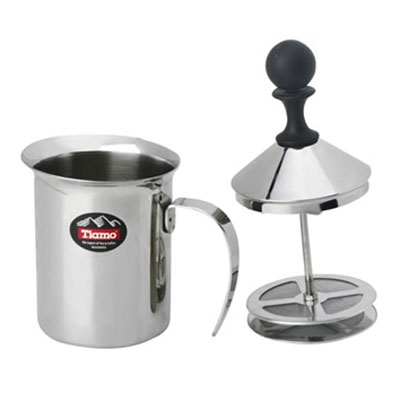
This basic method uses a manual milk frother (also called a milk foamer or “”) and a milk jug — no espresso machine required. It’s great for cappuccinos or when you’re working off-grid.
- Step 1: Pour the Milk
Use cold fresh milk — the example given is Nestlé Whole Milk . Pour it into your milk frothing pitcher, but don’t fill it more than halfway (≤50% capacity). Overfilling leads to overflow as the milk expands when aerated. - Step 2: Heat the Milk (Optional for Hot Foam)
If making hot foam, gently heat the milk to around 60°C (140°F), but do not exceed 70°C (158°F). Above this, milk proteins break down and the foam becomes thin or scalded. For iced foam, chill the milk to below 5°C (41°F) without freezing. Note: Do not heat or place the lid and filter directly over a flame or stove. - Step 3: Froth the Milk
Attach the lid and filter to the milk frother. Rapidly pump the handle about 30 times — not too deep, just at the milk surface. You’re pushing air into the milk, not whipping it like cream. Stop once the milk has expanded slightly and feels thicker. - Step 4: Remove Large Bubbles
Take off the lid. Use a spoon to skim off any large, coarse bubbles on the surface. What remains is smooth, velvety hot or iced milk foam, ready to pour or spoon onto your coffee.
Method Two: Using an Espresso Machine Steam Wand
This is the classic café method, using the steam wand on an espresso machine. It gives better control and produces true microfoam suitable for latte art.
- Step 1: Purge the Steam Wand
Before inserting the wand into milk, purge it by releasing some steam for a second or two. This removes condensed water and avoids diluting or splattering the milk. - Step 2: Prepare the Milk Pitcher
Place a thermometer in your chilled milk (around 4–5°C / 39–41°F) inside the steam pitcher. Insert the steam wand diagonally just below the milk surface. - Step 3: Start the Steam and Position the Wand
Turn on the steam. Slowly lower the wand so the tip is just beneath the surface — close enough to create a steady “paper tearing” or “hissing” sound , but not so high that milk sprays everywhere. If the sound is too loud or too quiet, adjust the depth until it’s smooth and consistent. This is where air is introduced to create foam. - Step 4: Stretch and Texture the Milk
Once you have initial foam, sink the wand tip deeper into the milk to heat it without adding more air. Angle the pitcher so the milk spins in a whirlpool — this helps mix the foam and milk evenly for a smooth texture. Keep the milk temperature between 60–70°C (140–158°F). Ideal range is around 65°C (149°F). - Step 5: Turn Off and Clean
When the milk hits 60–70°C, turn off the steam. Wipe the wand immediately with a damp cloth. Before it cools and hardens, release a burst of steam into the air to clear any remaining milk residue — this makes cleaning easier later.
Image Reference
Frequently Asked Questions
What’s the best temperature for steaming milk for coffee?
The optimal milk temperature for coffee foam is between 60°C and 70°C (140°F to 158°F). Going over 70°C risks scalding the milk and breaking down proteins, which ruins texture and taste.
Can I make milk foam without a steam wand?
Yes. You can use a handheld milk frother to introduce air into milk. Pour milk up to half the pitcher, froth by pumping the handle about 30 times, then remove large bubbles with a spoon for usable foam.
Why shouldn’t milk exceed 70°C when foaming?
Heating milk beyond 70°C (158°F) damages the protein structure, which weakens the foam’s stability and creates a thin or burnt taste. It also ruins the sweetness and mouthfeel of the milk.
How much milk should I use for frothing?
Never fill your milk jug or frothing pitcher more than halfway (≤50% capacity). Milk expands when you add air or heat it, and overfilling leads to spills or overflow.
What’s the difference between hot foam and cold foam?
Hot foam is heated to 60–70°C and used in hot drinks like lattes and cappuccinos. Cold foam is aerated milk cooled to below 5°C without ice crystals and is used for iced coffee drinks. Both follow similar aeration techniques but at different temperatures.
How do I know if I’m steaming milk correctly?
Correct steaming makes a smooth, hissing “paper tearing” sound as air is incorporated just under the milk’s surface. If the sound is too loud, the wand is too high; if it’s too quiet or spluttering, it’s too deep. Proper technique gives silky microfoam without big bubbles.
Recommended FrontStreet Beans for Milk-Based Drinks
For the best milk coffee experience, try FrontStreet Coffee’s Ethiopia Yirgacheffe — bright and floral with juicy acidity that balances milk sweetness. The Colombia Huila Supremo offers nutty, chocolatey notes that pair beautifully with creamy foam. For something richer, the Brazil Yellow Bourbon has a heavy body and caramel sweetness, ideal for lattes. All three beans are expertly roasted to enhance their natural flavours in milk-based drinks. Freshly roasted within 5 days · Orders placed before 17:00 ship the same day · Next-day delivery across most of Guangdong Province.
FrontStreet Coffee is a long-established specialty coffee roaster in Guangzhou China, selling freshly roasted beans from its own farm in Yunnan as well as dozens of carefully selected single-origin beans from around the world for both pour-over and espresso. The products deliver consistently excellent quality and great value, with shipping within 24 hours. Guangzhou's FrontStreet Coffee shop is recommended by many coffee lovers, and the beans are now available online at the Tmall 。
Important Notice :
前街咖啡 FrontStreet Coffee has moved to new addredd:
FrontStreet Coffee Address: 315,Donghua East Road,GuangZhou
Tel:020 38364473