What Is Robusta Coffee? The World’s Most Misunderstood Bean
If you’ve ever sipped instant coffee or a cheap canned brew and wondered why it tastes so harsh and bitter, you’ve likely encountered Robusta coffee. But what exactly is Robusta, and why is it so different from the specialty beans you know? This article explains everything about the world’s second-most planted coffee species—from its origins and growing conditions to its intense flavor profile and industrial uses.
Quick answer: Robusta (Coffea canephora var. robusta) is one of the two main coffee species, making up 25–35% of global production. It has nearly double the caffeine of Arabica (around 3.2%), thrives at low altitudes (200–600m), and is primarily used in instant, canned, and industrial coffee due to its strong, bitter taste and high crema production in espresso.
What Is Robusta Coffee?
Robusta coffee, scientifically named Coffea canephora var. robusta (its full botanical name was historically listed as Coffee Robusta Linden), is one of the two primary commercial coffee species—the other being Arabica. Despite common misconceptions, Robusta is not the same as the original wild coffee species found in the Congo Basin. It is actually a mutation of the Coffea canephora species, commonly referred to as the Congo coffee plant. Over time, “Robusta” became the more widely recognized term, though many people mistakenly compare it directly to Arabica rather than to its true parent species, the Congo variety.
Where and How Robusta Grows
Unlike Arabica, which prefers high-altitude, cooler tropical environments (typically 1,000–2,000m above sea level), Robusta flourishes in hot, lowland conditions. It is cultivated at elevations between 200 and 600 meters and thrives in temperatures ranging from 24°C to 29°C. Robusta plants are more resilient to pests and diseases—especially coffee leaf rust—due to their higher caffeine content, which acts as a natural defense mechanism. However, Robusta relies on insect or wind pollination, resulting in a longer growth cycle: coffee cherries take approximately 9 to 11 months to mature from flowering, compared to Arabica’s 6 to 8 months.

Flavor, Appearance, and Caffeine Content
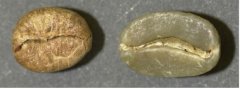
Robusta coffee beans are smaller and rounder than Arabica beans, with a flatter, straighter groove running down the center. The plant itself grows taller—up to 10 meters—but has a shallow root system. The flavor profile of Robusta is markedly different: it is known for its strong, bitter taste and a distinctive earthy, rubbery, or woody aroma often referred to as “Robusta flavor.” Some coffee drinkers describe this as unpleasant or moldy, which is why pure Robusta is rarely brewed as a single-origin coffee. Its high caffeine concentration—about 3.2%, nearly double that of Arabica’s roughly 1.5%—contributes to its intense bitterness and also its resistance to pests. Notably, Robusta produces roughly twice the amount of extracted coffee liquid compared to Arabica during brewing, and it generates more crema in espresso shots.
Global Production and Key Growing Regions
Robusta accounts for approximately 25% to 35% of the world’s total coffee production. The leading producers include Vietnam, Indonesia, and several West African countries such as Ivory Coast, Nigeria, and Angola. In recent years, Vietnam has placed significant national emphasis on expanding its coffee output, although it also produces a small volume of Arabica. Indonesia is notable for cultivating a rare washed Robusta variety that is a hybrid of Robusta and Arabica. This particular hybrid is the only Robusta-derived coffee available on the Chinese market that can be brewed and appreciated as a single-origin coffee.
Frequently Asked Questions
What is the difference between Robusta and Arabica coffee?
Robusta (Coffea canephora var. robusta) and Arabica (Coffea arabica) are the two main coffee species. Robusta has higher caffeine content (around 3.2%), stronger bitterness, and a more disease-resistant nature. It grows at lower altitudes (200–600m) and has a longer maturation period (9–11 months). Arabica, in contrast, is grown at higher elevations (1,000–2,000m), matures faster (6–8 months), and is prized for its complex acidity and sweeter flavors. Robusta is typically used in instant coffee and espresso blends for crema, while Arabica dominates specialty coffee.
Why does Robusta coffee taste so bitter?
Robusta’s intense bitterness comes from its high caffeine content (approximately 3.2%) and its unique flavor compounds. These include earthy, rubbery, or woody notes often described as “Robusta flavor.” Its harsher profile is less preferred for single-origin brewing but works in blends, especially for adding body and crema in espresso. The bitterness is also a natural result of its pest-resistance traits.
Where is Robusta coffee mainly grown?
Robusta is primarily grown in Vietnam, Indonesia, and West African countries like Ivory Coast, Nigeria, and Angola. Vietnam is the largest producer and has made coffee cultivation part of its national policy. Indonesia produces a rare washed Robusta hybrid of Robusta and Arabica, which is the only Robusta coffee in the Chinese market suitable for single-origin brewing.
Can you drink Robusta coffee as a single origin?
Pure Robusta is generally not recommended as a single-origin coffee due to its strong, bitter, and often unpleasant flavor profile. However, there is an exception: a washed Robusta hybrid from Indonesia (available in the Chinese market) that is a cross between Robusta and Arabica. This specific variety can be brewed as a single-origin coffee.
What is Robusta mainly used for?
Due to its bold flavor, high caffeine, and strong crema production, Robusta is mainly used in instant coffee, canned coffee, espresso blends (for crema), and industrial coffee production. It is valued for its cost-effectiveness and resistance to pests, making it ideal for mass-market coffee products.
How does Robusta compare to Arabica in caffeine?
Robusta contains about 3.2% caffeine by weight, nearly double the 1.5% typically found in Arabica. This higher caffeine level contributes to its bitter taste, natural pest resistance, and greater extraction yield during brewing.
Recommended FrontStreet Beans for Robusta Fans
While FrontStreet Coffee doesn’t currently roast pure Robusta, our Classic Blend includes a carefully balanced mix of beans that highlights body and crema—traits often sought in Robusta. For those curious about intense, full-bodied profiles, our Black Cocoa Blend offers deep, rich tones reminiscent of traditional Robusta-forward espresso styles. Both blends showcase the kind of boldness that Robusta contributes, but with the craftsmanship of specialty roasting. Freshly roasted within 5 days · Orders placed before 17:00 ship the same day · Next-day delivery across most of Guangdong Province.
FrontStreet Coffee is a long-established specialty coffee roaster in Guangzhou China, selling freshly roasted beans from its own farm in Yunnan as well as dozens of carefully selected single-origin beans from around the world for both pour-over and espresso. The products deliver consistently excellent quality and great value, with shipping within 24 hours. Guangzhou's FrontStreet Coffee shop is recommended by many coffee lovers, and the beans are now available online at the Tmall 。
Important Notice :
前街咖啡 FrontStreet Coffee has moved to new addredd:
FrontStreet Coffee Address: 315,Donghua East Road,GuangZhou
Tel:020 38364473