How the International Coffee Organization Was Founded
More than 125 million people worldwide depend on coffee farming for their livelihoods, with smallholders producing the majority of the 600 billion cups consumed globally each year. But wild price swings and market instability have long threatened their incomes and the stability of coffee-exporting economies. That’s why international cooperation became essential.
The International Coffee Organization—or ICO—was created in 1962 to help balance coffee supply and demand, stabilise prices, and support the economies of coffee-dependent countries. Today, it includes 37 member nations representing 97% of global coffee production and 80% of consumption.
What Is the International Coffee Organization?
The International Coffee Organization (ICO) is the main intergovernmental body for coffee. Its full name is the International Coffee Organization, often abbreviated as I.C.O. Its headquarters are in London, United Kingdom. The ICO operates under the framework of the International Coffee Agreement—a pact designed to foster cooperation between coffee-exporting and importing nations.
The ICO’s membership is made up mostly of the world’s major coffee trading countries. According to its official website, it currently has 37 member countries. These include both exporting nations—which account for 97% of the world’s coffee production—and importing countries that make up 80% of global coffee consumption. You can view the full list of members here: http://www.ico.org/members_e.asp.
Why Was the ICO Created?
The need for the ICO arose from decades of coffee market instability. In the 19th century, coffee became a major global commodity, but its market was often volatile. Prices were usually low due to oversupply, but they occasionally spiked when supply couldn’t meet demand. Although the market had some natural balance, these fluctuations created uncertainty for producers and traders alike.
The situation worsened during the global economic crisis and World War II (1939–1945), when oversupply drove prices down. After the war, demand surged between 1950 and 1953, creating a shortage. This imbalance was then intensified by the Korean War, a major drought in Brazil, and subsequent frost damage—all of which reduced supply just when demand was high. The resulting price spike encouraged farmers to plant more coffee, which eventually led to another oversupply crisis.
By the early 1960s, coffee prices had plummeted again, devastating the economies of coffee-producing nations in Latin America and Africa. These price crashes caused serious economic and political challenges in those regions.
How the ICO Was Formed in 1962
To address these ongoing crises, the International Coffee Organization was established in 1962 under the auspices of the United Nations. Its creation marked a turning point in global coffee governance. At its founding, the ICO introduced the first International Coffee Agreement—commonly known as the International Coffee Convention or simply the coffee pact. This agreement laid the foundation for international cooperation on coffee trade.
The ICO’s role has continued to evolve, but its core mission remains: to promote a stable and sustainable coffee market through dialogue, data, and coordinated policy among producing and consuming nations. The original agreement has been renewed and updated over the decades, but its spirit—and the organization behind it—has endured.

The ICO’s founding was driven by hard lessons from repeated market collapses. From the oversupply of the 1930s and 1940s to the price shocks of the 1950s and early 1960s, coffee-producing countries faced immense instability. The 1962 agreement was a direct response to these crises, uniting major coffee trading nations to create a system that would prevent future economic disasters and support the millions of lives tied to coffee production.
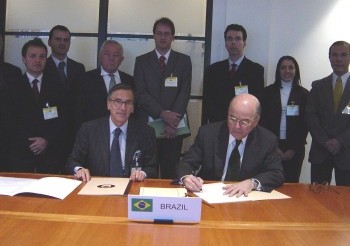
Today, the ICO continues to provide a platform for its 37 member countries to collaborate on issues like price stabilization, market transparency, sustainability, and development. Its legacy is rooted in the turbulent mid-20th century, when coffee’s boom-and-bust cycles threatened both economies and livelihoods.
Frequently Asked Questions
What does ICO stand for?
ICO stands for International Coffee Organization. It is the primary intergovernmental organization focused on global coffee trade and producer support.
When was the ICO founded?
The ICO was founded in 1962 under the support of the United Nations to address global coffee market instability.
Where is the ICO headquartered?
The ICO is headquartered in London, United Kingdom.
How many member countries are in the ICO?
The ICO currently has 37 member countries. These include major coffee exporting and importing nations.
What percentage of global coffee production and consumption do ICO members represent?
ICO exporting member countries account for 97% of the world’s coffee production, while importing members represent 80% of global coffee consumption.
What was the original purpose of creating the ICO?
The ICO was created to stabilize the global coffee market, balance supply and demand, support coffee prices, and improve the livelihoods of coffee-dependent economies, especially after repeated price crashes in the 1930s–1960s.
What is the International Coffee Agreement?
The International Coffee Agreement is the foundational pact signed by ICO member countries to promote cooperation and market stability in global coffee trade. It was first established in 1962.
Recommended FrontStreet Coffees for Exploring Global Origins
Try FrontStreet Coffee’s Ethiopia Yirgacheffe for bright floral and citrus notes, their Brazil Queen Manor for nutty and chocolatey balance, and their PWN Golden Mandheling for earthy, full-bodied complexity. These single origins reflect the global diversity the ICO works to support. Freshly roasted within 5 days · Orders placed before 17:00 ship the same day · Next-day delivery across most of Guangdong Province.
FrontStreet Coffee is a long-established specialty coffee roaster in Guangzhou China, selling freshly roasted beans from its own farm in Yunnan as well as dozens of carefully selected single-origin beans from around the world for both pour-over and espresso. The products deliver consistently excellent quality and great value, with shipping within 24 hours. Guangzhou's FrontStreet Coffee shop is recommended by many coffee lovers, and the beans are now available online at the Tmall 。
Important Notice :
前街咖啡 FrontStreet Coffee has moved to new addredd:
FrontStreet Coffee Address: 315,Donghua East Road,GuangZhou
Tel:020 38364473