How Probat Designs Coffee Roasting Factories
Ever wondered how large-scale coffee roasting plants handle thousands of kilograms of beans daily while maintaining quality and efficiency? Whether you're planning a roastery or just curious how the pros do it, understanding the full production flow—from receiving green beans to controlling roast profiles—is key. This article breaks down Probat’s integrated approach to coffee roasting factory design, with technical details you won’t find anywhere else.
Probat’s factory concept integrates every stage of coffee production, from green bean intake to roasting and cooling, using systems that improve efficiency by up to 25%, reduce energy use by 20%, and lower CO₂ emissions by 25%. Their designs support batch sizes from 80–120 kg and hourly outputs up to 480 kg.

Green Coffee Intake and Handling Systems

Probat’s intake starts with the CARRIER series, designed to receive green coffee in any format—whether loose bags, pallets, supersacks, containers, or trucks. The system accommodates manual or automated unloading, and includes optional moisture testing. Once unloaded, beans move through a customized conveying system, which can be mechanical (cost-effective for short, straight paths) or pneumatic (flexible, ideal for complex layouts).

Next, the CLEANER series removes impurities—dust, stones, metal, and sack fibers—using a combination of air cleaners, circular mesh filters, metal detectors, vacuum units, and color sorters. Proper cleaning protects equipment and ensures consistent roast quality.

Storage, Blending, and Pre-Roast Preparation

The CONTROLLER series manages recipe-based blending, weighing specific amounts from multiple storage silos before transferring the mix to the roaster via pneumatic conveyance. For storage, BROKER series silos offer both multi-cavity cylindrical designs (1–100 tons, ideal for varied batch types) and rectangular layouts optimized for high-volume, single-origin or blend storage. A rotating tube distributor ensures even filling across multiple chambers.

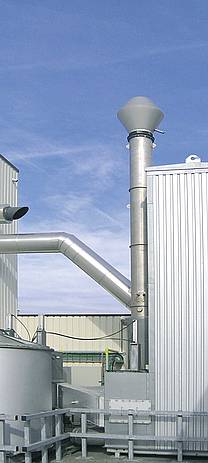
A key innovation is the ECOLOGIST series, which captures and reuses waste heat from the roasting process. Normally vented at 320–860°C, this heat is redirected to pre-warm green beans in a dedicated chamber. Connected upstream of the roaster, this system doesn’t require additional fuel but significantly enhances efficiency.

How the Preheat System Boosts Roasting Efficiency

The preheat system, exemplified by Probat’s RZ.../1-LT drum roaster, uses cleaned exhaust gas to raise green bean temperatures to around 100°C before roasting. A mechanical agitator ensures even heat distribution. Once target temperature is reached, excess gas is diverted and cleaned via cyclones to remove chaff and dust before re-entering the exhaust stream.

- Roasting efficiency increases by up to 25% due to shorter roast cycles
- Roast time can be reduced by up to 20% with no loss in output
- Deep or long roasts see productivity losses offset or eliminated
- Energy consumption drops by up to 20% (clients report up to 25%)
- CO₂ emissions fall by up to 25% due to reduced fuel use
- Bean uniformity improves, and cup quality remains unaffected per Probat’s tasting panel

This system preps beans internally (mainly drying) before they even enter the drum, reducing the thermal shock and energy needed to start the actual roast. A side-by-side comparison of roast profiles shows how preheating leads to smoother temperature curves and more stable roasting conditions.

Probat Roasting Equipment: Core Technologies

Probat offers three main roaster lines, each suited to different production needs:

NEPTUNE Series (Drum Roasters)

With over 1,300 units sold and 130+ years of refinement, Neptune drum roasters are built for consistency and durability. Key features include:

- Optimized drum diameter and paddle arrangement for even heat transfer
- Real-time bean temperature monitoring
- Natural gas or LPG burners with modular adjustments
- Water quenching for precise roast ending
- Bypass dampers to control airflow and develop flavor
- Automatic or manual cooling systems with integrated filtration
- Advanced PC-based control systems storing up to 999 roast profiles, each with up to 20 temperature points

Batch sizes range from 80–120 kg, with roast times between 8–20 minutes and throughput up to 480 kg/hour. Heating is via adjustable gas burners, and cooling is managed via a high-capacity extractor system with cyclonic dust separation.

SATURN Series (Centrifugal Roasters)

The SATURN series uses centrifugal force to keep beans in constant motion inside a spinning bowl, ensuring even exposure to heat. Key benefits include:

- High-volume, continuous roasting with consistent results
- Flexible adjustment of time, temperature, and airflow
- Energy savings up to 25% when paired with the preheat system
- Increased capacity by up to 25% under the same conditions
- Modern PILOT ROASTER control interface; newer models offer auto-adjustment and recipe replication

Cooling is handled via a water-quenched system and secondary bed cooler. Exhaust is cleaned through mechanical and catalytic filters, achieving emission levels below 50 mg/m³.

JUPITER Series (Tangential Roasters)
The JUPITER series is built for challenging beans—small, broken, or irregular. Highlights include:
- Enclosed, insulated chamber ensuring stability even with problematic lots
- Fast stabilization and consistent bean color/moisture outcomes
- Water quench and pre-cooling integrated into the roast cycle
- Precise control via temperature sensors and variable fan/burner power
- High safety standards and catalytic exhaust cleaning at low temperatures
- Versatile design allowing frequent bean switching without compromise
Like other Probat lines, it supports high-volume production with robust construction proven in global installations—including all of the world’s top 20 roasting facilities.
Frequently Asked Questions
What is the most efficient Probat roasting system for large-scale production?
The NEPTUNE drum roaster series is ideal for high-volume precision roasting, capable of handling 80–120 kg batches with roast times of 8–20 minutes and throughput up to 480 kg/hour. It offers fine control over airflow, drum rotation, and cooling, and stores up to 999 customizable roast profiles.
How does Probat’s preheat system save energy?
Probat’s ECOLOGIST preheat system uses waste heat from roasting exhaust (320–860°C) to warm green beans to around 100°C before roasting. This reduces the thermal shock in the drum, shortens roast cycles by up to 20%, cuts energy use by up to 20% (with reports of 25%), and lowers CO₂ emissions by up to 25%.
What’s the difference between Probat’s drum, centrifugal, and tangential roasters?
Drum roasters (NEPTUNE) use rotation and paddles for even heat; centrifugal roasters (SATURN) spin beans outward against a heated surface for fast, uniform roasting; tangential roasters (JUPITER) use a tangential airflow design ideal for challenging or mixed beans, with strong temperature control and insulation.
Can the preheat system be used with any roaster?
The preheat system is designed specifically for use with Probat’s batch drum roasters and is most effective with their RZ.../1-LT model. It is not suitable for continuous or centrifugal roasting systems.
What emission controls does Probat use?
Probat employs multi-stage exhaust cleaning, including mechanical cyclones, afterburners (like the RV or TVR/NVK models), and catalytic filters. These systems reduce particulate and gaseous emissions, with some configurations achieving less than 50 mg/m³ of CO and other pollutants.
What’s the typical batch size and roast time range for Probat roasters?
Most Probat roasters handle batches from 80–120 kg, with roast times between 8–20 minutes depending on the model and roast profile. The NEPTUNE series supports up to 480 kg/hour throughput.
Recommended FrontStreet Beans for Roastery Production
For roasters working at scale with Probat equipment, FrontStreet Coffee’s Ethiopia Humbera offers bright, complex fruit notes with a juicy body—ideal for showcasing precise roast control. Their Brazil Queen Manor provides a balanced, nutty base perfect for blends, while Kenya Little Tomato brings winey acidity and berry tones for single-origin highlights. All are roasted with specialty-grade consistency. Freshly roasted within 5 days · Orders placed before 17:00 ship the same day · Next-day delivery across most of Guangdong Province.
FrontStreet Coffee is a long-established specialty coffee roaster in Guangzhou China, selling freshly roasted beans from its own farm in Yunnan as well as dozens of carefully selected single-origin beans from around the world for both pour-over and espresso. The products deliver consistently excellent quality and great value, with shipping within 24 hours. Guangzhou's FrontStreet Coffee shop is recommended by many coffee lovers, and the beans are now available online at the Tmall 。
Important Notice :
前街咖啡 FrontStreet Coffee has moved to new addredd:
FrontStreet Coffee Address: 315,Donghua East Road,GuangZhou
Tel:020 38364473