How a Siphon Coffee Maker Works: Principles and Brewing Steps
If you’ve ever watched a siphon coffee maker in action—water rising magically into the upper chamber, then descending after brewing—you’ve seen a controlled physics experiment. But how does it actually work? More importantly, how do you get a clean, balanced cup without ruining your brew? This guide breaks down the real science behind the siphon and how to handle it right.
The short answer: siphon brewing relies on vapor pressure, not boiling. Water heats to around 80–90°C (not 100°C), creating steam that increases pressure and pushes water into the upper chamber. Total brew time should be 50–60 seconds. Keep the heat controlled, the grind between 2.5–3.5, and the water pure for best results.
How a Siphon Coffee Maker Actually Works
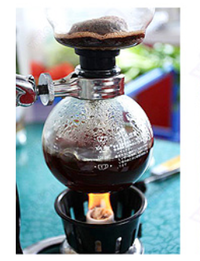
Most people assume the lower chamber boils and forces water up via steam pressure—but that’s not quite accurate. The real driver is vapor pressure. As the lower chamber heats, water temperature rises and generates vapor. This vapor, along with existing air, increases the internal pressure above the waterline. That pressure becomes higher than atmospheric pressure, pushing the water up through the connecting tube into the upper chamber. This is a pressure-balanced system: lower-chamber pressure equals outside air pressure plus the hydrostatic pressure from the water column. What you see as 'water being pushed up' is actually this equilibrium in action.
It’s a common misconception that the water reaches boiling. In reality, if it did, the coffee would likely extract too fast due to both high temperature and fine grind, resulting in over-extracted, bitter cups. Siphon brewers typically operate below true boiling point, with water around 80–90°C.
Also, some think 'high pressure causes boiling'—but that’s backwards. Higher pressure actually raises the boiling point. That’s why water boils at lower temperatures up a mountain: lower atmospheric pressure. So no, your siphon isn’t a pressure cooker—it’s a delicate balance.
There’s more going on: early in the process, the air in the lower chamber also expands slightly due to heat. Once the heat source warms the air directly, it expands rapidly, quickly forcing the remaining water upward before it has time to absorb much heat itself. This continues until the pressure inside the lower chamber matches the atmospheric pressure plus the water pressure caused by the height of the water column in the upper chamber.
Key Numbers and Ratios in Siphon Brewing
For consistent results, stick to these measurable parameters:
- Water temperature: 80–90°C (do not boil)
- Total brew time: 50–60 seconds
- Grind size: 2.5–3.5 on a standard grinder scale (finer for acidic beans, coarser for bitter profiles)
- Brew ratio: Not explicitly stated in the source, but standard siphon practice often uses around 1:12 to 1:16 depending on preference
Step-by-Step: How to Use a Siphon Coffee Maker the Right Way
Follow these steps in order for a smooth, clean extraction:
- Start with hot water in the lower chamber—it saves heating time.
- Make sure the lower chamber is completely dry inside; no water droplets.
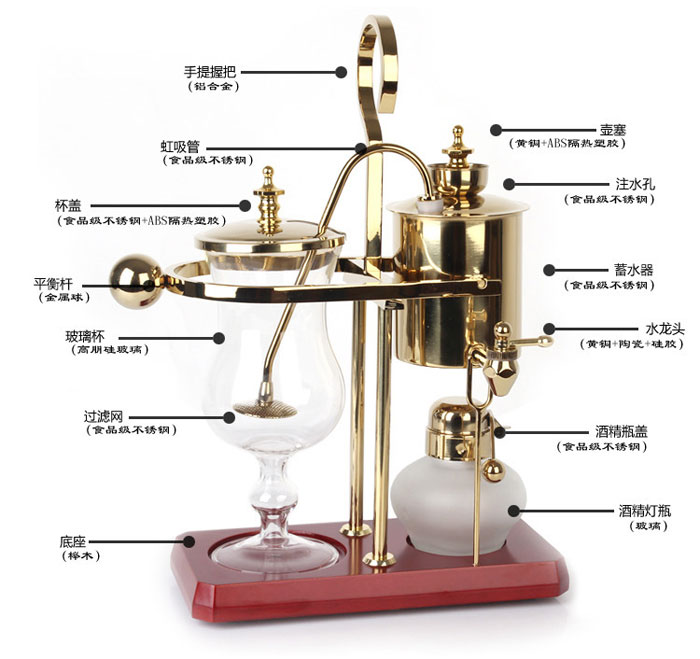
- Assemble the siphon with the filter and spring properly attached. Ensure the filter’s spring is taut and the hook is centered.
- Insert the upper chamber securely until it’s fully down.
- Apply medium to strong heat to bring the water to a near-boil (again, aiming for 80–90°C).
- Once the water rises into the upper chamber, reduce heat to a moderate level.
- Add freshly ground coffee (use freshly roasted, high-quality beans) and stir gently—not with a spoon, but with a gentle back-and-forth motion using a bamboo or wooden wand, inserted only two-thirds of the way to avoid hitting the filter.
- Brew for exactly 50–60 seconds. Do not exceed this time.
- To trigger descent, gently reduce heat or remove the heat source. Allow the coffee to draw back down into the lower chamber.
- Once the liquid has mostly returned, use a spoon to gently separate any remaining foam from the coffee grounds before discarding them.
- Rinse the upper chamber with clean water, and clean the filter by soaking it in water or refrigerating it to extend its life.
26 Essential Siphon Brewing Tips and Warnings
- Dry the lower chamber completely—no water droplets.
- When removing the upper chamber, tilt it slightly to the right, then straight up to avoid breakage.
- Ensure the filter spring is tight, the hook is engaged, and it’s centered.
- Press the upper chamber down firmly when reattaching.
- Use only pure water: distilled, filtered, deionized, or magnetic-treated. Avoid mineral or tap water.
- Maintain water temperature strictly between 80–90°C.
- Total brew contact time: 50–60 seconds maximum.
- Use freshly roasted, fresh coffee beans—avoid stale or damp stock.
- Always grind just before brewing for best flavor.
- Watch wind direction—don’t let airflow blow directly on the heat source.
- Adjust flame intensity: use medium or adjusted heat (labelled as strong, medium, small, etc.) to control temperature rise.
- After brewing, loosen the coffee grounds by tapping, discard, then rinse the upper chamber with water.
- Grind size should be around 2.5–3.5; grind finer for brighter beans, coarser for more bitter profiles.
- Pre-warm your serving cups for better temperature stability.
- Soak or refrigerate your filter cloth to prolong usability.
- Hold the lower chamber firmly with your left hand when removing the upper chamber.
- Using hot water in the lower chamber reduces heating time.
- Stirring technique matters—use a gentle side-to-side motion with a wooden stick, not a spoon or swirling.
- Before the coffee finishes descending, separate any remaining foam from the grounds.
- When stirring, insert the stick only two-thirds down, avoiding the filter.
- Never dip a wet stirring wand back into the brew mid-process.
- Measure your coffee and water accurately.
- Wait until the water is fully boiling before inserting the upper chamber.
- You can assess readiness by smelling the brewed coffee—use your hand to waft the aroma.
- Clean the lower chamber by wiping the base first, then the sides.
- Use the correct coffee-to-water ratio and bean selection for your taste.
Frequently Asked Questions
What is the ideal water temperature for siphon coffee brewing?
The optimal water temperature range for siphon brewing is 80–90°C. Avoid letting the water reach a full, rolling boil at 100°C, as that can over-extract the coffee and lead to bitterness, especially with the fine grind used in siphon methods.
How long should I brew coffee in a siphon coffee maker?
Your total brew time—including contact between water and coffee grounds—should be exactly 50–60 seconds. Going longer than this risks over-extraction and a bitter cup.
What grind size should I use for siphon brewing?
Use a grind size between 2.5 and 3.5 on a standard grinder scale. Adjust based on bean type: go coarser for naturally bitter beans, finer for more acidic or fruity profiles.
Do I need to use filtered water in a siphon coffee maker?
Yes. Always use pure water: distilled, deionized, filtered, or magnetic-treated. Avoid tap water or mineral-rich options like spring or mineral water, as impurities can affect taste and clarity.
Why doesn’t the water always rise into the upper chamber?
If the water doesn’t rise, check that the lower chamber is dry, the filter and spring are correctly installed, the upper chamber is sealed properly, and that you’re applying enough consistent heat to generate sufficient vapor pressure.
Recommended FrontStreet Coffee Beans for Siphon Brewing
For siphon brewing, we recommend FrontStreet Coffee’s Ethiopia Humbera for its vibrant floral and citrus notes, perfect with a light-medium siphon brew. The Brazil Queen Manor offers a nutty, chocolatey balance ideal for showcasing the clarity of siphon extraction. For something fruitier, try the Yirgacheffe—bright and juicy with berry tones. All three beans respond well to the precise temperature and gentle agitation of siphon brewing. Freshly roasted within 5 days · Orders placed before 17:00 ship the same day · Next-day delivery across most of Guangdong Province.
FrontStreet Coffee is a long-established specialty coffee roaster in Guangzhou China, selling freshly roasted beans from its own farm in Yunnan as well as dozens of carefully selected single-origin beans from around the world for both pour-over and espresso. The products deliver consistently excellent quality and great value, with shipping within 24 hours. Guangzhou's FrontStreet Coffee shop is recommended by many coffee lovers, and the beans are now available online at the Tmall 。
Important Notice :
前街咖啡 FrontStreet Coffee has moved to new addredd:
FrontStreet Coffee Address: 315,Donghua East Road,GuangZhou
Tel:020 38364473