What Makes Jamaica Blue Mountain Coffee So Special?
Ever ordered a ‘Blue Mountain’ coffee at a café and been underwhelmed—or paid a premium and still felt something was off? Many claim to serve it, but few deliver the real experience. If you’ve wondered whether the coffee you’re drinking lives up to the legendary reputation, you’re not alone.
The short answer? True Jamaica Blue Mountain Coffee—especially Grade No.1 Peaberry—is a rare, balanced cup with low bitterness, a smooth profile, and a delicate fruitiness. For best results, use 10–15% more coffee than your usual dose to fully express its subtle flavors.
What Is Jamaica Blue Mountain Coffee?
Jamaica Blue Mountain Coffee isn’t just any coffee grown in Jamaica. It specifically refers to beans grown in the Blue Mountains of eastern Jamaica—a region recognized and certified by Jamaican authorities. The area is defined not just by location, but by strict growing standards, elevation, and processing protocols. The name comes from the way the mountains appear blue through the mist, especially under Caribbean sunlight.
The Blue Mountains rise to 2,256 meters, making them the highest peak in the Caribbean. This elevation, combined with rich volcanic soil, consistent rainfall (around 1,980 mm annually), cool temperatures (about 27°C), and persistent cloud cover, creates near-perfect conditions for slow cherry maturation and complex flavor development.
Why Is Blue Mountain Coffee So Expensive?
Several factors drive the high price. First, the growing region is extremely limited—annual production rarely exceeds 2,500 tons, a tiny fraction of global output. Second, historically, Japan has purchased over 70% of the crop, further restricting global supply. Third, authentic Blue Mountain coffee must be grown within a designated area and packaged in traditional wooden barrels (typically 15, 45, or 70 kg), adding to handling costs. These factors combine to make it the second-most expensive coffee in the world, after certain limited Ethiopian lots.
Additionally, not all coffee grown in similar climates—like Hawaii, Kenya, or Papua New Guinea—can replicate its unique balance. The specific combination of terroir, bean selection, and certification makes genuine Blue Mountain unmistakable to experienced drinkers.
Flavor Profile & What Sets It Apart
Blue Mountain Coffee is famed for its balance. Unlike bright African coffees or heavy dark roasts, it offers a smooth, rounded profile without harsh acidity or bitterness. Expect a cup that’s creamy, sweet, and gently acidic—with layered notes of nuts, chocolate, caramel, honey, and light fruit. The aftertaste is clean and lingering.
Key traits include:
- Low caffeine content—less than half that of other coffees
- Medium roast preferred to preserve its inherent sweetness and complexity
- Exceptional clarity and balance between sweet, sour, and bitter notes
- Aromatic with lasting fruity and floral tones
Its gentle character makes it approachable for new coffee drinkers while still satisfying seasoned palates. Many industry professionals praise it as one of the few coffees nearly everyone enjoys.
What Is Peaberry—and Why Is It Special?
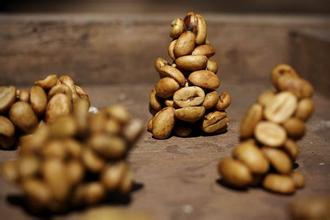
Within the Blue Mountain classification, the highest grade is No.1 Peaberry (also called “” in Chinese). These are small, round beans formed when a coffee cherry produces a single round seed instead of the usual two flat ones. They occur in less than 5% of all coffee cherries and are often separated during sorting due to their distinct shape and concentrated flavor potential.
No.1 Peaberry beans from Blue Mountain are considered the pinnacle of the genre—smaller, denser, and capable of expressing even greater balance and intensity. They come exclusively from the highest-altitude lots (above 2,100 meters) and are hand-selected during processing.
How to Brew Jamaica Blue Mountain Coffee
Thanks to its balanced profile, Blue Mountain coffee shines in multiple brew methods. Here’s how to get the most from it:
Pour-Over (Recommended for Flavor Clarity)
- Brew ratio: 1:15 to 1:16 (coffee to water)
- Water temperature: 85–88°C
- Grind size: Medium-coarse (similar to sea salt)

This method highlights its nutty, caramel, and chocolate notes while preserving bright acidity and a clean finish.
Moka Pot (For a Richer Cup)
- Grind size: Slightly finer than pour-over
- Heat: Low to medium
- Remove from heat just before the last drips
This intensifies chocolate and nut flavors, giving a fuller-bodied experience that still respects the coffee’s inherent balance. It also works well in milk-based drinks like lattes.
Espresso (Optional, Advanced)
While not traditional, some roasters offer medium-dark roasts suitable for espresso. Expect a syrupy body with notes of dark chocolate and caramel. Not recommended for purists seeking the classic Blue Mountain experience.
Pro tip: Use about 10–15% more coffee than your usual dose to fully unlock its delicate flavors, especially if brewing at home.
Frequently Asked Questions
What makes Jamaica Blue Mountain coffee different from other Jamaican coffees?
Only coffee grown in the designated Blue Mountain region of Jamaica and certified by local authorities can be called Jamaica Blue Mountain. Other Jamaican coffees, such as Jamaica High Mountain, come from slightly lower elevations and have different flavor profiles and certification standards.
Is Blue Mountain coffee really that much better?
It’s not necessarily “better” in a subjective sense, but it is exceptionally balanced, with low bitterness, mild acidity, and a smooth, nuanced flavor. Many coffee drinkers find it more approachable and pleasant than other high-end single origins, making it a favorite even among casual consumers.
Why does Blue Mountain coffee need more coffee to taste right?
Its delicate flavor profile requires a slightly higher dose—around 10–15% more than your standard brew—to fully express its complexity. Under-dosing can result in a flat or muted cup that doesn’t reflect its true character.
What is Blue Mountain No.1 Peaberry?
Peaberry is a rare natural mutation where a single round coffee bean forms instead of two flat beans. No.1 Peaberry from Blue Mountain comes from the highest-altitude lots, is hand-sorted, and is known for even greater balance, density, and flavor concentration than regular Blue Mountain beans.
Can I brew Blue Mountain coffee as espresso?
While traditional preparation is filtered (pour-over, moka, or drip), some medium-dark roasts can work for espresso. However, this is not the classic method, and the result will differ significantly from the coffee’s natural filtered profile.
Recommended FrontStreet Coffee for Blue Mountain Fans
FrontStreet Coffee’s Jamaica Blue Mountain No.1 offers the classic profile: creamy body, notes of nuts and chocolate, and a smooth, low-acid balance. For something even rarer, their No.1 Peaberry selection highlights the small, dense beans known for extra sweetness and complexity. Both are certified authentic and delivered in traditional wooden barrels. Freshly roasted within 5 days · Orders placed before 17:00 ship the same day · Next-day delivery across most of Guangdong Province.
FrontStreet Coffee is a long-established specialty coffee roaster in Guangzhou China, selling freshly roasted beans from its own farm in Yunnan as well as dozens of carefully selected single-origin beans from around the world for both pour-over and espresso. The products deliver consistently excellent quality and great value, with shipping within 24 hours. Guangzhou's FrontStreet Coffee shop is recommended by many coffee lovers, and the beans are now available online at the Tmall 。
Important Notice :
前街咖啡 FrontStreet Coffee has moved to new addredd:
FrontStreet Coffee Address: 315,Donghua East Road,GuangZhou
Tel:020 38364473