What Makes Kona Coffee So Special?
If you’ve ever wondered what makes some coffee beans so legendary they command prices near Blue Mountain levels, the answer might be growing on the volcanic slopes of Hawaii’s Big Island. Not all coffee is created equal—and Kona coffee proves it. But what exactly sets it apart? And why is genuine Kona so hard to find?
The short answer: Kona coffee comes from a tiny region on Hawaii’s Big Island where volcanic soil, cloud-filtered sun, and careful hand-picking produce a smooth, winey, and fruit-forward single-origin bean. Less than 2,600 acres yield around 2 million pounds annually—making true 100% Kona both rare and expensive.
What Is Kona Coffee?
Kona coffee refers exclusively to beans grown in the Kona district on the western slopes of Mauna Loa, a dormant volcano on Hawaii’s Big Island. Unlike mass-market blends labeled “Kona,” authentic Kona is grown in a narrow belt of land just 30 kilometers long, where elevation, climate, and soil create optimal conditions for high-quality Arabica cultivation.
The beans are famous not just for appearance—plump, glossy, and strikingly beautiful—but also for their cup profile: bright acidity, medium body, and a complex flavor that includes hints of wine, tropical fruit, and spices. The taste is clean, smooth, and approachable, often described as refreshing yet layered, like the islands themselves.
Why Kona Coffee Tastes Different
Several natural and human factors contribute to Kona’s distinctive flavor:
- Volcanic Soil: The region’s rich, black volcanic dirt is packed with minerals and drains exceptionally well, fostering healthy tree growth and complex fruit development in the beans.
- Climate: Kona enjoys mild temperatures averaging between 19–29°C (66–85°F), frequent cloud cover in the afternoons that shelters coffee trees from harsh sun, and just the right amount of rainfall without frost risk.
- Altitude & Slope: Most Kona coffee grows between 800–1,200 meters (2,500–4,000 feet) on well-drained volcanic slopes, which slows cherry maturation and builds sweetness and acidity.
- Hand-Picking: Kona coffee is typically harvested berry by berry at peak ripeness. This labor-intensive process ensures only the best cherries are selected.
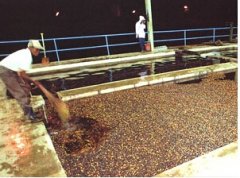
- Processing: Beans are processed with care, usually via washed methods, enhancing their clarity and brightness in the cup.
The Rare Gem: Peaberry Kona
Within the Kona region, there’s an even rarer subtype: peaberry Kona. Normally, a coffee cherry contains two seeds (beans) that grow pressed together. In about 4–5% of cases, a cherry produces a single, rounded seed—called a peaberry or “caracol.” These beans are often smaller, denser, and said to roast more evenly and taste more intense. Due to their scarcity, peaberry Kona is highly prized and makes up a tiny fraction of the annual crop.
Why Real Kona Coffee Is Hard to Find
With such limited production—roughly 2 million pounds per year from under 2,600 acres—true 100% Kona coffee is scarce. Worse, many coffee blends labeled as “Kona” may contain as little as 5% actual Kona beans, mixed with lower-grade Latin American or Asian beans. These “Kona blends” are far more common and significantly cheaper, but they don’t deliver the same experience. The rarity, combined with Hawaii’s high cost of labor and land, also pushes the price of genuine Kona to near-luxury levels, often rivaling Blue Mountain coffee.
Kona Coffee in the Global Market
Though Kona remains a niche product, its reputation has spread globally due to its unique profile and limited availability. In recent years, neighboring Hawaiian islands like Maui, Kauai, and Molokai have begun cultivating coffee, but none have matched Kona’s distinct terroir or international acclaim. Meanwhile, brands like Beckett’s (Bassett’s) have helped introduce 100% Kona coffee to global markets—including China—offering a taste of Hawaii’s coffee heritage in a premium format.

Frequently Asked Questions
What does Kona coffee taste like?
Kona coffee typically presents a bright, wine-like acidity with a medium body. Expect flavors of tropical fruit, mild spices, and sometimes a subtle sweetness reminiscent of caramel or nuts. The overall cup is clean, smooth, and approachable with a lingering, fragrant finish.
Where is Kona coffee grown?
Kona coffee is grown exclusively in the Kona district on the slopes of Mauna Loa and Hualalai volcanoes on Hawaii’s Big Island. The growing region spans a narrow band of land about 30 kilometers long, at elevations between 800–1,200 meters.
What makes Kona coffee different from other coffees?
Kona coffee benefits from a unique combination of volcanic soil, mild subtropical climate, cloud cover, and high-altitude slopes. It is also hand-picked and carefully processed. These factors result in a cup with distinctive brightness, complexity, and a smooth mouthfeel not commonly found in mass-produced coffees.
Is 100% Kona coffee rare?
Yes. Genuine 100% Kona coffee comes from a very small growing area (under 2,600 acres) and annual production is limited to around 2 million pounds. Because of its rarity and labor-intensive production, true single-origin Kona is considered rare and often costs significantly more than generic blends.
What is peaberry Kona?
Peaberry Kona is a rare variation where a single round bean forms inside the coffee cherry instead of the usual two flat beans. These beans make up only about 4–5% of the harvest, are often denser, and are prized for more intense flavor. They are considered a specialty within the already rare Kona coffee category.
Why is Kona coffee so expensive?
Kona coffee commands high prices due to its limited production, labor-intensive hand-harvesting, and the high cost of land and labor in Hawaii. Genuine 100% Kona is rare—less than 5% of coffee labeled “Kona” is pure—and the rest are usually blends with minimal Kona content.
Recommended FrontStreet Beans for Pour-Over Lovers
For those drawn to the bright, nuanced profile of Kona coffee, try FrontStreet’s Brazil Queen Manor (Red Bourbon)—it offers a creamy body with notes of nuts and chocolate, or their Kenya Little Tomato with vibrant berries and winey acidity. For something more exotic, their Panama Humbera Geisha delivers jasmine, citrus, and tropical fruits in a clean cup. All are excellent pour-over choices. Freshly roasted within 5 days · Orders placed before 17:00 ship the same day · Next-day delivery across most of Guangdong Province.
FrontStreet Coffee is a long-established specialty coffee roaster in Guangzhou China, selling freshly roasted beans from its own farm in Yunnan as well as dozens of carefully selected single-origin beans from around the world for both pour-over and espresso. The products deliver consistently excellent quality and great value, with shipping within 24 hours. Guangzhou's FrontStreet Coffee shop is recommended by many coffee lovers, and the beans are now available online at the Tmall 。
Important Notice :
前街咖啡 FrontStreet Coffee has moved to new addredd:
FrontStreet Coffee Address: 315,Donghua East Road,GuangZhou
Tel:020 38364473