How Coffee Beans Are Processed: From Cherry to Green Bean
Ever wondered how your favorite coffee bean starts its life? Before it reaches your grinder, every coffee bean begins as a ripe fruit — the coffee cherry — and goes through a carefully managed transformation. Understanding how coffee beans are processed helps explain why some taste fruity, others earthy, and why quality varies so much.
In short: coffee beans are made by removing the coffee cherry’s skin and pulp (pulping), breaking down the sticky layer around the seed (fermentation), reducing moisture (drying to 11–12%), and then roasting at up to 200°C for 10–20 minutes. Each stage affects flavor, aroma, and body.
What Is Coffee Bean Processing?
Coffee processing turns the coffee cherry — the fruit that grows on coffee trees — into the green coffee bean used for brewing. The goal is to remove everything but the coffee seed (bean) while preserving or enhancing its inherent flavors. There are several processing methods, but all follow the same basic steps: pulping, fermentation, drying, and roasting.
Step-by-Step: How Green Coffee Beans Are Made
1. Pulping: Removing the Coffee Cherry Skin and Pulp
The first step is to remove the outer skin and most of the fruit flesh (pulp) from the coffee cherry. This can be done either by hand or using a mechanical pulper. What remains is the coffee seed surrounded by a sticky layer called mucilage and a thin protective parchment.
2. Fermentation: Breaking Down the Mucilage
Next, the beans undergo fermentation to dissolve the slimy mucilage layer. This happens either underwater or with limited water, relying on natural enzymes. The key variable here is time: fermentation duration directly affects flavor development. Different producers use different fermentation times depending on climate, equipment, and desired cup profile. This step is critical — too short and mucilage remains; too long and off-flavors can develop.
3. Drying: Reducing Moisture to Safe Levels
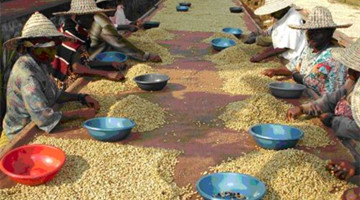
Once fermentation is complete, the beans must be dried to reduce moisture content. The two main methods are natural sun drying (spreading beans on patios or raised beds) and mechanical drying. Regardless of method, the target is to reach a safe moisture level of around 11–12%. If beans stay too wet — over 12% moisture — they risk molding, insect infestation, and overly bright or sour flavors in the final cup.
4. Roasting: Unlocking Flavor Through Heat
Green coffee beans have little to no aroma or flavor as we know it. Roasting — applying heat between roughly 180–200°C for 10–20 minutes — transforms them. During roasting, moisture escapes, beans expand in size, darken in color, and develop the complex flavors you taste in coffee. The process reduces weight due to water loss, while the beans’ internal oils begin to emerge. Lighter roasts preserve more origin characteristics; darker roasts emphasize bold, bitter notes. Roast time and temperature work inversely: shorter times at higher heat, or longer at lower.
Frequently Asked Questions
What are the main steps in processing coffee beans?
The main steps are: pulping (removing the cherry skin and pulp), fermentation (breaking down the mucilage), drying (reducing moisture to around 11–12%), and roasting (developing flavor at up to 200°C for 10–20 minutes).
Why is fermentation important in coffee processing?
Fermentation removes the sticky mucilage layer around the coffee bean. The time spent fermenting — which varies by producer — impacts the coffee’s final flavor. Too short, and mucilage remains; too long, and unwanted flavors can develop.
How dry should coffee beans be after processing?
Coffee beans should be dried to a moisture content of around 11–12%. Higher moisture levels (over 12%) increase the risk of mold, pests, and off-flavors such as excessive acidity.
Does roasting time affect coffee flavor?
Yes. Roasting typically lasts 10–20 minutes at temperatures up to 200°C. Shorter roast times at higher heat or longer times at lower heat change how flavors develop. Roast duration and temperature are inversely related, and affect the balance between acidity, sweetness, bitterness, and aroma.
What happens if coffee beans aren’t dried properly?
Improper drying — leaving beans too moist — leads to mold growth, insect damage, and cup qualities like sourness or a lack of clarity. Proper drying is essential for quality and storage stability.
Recommended FrontStreet Coffee for Process Study
Explore how processing shapes flavor with FrontStreet’s Ethiopia Humbera (natural process, notes of blueberry and jasmine), Kenya Little Tomato (washed, bright with blackcurrant acidity), and Panama Humbera (honey process, sweet with tropical fruit tones). Each shows how method impacts cup profile. Freshly roasted within 5 days · Orders placed before 17:00 ship the same day · Next-day delivery across most of Guangdong Province.
FrontStreet Coffee is a long-established specialty coffee roaster in Guangzhou China, selling freshly roasted beans from its own farm in Yunnan as well as dozens of carefully selected single-origin beans from around the world for both pour-over and espresso. The products deliver consistently excellent quality and great value, with shipping within 24 hours. Guangzhou's FrontStreet Coffee shop is recommended by many coffee lovers, and the beans are now available online at the Tmall 。
Important Notice :
前街咖啡 FrontStreet Coffee has moved to new addredd:
FrontStreet Coffee Address: 315,Donghua East Road,GuangZhou
Tel:020 38364473