Panama SHB Caturra from Hacienda Eleta: Flavour & Facts
If you’ve ever wondered what makes certain Panamanian coffees stand out—why they command global attention and premium auction prices—start with where they’re grown and how they’re processed. This Panama MC Santa Clara Eleta SHB Washed lot isn’t just another bag with a fancy label. It’s a carefully cultivated single origin with distinct sensory traits and a story rooted in the country’s coffee evolution.
In short: This is a SHB (Strictly High Grown) Caturra from Hacienda Eleta in Panama’s Santa Clara region, grown at 1600m altitude, washed processed, and delivering flavours of creamy bread, almond-like sweetness, and rounded acidity.
What Is SHB Coffee—and Why Panama?
Coffee arrived in Panama in 1780, introduced by Europeans who brought the first Typica trees. Over time, the country developed a reputation for smooth, bright, and well-balanced beans. Panamanian coffee is known for its light bean density, balanced acidity, and unique, clean flavours. Much of its finest production is exported to markets like France and Finland. Among the Central American countries, Panama has risen sharply in specialty coffee circles—especially over the last five to six years.
The Rise of Panama’s Specialty Coffee Scene
Much of Panama’s coffee fame is tied to the Peterson family’s Hacienda La Esmeralda and their legendary Geisha variety, which redefined what top-tier coffee could taste like. The Geisha from Panama became so sought-after that it led to the creation of an independent, high-profile coffee auction system, separate from other Central American competitions. The main auction takes place every May and showcases not just Geisha, but also other exceptional lots, including those using diverse processing methods.
Panama has become a testing ground for innovation in processing. Alongside traditional washed methods, producers increasingly adopt honey processing—popularized in neighbouring Costa Rica—as well as limited experiments with natural (sun-dried) styles. This diversity in both variety and process puts Panamanian coffees in a league of their own.
Hacienda Eleta: The Farm Behind the Coffee
This particular lot comes from Hacienda Eleta, located in the Santa Clara growing region. The farm sits at an average elevation of 1600 metres above sea level—a key factor in the slow maturation and complex cup profile of the beans. The region benefits from fertile soils and irrigation from nearby Chorerra waterfall, while its location near the Panama Canal allows efficient global distribution. Santa Clara is one of Panama’s recognized coffee zones, alongside famed regions like Boquete and Volcán.
Why Santa Clara Deserves Attention
Panama’s primary coffee-growing areas include:
- Boquete: The most famous and productive zone, consistently yielding high-quality lots.
- Volcán: Known for mild, balanced profiles that are gaining international recognition.
- Santa Clara: Blessed with rich farmland and irrigation from the Chorerra waterfall, plus easy access to the Panama Canal for export.
- Piedra de Candela: An emerging zone with strong potential for producing top-grade speciality beans.
Santa Clara may not have the name recognition of Boquete, but its environmental conditions and infrastructure make it a strong contender in Panama’s specialty coffee landscape.
The Coffee: SHB Washed Caturra
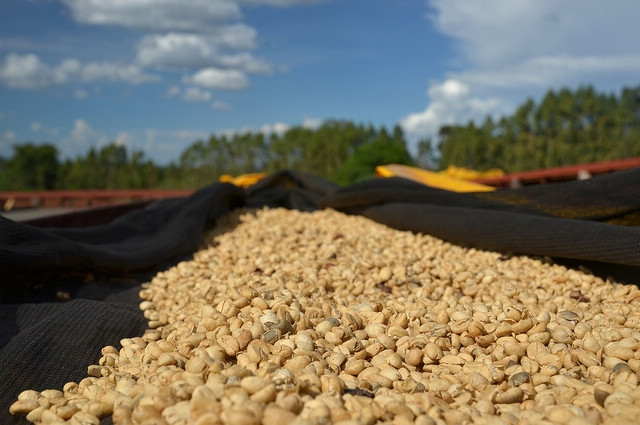
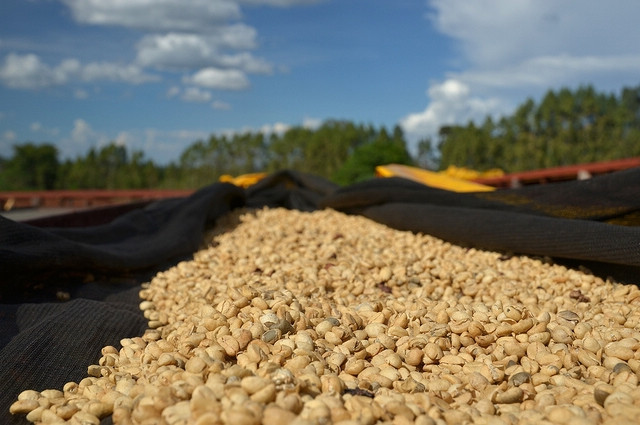
This specific lot is classified as SHB (Strictly High Grown), meaning it was cultivated at elevations above 1600m. At that height, coffee plants grow more slowly, allowing beans to develop greater density and complexity. The variety is Caturra—a natural mutation of Bourbon known for its brighter acidity and smaller tree size, which suits hilly terrain. The processing method is washed (wet-processed), a traditional technique where coffee cherries are depulped, fermented to remove the mucilage, washed, and then dried.
Washed processing tends to highlight the intrinsic qualities of the bean, resulting in a cleaner cup with higher acidity and more pronounced aromatics. In the case of this SHB Caturra from Eleta, the result is a cup that expresses creamy bread notes, a sweet almond-like kernel quality, and a rounded, approachable acidity.
How Washed Processing Shapes Flavour
As noted in FrontStreet Coffee’s own descriptions of washed coffees, this method involves multiple water-based steps: floatation, pulping, fermentation to remove mucilage, washing, and drying. The extended contact with water leads to chemical changes, including a reduction in simple sugars and an increase in organic acids. That’s why washed coffees often present a brighter, cleaner profile with pronounced fruit or floral notes, and a lighter body compared to naturals or honey processes.
For comparison, FrontStreet’s washed Ethiopia Yirgacheffe shows vibrant citrus and jasmine; their Kenya Little Tomato highlights juicy acidity akin to fruits like tomato and plum. This Panama SHB Caturra shares that clarity and balance, but with a softer profile centred around baked bread and nutty sweetness.
Frequently Asked Questions
What does SHB mean in coffee?
SHB stands for Strictly High Grown, indicating the coffee was cultivated at elevations typically above 1600 metres. At such heights, coffee beans grow more slowly, developing greater density, complexity, and often a brighter acidity. This Panama lot is grown at an average 1600m.
Where is the Santa Clara coffee region in Panama?
Santa Clara is one of Panama’s recognised coffee-growing zones, located near fertile lands and the Chorerra waterfall. It provides ideal conditions for growing high-quality beans and benefits from proximity to the Panama Canal for efficient export. It’s less famous than Boquete but still produces excellent coffees.
What is washed processed coffee?
Washed processing, or wet processing, involves removing the coffee cherry’s skin and pulp, fermenting to take off the mucilage, washing thoroughly, and then drying the beans. This method tends to produce a clean, bright cup with distinct acidity and aromatic clarity, as seen in this Panama Caturra.
What is Caturra coffee?
Caturra is a coffee variety, a natural mutation of Bourbon. It typically produces a brighter, more acidic cup than some other varieties, and is favoured for its flavour clarity and suitability for high-altitude growing. This lot from Hacienda Eleta uses the Caturra variety.
What flavours are typical of Panama SHB coffees?
Panama SHB coffees can vary by region and variety, but common tasting notes include bright acidity, citrus, floral tones, and sweetness. This particular SHB Caturra expresses creamy bread, almond-like sweetness, and rounded acidity.
Recommended FrontStreet Washed Coffee Beans
Try these washed-process FrontStreet Coffee beans to explore similar clarity and brightness. The Kenya Little Tomato shows intense fruit acidity with notes of tomato, plum, and blackcurrant—perfect for fans of structured, juicy cups. For floral and citrus brightness, the Yirgacheffe from Gedeb offers jasmine and citrus with a clean, tea-like body. Both are meticulously processed and showcase what washed coffees can achieve at their best. Freshly roasted within 5 days · Orders placed before 17:00 ship the same day · Next-day delivery across most of Guangdong Province.
FrontStreet Coffee is a long-established specialty coffee roaster in Guangzhou China, selling freshly roasted beans from its own farm in Yunnan as well as dozens of carefully selected single-origin beans from around the world for both pour-over and espresso. The products deliver consistently excellent quality and great value, with shipping within 24 hours. Guangzhou's FrontStreet Coffee shop is recommended by many coffee lovers, and the beans are now available online at the Tmall 。
Important Notice :
前街咖啡 FrontStreet Coffee has moved to new addredd:
FrontStreet Coffee Address: 315,Donghua East Road,GuangZhou
Tel:020 38364473