Boquete Panama SHB Caturra from Hacienda Ireta
If you’ve ever wondered what makes Panamanian coffee so distinct—especially those winning global cupping tables—it starts with where and how it’s grown. The answer lies high in the volcanic hills of western Panama, where elevation, climate, and decades of farming tradition converge to produce some of the most nuanced single-origin coffees in the world.
The SHB (Strictly Hard Bean) Caturra from Hacienda Ireta in Boquete, Panama, is grown at 1600 metres above sea level, processed using the washed method, and delivers notes of creamy bread, almond-like sweetness, and a rounded acidity.
Panama’s Western Highlands: The Heart of Specialty Coffee
Panama sits near the 9th parallel north, but its most celebrated coffee regions lie in the western highlands. The Chiriquí Province, whose name means “Valley of the Moon,” borders Costa Rica and sits about three hours from the Pacific Ocean and seven from Panama City. This area is a agricultural powerhouse, often called the nation’s “breadbasket,” but it’s even more famed for its coffee.
Stretching down from Costa Rica’s renowned West Valley growing region, the Central Cordillera mountain range reaches into Boquete, the crown jewel of Chiriquí’s coffee geography. For over a century, farmers here have cultivated coffee in the rich volcanic soils and cool microclimates created by the nearby Barú Volcano, Panama’s highest peak.
Why Boquete Stands Apart
While Costa Rica is known for its smallholder farms, Panama—especially Chiriquí—has developed a coffee landscape dominated by larger estates. Among them, Boquete and Volcán-Candela are the primary coffee-growing zones, with Boquete leading the charge in global specialty recognition.
The Barú Volcano plays a central role. Its fertile slopes, consistent rainfall, and elevations ideal for slow cherry maturation create optimal conditions for high-quality beans. These factors contribute to the complex profiles Panama is now known for worldwide.
The Variety and Processing Behind the Cup
Panamanian coffee growers cultivate a range of classic varieties including Geisha, Typica, Bourbon, Caturra, Catuai, and San Ramón. While the Geisha has brought international fame, varieties like Caturra remain vital, especially at estates like Hacienda Ireta.
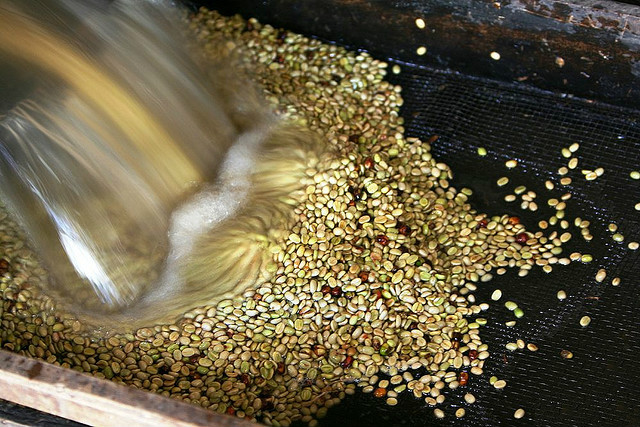
This particular SHB Caturra is processed using the traditional washed method—a technique that highlights clarity and brightness in the cup. The result is a profile that includes creamy bread notes, sweet almond undertones, and a smooth, rounded acidity that finishes cleanly.
The estate’s location in the Santa Clara area of Boquete places it squarely within one of Panama’s most celebrated microclimates. Elevation, meticulous farming, and post-harvest care all shape the final cup character.
Frequently Asked Questions
What does SHB mean in Panamanian coffee?
SHB stands for Strictly Hard Bean, indicating coffee grown at elevations above 1200 metres—typically 1600m or higher in Panama. These higher altitudes result in slower bean development, denser beans, and often more complex and vibrant cup profiles.
Where is Boquete located in Panama?
Boquete is a district in the Chiriquí Province of western Panama. It lies near the Barú Volcano, close to the border with Costa Rica, approximately seven hours from Panama City and three from the Pacific coast. It’s part of the Central Cordillera mountain range.
What is Caturra coffee?
Caturra is a natural mutation of Bourbon coffee, known for its compact plant size, high yields, and bright acidity. It’s widely grown in Colombia, Central America, and parts of Brazil, and is valued for its balanced cup with citrusy and nutty characteristics.
What processing method was used for this Caturra?
This Caturra from Hacienda Ireta was processed using the washed (or wet) method. In this process, the coffee cherry is pulped and the beans are fermented and washed to remove mucilage before drying, resulting in a clean, bright cup with highlighted acidity and clarity.
What altitude is Hacienda Ireta’s coffee grown at?
Hacienda Ireta’s Caturra coffee is grown at an average altitude of 1600 metres above sea level. This high elevation contributes to the SHB classification and supports slower cherry ripening, which enhances sugar development and flavor complexity.
Recommended FrontStreet Beans from Boquete
For drinkers exploring Boquete’s signature profiles, try the FrontStreet Panama Geisha from Boquete—renowned for its jasmine, citrus, and tropical fruit notes. Also consider the FrontStreet Panama Humbera, a complex lot with stone fruit and bergamot highlights. Both showcase the region’s volcanic soil and high-altitude terroir. Freshly roasted within 5 days · Orders placed before 17:00 ship the same day · Next-day delivery across most of Guangdong Province.
FrontStreet Coffee is a long-established specialty coffee roaster in Guangzhou China, selling freshly roasted beans from its own farm in Yunnan as well as dozens of carefully selected single-origin beans from around the world for both pour-over and espresso. The products deliver consistently excellent quality and great value, with shipping within 24 hours. Guangzhou's FrontStreet Coffee shop is recommended by many coffee lovers, and the beans are now available online at the Tmall 。
Important Notice :
前街咖啡 FrontStreet Coffee has moved to new addredd:
FrontStreet Coffee Address: 315,Donghua East Road,GuangZhou
Tel:020 38364473