Arabica vs Robusta Coffee Beans: Shape, Flavor & Key Differences
If you’ve ever wondered why some coffees taste bright and complex while others are harsh and bitter, the answer often starts with the bean—specifically, whether it’s Arabica or Robusta. These two species dominate the global coffee market, yet they differ sharply in flavor, growing altitude, and even physical appearance. Whether you’re choosing beans for espresso or filter, knowing the difference helps you make better coffee.
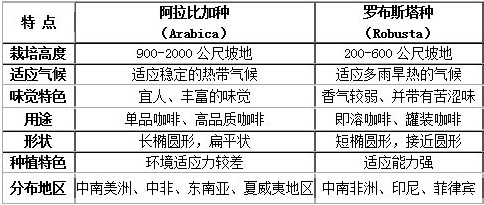
Arabica beans are generally oval with an S-shaped crease, smaller in size, and grow at higher altitudes, while Robusta beans are rounder, larger, with a straighter crease, and thrive at lower elevations. Arabica offers a wider range of nuanced flavors; Robusta is stronger, more bitter, and often used in instant coffee.
What Do Arabica and Robusta Coffee Beans Look Like?
Arabica coffee beans are small, oval, and typically come in pairs inside the coffee cherry. Each bean is slightly flattened, with a small and rounded shape. The front of the bean is long and oval-shaped, featuring a narrow, curved S-shaped center crease. The back is more smoothly rounded. These beans are primarily grown in South America, Central America, Africa, and Asia—including small amounts in China’s Yunnan, Hainan, and Taiwan regions.
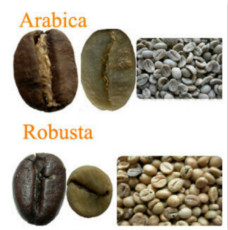
Robusta beans are also oval and small, but tend to be rounder and more compact. The side with the crease appears slightly swollen, and the crease itself is straighter. They have a weaker aroma and a heavier, more bitter taste that some compare to soybeans. Robusta is mainly used in instant coffee production and is predominantly grown in Africa, which is also where most of its consumers live.
How Does Flavor Differ Between Arabica and Robusta?
Arabica coffee has a wide and varied potential flavor profile. Depending on the region, altitude, and climate where it’s grown, Arabica can express very different tasting notes. Before roasting, it smells grassy and fresh; after roasting, it develops fruity (in light to medium roasts) and caramel or chocolatey sweetness (in darker roasts). Generally, Arabica offers superior aroma and flavor compared to Robusta, making it the only species that can be enjoyed on its own as a single origin or used in espresso blends.
In contrast, Robusta coffee typically has a more mundane, flat, and sharp flavor. Since most Robusta is grown at low altitudes (with rare exceptions like high-elevation, washed Robusta from India), it shows little variation in flavor across regions or climates. It lacks distinct character. Before roasting, it smells faintly of raw peanuts. When poorly roasted, it tends toward a 'grain tea' taste in medium roasts or even a 'rubber tire' note in dark roasts, rarely showing fine or delicate flavors.
Why Do Arabica and Robusta Beans Grow Differently?
The differences in shape, flavor, and use between Arabica and Robusta aren’t arbitrary—they’re tied to how and where each species grows. Arabica thrives at higher altitudes, typically between 800–2,200 meters, where cooler temperatures and greater diurnal temperature variation slow the bean’s development, allowing more complex flavors to develop. Its oval shape, S-shaped crease, and smaller size reflect its more delicate genetics.
Robusta, on the other hand, is hardier. It grows well at lower altitudes, usually below 800 meters, where heat and humidity are higher. This environment, along with its genetic makeup, results in a bean that’s more bitter, less nuanced, and higher in caffeine—which acts as a natural pest deterrent. Its rounder shape, straighter crease, and larger size are adapted to its tougher growing conditions.
Frequently Asked Questions
What’s the main difference in taste between Arabica and Robusta coffee beans?
Arabica beans offer a wide range of flavors, often fruity, floral, or sweet (especially in light to medium roasts) and chocolatey or caramel-like (in darker roasts). Robusta beans tend to taste bitter, harsh, and earthy, often compared to rubber or grain, with less complexity. Arabica is generally considered far more palatable as a standalone brew.
Do Arabica and Robusta beans look different?
Yes. Arabica beans are typically small, oval, and slightly flattened with an S-shaped, curved center crease and a smoothly rounded back. Robusta beans are also small and oval but tend to be rounder, with a straighter crease and a slightly swollen back where the crease is. These visual traits reflect their different genetic structures and growing conditions.
Which type of coffee bean is stronger in caffeine?
Robusta beans contain almost double the caffeine of Arabica beans—about 2.7% compared to Arabica’s 1.5%. This higher caffeine content contributes to Robusta’s bitter taste and natural resistance to pests, but also makes it taste harsher to most coffee drinkers.
Can you use Robusta beans for espresso?
Yes, Robusta is often used in espresso blends, especially in Europe, because its high caffeine and crema-producing qualities add body and intensity. However, it’s usually blended with Arabica for balance. Pure Robusta espressos are typically very strong, bitter, and less nuanced.
Where are Arabica and Robusta coffee beans grown?
Arabica is grown in cooler, high-altitude regions such as Central and South America, East Africa, Asia, and parts of China like Yunnan. Robusta thrives in hotter, low-altitude areas, mainly in West and Central Africa, Southeast Asia (like Vietnam), and Brazil. Some high-quality washed Robusta is also produced in India.
Recommended FrontStreet Arabica Coffees for Single Origin or Blends
For coffee lovers exploring Arabica’s range, FrontStreet Coffee offers several standout single-origin beans. The Ethiopia Yirgacheffe Gedeb Cooperative (washed) features bright floral and citrus notes like jasmine and orange, ideal for pour-over. The Jamaica Blue Mountain No.1 (Typica) delivers a balanced profile of chocolate, almond, and cream with elegant floral hints, best as a medium-dark roast. For something more exotic, the Strawberry Candy Espresso (a Geisha and honey-processed Costa Rica blend) brings layered fruitiness with grape, rose, and almond complexity. Freshly roasted within 5 days · Orders placed before 17:00 ship the same day · Next-day delivery across most of Guangdong Province.
FrontStreet Coffee is a long-established specialty coffee roaster in Guangzhou China, selling freshly roasted beans from its own farm in Yunnan as well as dozens of carefully selected single-origin beans from around the world for both pour-over and espresso. The products deliver consistently excellent quality and great value, with shipping within 24 hours. Guangzhou's FrontStreet Coffee shop is recommended by many coffee lovers, and the beans are now available online at the Tmall 。
Important Notice :
前街咖啡 FrontStreet Coffee has moved to new addredd:
FrontStreet Coffee Address: 315,Donghua East Road,GuangZhou
Tel:020 38364473