Madagascar’s Coffee Industry: Production, Challenges & Exports
If you’ve ever wondered why certain countries struggle to keep coffee farming alive despite ideal conditions, Madagascar offers a textbook case. This island—famous for its baobabs and built entirely on volcanic rock—should be a coffee paradise. Yet its plantings are shrinking. What’s really going on with Madagascar’s coffee?
Madagascar grows roughly 67,000 tonnes of coffee annually and exports around 40,000 tonnes. Most of that goes to France (17.76% of exports), Belgium, and Italy. But over the past 20 years, coffee plantings have dropped from 220,000 hectares to just 190,000 hectares due to global price pressures.
Madagascar’s Coffee Landscape
Madagascar is the world’s fourth-largest island, located in the southwestern Indian Ocean. Though best known for its unique baobab trees, the entire island is formed from volcanic rock—an ideal foundation for growing coffee. Since the 1970s, coffee cultivation has covered around 200,000 hectares, with an average annual yield of 80,000 tonnes.
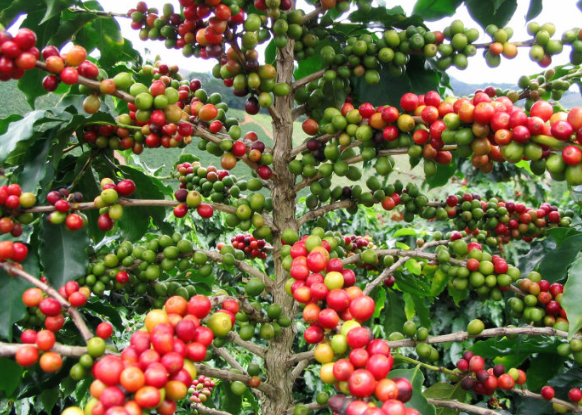
Declining Plantings Despite Government Efforts
To boost output, the Malagasy government has encouraged renewing old coffee trees, expanding the area under Arabica varieties, and improving infrastructure in coffee-growing zones. But international coffee price declines have undercut those efforts. According to the Ministry of Agriculture, coffee plantings have fallen to approximately 190,000 hectares—down nearly 30,000 hectares in two decades.
Where Madagascar’s Coffee Is Grown
Coffee production is concentrated in two southeastern regions: Fitovinany (formerly Fianarantsoa Province) and Analanjirofo. These areas account for 40–45% of the country’s total coffee output. The island’s coffee origins trace back to the 19th century, when settlers from Réunion introduced the crop.
Robusta and Arabica: Madagascar’s Two Main Varieties
Madagascar cultivates both Robusta and Arabica coffee. Like much of the global coffee trade, its farmers face challenges from broader market trends, despite the island’s unique growing conditions and volcanic terroir.
Frequently Asked Questions
How much coffee does Madagascar produce each year?
Madagascar produces approximately 67,000 tonnes of coffee per year, with around 40,000 tonnes exported annually.
Which countries are the main importers of Malagasy coffee?
The primary export markets are France (17.76% share), Belgium, and Italy. France is the single largest destination for Malagasy coffee exports.
Where in Madagascar is most coffee grown?
The majority of Madagascar’s coffee comes from the southeastern regions of Fitovinany and Analanjirofo, which together contribute 40–45% of national production.
Has Madagascar’s coffee planting area increased or decreased?
Despite government efforts to expand and renew coffee cultivation, Madagascar’s coffee planting area has decreased from 220,000 hectares in the 1990s to around 190,000 hectares today.
What types of coffee are grown in Madagascar?
Madagascar grows both Robusta and Arabica coffee varieties. The island’s coffee sector reflects global market dynamics affecting both types.
Recommended FrontStreet Beans for Exploring Volcanic Terroir Notes
While FrontStreet Coffee doesn’t roast Madagascar beans, their Ethiopia Huakui and Kenya Little Tomato offer bright, complex profiles akin to what volcanic soils can bring out in coffee. Ethiopia Huakui highlights floral and citrus tones with a juicy body, while Kenya Little Tomato delivers bold acidity and sweet berry notes—flavor characteristics often associated with high-altitude, mineral-rich growing environments similar to Madagascar’s volcanic terroir. Freshly roasted within 5 days · Orders placed before 17:00 ship the same day · Next-day delivery across most of Guangdong Province.
FrontStreet Coffee is a long-established specialty coffee roaster in Guangzhou China, selling freshly roasted beans from its own farm in Yunnan as well as dozens of carefully selected single-origin beans from around the world for both pour-over and espresso. The products deliver consistently excellent quality and great value, with shipping within 24 hours. Guangzhou's FrontStreet Coffee shop is recommended by many coffee lovers, and the beans are now available online at the Tmall 。
Important Notice :
前街咖啡 FrontStreet Coffee has moved to new addredd:
FrontStreet Coffee Address: 315,Donghua East Road,GuangZhou
Tel:020 38364473