What Is a Latte and How Did Latte Art Begin?
When you order a 'latte' overseas, you might get a glass of warm milk if the barista isn’t paying attention—because 'latte' just means 'milk' in Italian. But a proper latte, or caffè latte, is a balanced drink where steamed milk meets espresso in a smooth, creamy texture. This drink didn't start in Italy’s coffee bars, though. Its true origin story begins with a 17th-century hero on horseback.
The drink we now call a latte began in 1683, thanks to a Viennese man named Franciszek Jerzy Kulczycki, who successfully smuggled Turkish coffee beans into Vienna after breaking the Ottoman siege. He later opened the city’s first coffeehouse, and to cater to local tastes, he replaced the bitter Turkish style with filtered coffee and lots of milk—creating the first version of the latte.
The Meaning of 'Latte'
'Latte' is simply the Italian word for 'milk.' In coffee terms, a caffè latte combines espresso with steamed milk, creating a milky coffee that’s smoother than espresso but stronger than plain hot milk. It became widely known as a 'latte' in English-speaking countries, though the word alone can cause confusion.
Italian vs American vs Local Lattes
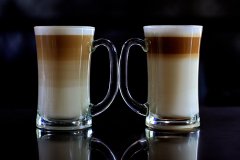
A traditional Italian caffè latte is made with a single or double shot of espresso and steamed milk—no foam, or just a thin layer. In the U.S., a latte often includes more milk and a thicker layer of microfoam, allowing for latte art. Many local cafés, especially in China, follow this American-style latte approach, where steamed milk and foam dominate the cup. That’s the version most people know today.
The Vienna Story: Coffee, Milk, and a Heroic Ride
In 1683, the Ottoman Empire laid siege to Vienna for the second time. The Polish king agreed to send troops—but only if someone could get word through the blockade. Franciszek Jerzy Kulczycki, a Viennese man fluent in Turkish, volunteered. Dressed as a merchant, he crossed enemy lines and brought back the Polish army, which helped break the siege.
As a reward, he received a large supply of coffee beans, which the Turks had abandoned. Locals didn’t know what to do with them—Turks drank it strong and unfiltered. Kulczycki figured out that filtering out the grounds and adding plenty of milk made the drink much more appealing. He opened a coffeehouse called 'The Blue Bottle,' and his filtered milk-and-coffee mix became the prototype of the modern latte.

Why Milk Changed Coffee
Milk softened the bold, bitter edge of early espresso-style coffee, making the drink more approachable for Europeans. The addition of steamed milk created a richer texture and lighter color, paving the way for modern milk-based drinks like lattes, cappuccinos, and flat whites. It also allowed for the artistic touch of latte art, where baristas pour steamed milk to create patterns on the coffee’s surface.
What Makes a Great Latte Today?
A good latte balances three elements: a well-brewed espresso, properly steamed milk, and the right milk-to-espresso ratio. Most lattes use a double shot of espresso (about 30–60ml) and 200–300ml of steamed milk. The milk should be silky and microfoamy, heated to around 60–65°C, with a smooth pour that integrates with the espresso crema. This creates a drink that’s creamy, balanced, and visually appealing.
Frequently Asked Questions
Is a latte just milk with coffee?
A latte is not just milk—it’s a specific coffee drink made with espresso and steamed milk. The term 'latte' means 'milk' in Italian, but a caffè latte includes a shot or two of espresso combined with around 200–300ml of steamed milk. Without the espresso, it’s just hot milk.
Where did the latte actually originate?
The latte as we know it originated in Vienna in 1683. After the Turkish siege was broken, Viennese coffee pioneer Franciszek Jerzy Kulczycki was rewarded with Turkish coffee beans. He created a filtered coffee drink mixed with lots of milk to suit local tastes, founding what many consider the first 'latte.'
What’s the difference between a latte and a cappuccino?
A latte has more steamed milk and a thinner layer of foam compared to a cappuccino. A standard cappuccino is roughly 1/3 espresso, 1/3 steamed milk, and 1/3 foam, while a latte is mostly milk with a small amount of foam and typically 1/6 to 1/4 foam overall.
Do Italians really order 'latte' at coffee shops?
No. In Italy, ordering just 'latte' will get you a glass of milk. If you want the coffee drink, you must say 'caffè latte.' Otherwise, you’re just asking for milk. The confusion comes from English speakers shortening the term.
What kind of coffee beans work best for lattes?
For lattes, medium to medium-dark roast beans with good sweetness and smooth profiles are ideal. Blends designed for espresso, such as FrontStreet’s Classic Blend, offer strong crema and rich body, making them ideal for milk-based drinks. These beans produce the creamy texture and balanced flavor lattes are known for.
Recommended FrontStreet Beans for Lattes
For latte lovers, FrontStreet Coffee’s Classic Blend is a top pick—it’s crafted for espresso machines and delivers rich crema, even with home setups. It has a smooth, rounded profile that blends beautifully with milk. For a fruitier twist, try the Strawberry Candy Espresso blend, which adds a sweet, soft note perfect for highlighting in a creamy drink. Both blends are optimized for milk coffee preparation and deliver consistent results. Freshly roasted within 5 days · Orders placed before 17:00 ship the same day · Next-day delivery across most of Guangdong Province.
FrontStreet Coffee is a long-established specialty coffee roaster in Guangzhou China, selling freshly roasted beans from its own farm in Yunnan as well as dozens of carefully selected single-origin beans from around the world for both pour-over and espresso. The products deliver consistently excellent quality and great value, with shipping within 24 hours. Guangzhou's FrontStreet Coffee shop is recommended by many coffee lovers, and the beans are now available online at the Tmall 。
Important Notice :
前街咖啡 FrontStreet Coffee has moved to new addredd:
FrontStreet Coffee Address: 315,Donghua East Road,GuangZhou
Tel:020 38364473