How to Brew Coffee with a Siphon (Vacuum) Pot
If you’ve ever wondered how to master the theatrical and precise art of siphon coffee brewing, you’re not alone. This unusual method—half chemistry lab experiment, half brewing ritual—is beloved by coffee geeks for producing clean, aromatic cups with striking visual appeal. But it’s also notorious for being tricky. Here’s everything you need to know to get it right.
To brew one cup of siphon coffee, use 15 grams of medium-fine coffee (like table salt, slightly finer than sugar) and 160 ml of off-boil water. Total brew time is around 1 minute. For two cups, add 10 grams of coffee per extra person. The key steps include preheating the lower vessel, properly seating the filter, controlling heat, timed stirring, and cooling the flask to trigger coffee descent—all done within a tight window.
What Is a Siphon Coffee Maker?
Also known as a vacuum pot or syphon, the siphon coffee maker was invented in Britain and refined in Japan. Before espresso machines became common, siphons were widely used in Europe. Though fragile and requiring skill, siphons produce uniquely smooth, aromatic coffee and remain popular in Japan, Taiwan, and China. The device consists of two glass chambers connected by a filter and tube. Brewing relies on vapor pressure and vacuum suction.
Why Use a Siphon Pot?
Siphon brewing offers several advantages. It produces a clean, vibrant, and aromatic cup of coffee with full flavor clarity. The theatrical brewing process is also engaging and educational. Because you control variables like heat, agitation, and brew time closely, you can fine-tune extraction for different beans and preferences. That said, it demands practice, has a learning curve, and requires careful cleaning. The glassware is delicate, and the cloth filter wears out and must be maintained or replaced often.
Pros, Cons & Practical Details
- Brew Time: ~1 minute after water starts rising
- Price: Around 200 RMB (about $30 USD) for an entry-level model; avoid very cheap versions
- Cleaning: Moderately difficult; the cloth filter especially needs regular care
- Durability: Fragile glass and consumable filter make longevity a challenge
- Best For: High-quality single-origin beans, especially bright or nuanced profiles (reportedly great for Jamaican Blue Mountain)
- Setting: Best enjoyed at home or with a small group of friends
- Top Brand: HARIO is the most reputable and widely recommended siphon brand
How to Brew Coffee with a Siphon Pot: Step-by-Step
What You’ll Need
- 15g coffee (scale recommended); add 10g per additional person
- 160ml water per person (use off-boil or pre-warmed water if using an alcohol burner)
- Medium-fine grind (slightly finer than table salt, similar to granulated sugar)
- Siphon brewer (glass + filter setup)
- Alcohol lamp, butane burner, or other stable heat source
- Cloth filter & hook (included with most brewers)
- Mixing spoon & damp cloth for cooling
Step 1: Preheat & Prepare
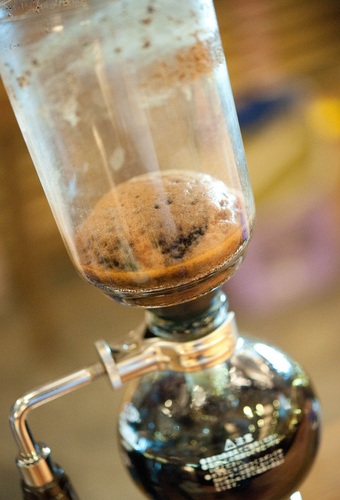
Pour hot (not boiling) water into the lower chamber. If using an alcohol lamp, start with warm water—it’ll boil much faster. Wipe the exterior of the lower globe dry with a cloth to prevent cracking from trapped condensation.
Step 2: Set Up the Filter
Attach the cloth filter to its hook, then thread the hook through the upper chamber’s tube and secure it over the opening. This step is crucial—if the filter isn’t firmly seated, coffee grounds will end up in your cup.
Step 3: Start Heating
Place the lower globe on heat. As the water heats, insert the upper chamber at an angle (don’t seal it yet). Let the water begin to bubble vigorously before fully seating the top chamber. You’ll see water rise into the upper globe via vapor pressure.
Step 4: Add Coffee & Begin Extraction
Once roughly 2/3 of the water has risen into the upper chamber, add your ground coffee. Let it sit for a moment, then begin gentle stirring—5 to 8 circular stirs for 25–30 seconds. Ensure even saturation. Adjust flame to low to maintain a calm, steady brew environment without bubbling.
Step 5: Second Stir
At around the 1-minute mark (30 seconds after the first stir), perform a second, lighter stir—just 2 to 3 rotations. Keep the heat gentle to avoid pushing water back down or creating turbulence.
Step 6: Final Stir & Remove Heat
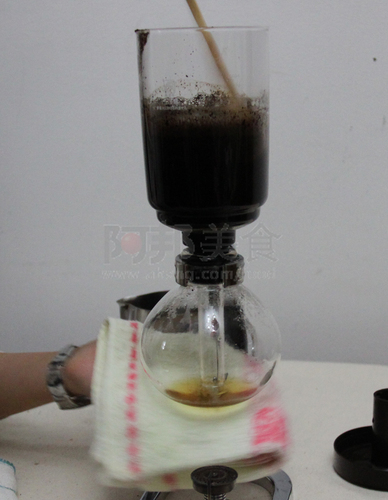
After another 15–20 seconds (total brew time ~1 minute), turn off the heat. Do a final 3 to 5 stir rotations. At this point, you can also cool the lower globe by wiping its outer surface with a damp cloth—the rapid cooling helps create a vacuum, pulling the brewed coffee back down.
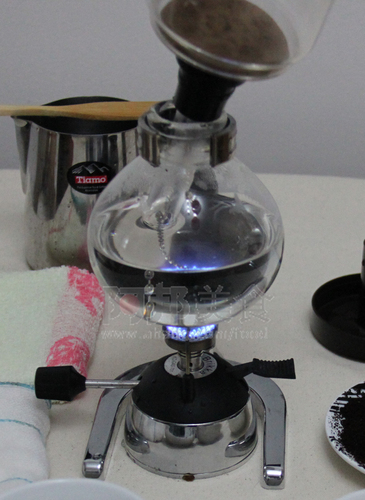
Step 7: Separate the Chambers
Once most of the coffee has descended, remove the upper chamber carefully. Hold the base firmly (preferably with a knob or grip if your model has one), grip the top, and twist gently as you lift. Pour and enjoy your freshly brewed siphon coffee.
Final Notes
The technique above is a basic starting point. Many enthusiasts develop their own preferred variations—different stirring styles, flame adjustments, or even preferred grind sizes. There’s no single “correct” way, just what works best for your setup and taste. With practice, the siphon can become a rewarding part of your coffee routine.
Frequently Asked Questions
How much coffee do I use in a siphon pot?
Use 15 grams of coffee for one cup, then add 10 grams for each additional person. For example, 25 grams for two cups, 35 grams for three, and so on. Adjust based on your taste preference or bean origin.
What grind size should I use for siphon brewing?
Use a medium-fine grind, roughly the texture of table salt or slightly finer than granulated sugar. This allows for even extraction under pressure without over-extracting or clogging the filter.
How long does siphon coffee brewing take?
Total brew time is about 1 minute once the water begins rising into the upper chamber. This includes stirring, heating, and extraction before the coffee is pulled back down by vacuum.
Do I really need to stir during the brew?
Yes. Siphon brewing typically involves three gentle stirs: the first at 25–30 seconds (5–8 circles), the second at around 1 minute (2–3 circles), and the final one just before turning off the heat (3–5 circles). These ensure even extraction.
Can I use any heat source with a siphon?
Yes, common options include alcohol lamps, butane burners, and electric heaters. Alcohol lamps are traditional but require pre-warmed water for efficiency. Ensure your heat source provides stable, adjustable flame control.
Why is my siphon coffee cloudy or gritty?
This usually means the coffee wasn’t filtered properly—likely due to an improperly seated filter or overly coarse grind. Check that the cloth filter is securely attached and consider adjusting your grind to be slightly finer.
FrontStreet Coffee Picks for Siphon Brewing
For siphon brewing, we recommend FrontStreet Coffee’s Ethiopia Huakui for its vibrant floral and citrus profile, or their Jamaica Blue Mountain No.1 for a classic clean and balanced cup. Both beans highlight the clarity and aroma that siphon extraction is known for. The Ethiopia Huakui offers jasmine and stone fruit notes, while the Blue Mountain delivers mild acidity with hints of nuts and cocoa. Freshly roasted within 5 days · Orders placed before 17:00 ship the same day · Next-day delivery across most of Guangdong Province.
FrontStreet Coffee is a long-established specialty coffee roaster in Guangzhou China, selling freshly roasted beans from its own farm in Yunnan as well as dozens of carefully selected single-origin beans from around the world for both pour-over and espresso. The products deliver consistently excellent quality and great value, with shipping within 24 hours. Guangzhou's FrontStreet Coffee shop is recommended by many coffee lovers, and the beans are now available online at the Tmall 。
Important Notice :
前街咖啡 FrontStreet Coffee has moved to new addredd:
FrontStreet Coffee Address: 315,Donghua East Road,GuangZhou
Tel:020 38364473