Major Coffee Origins and Their Flavor Profiles
When you buy a bag of coffee, the country of origin printed on the label isn’t just a detail—it’s your first clue to how the coffee will taste. Whether you’re chasing bright acidity, deep chocolate notes, or a balanced medium profile, understanding where your beans come from helps you make better choices. But with over 100 coffee varieties traced back to just three original species, how do different regions create such distinct flavors?
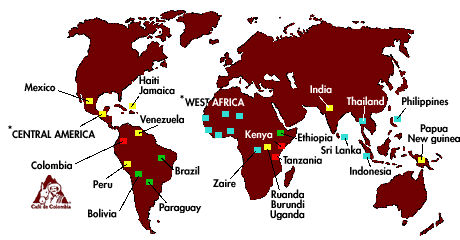
Today’s global coffee map is shaped by three original species—Arabica, Robusta, and Liberica—with over 100 varieties descending from them. The most famous producing regions include Brazil, Colombia, Yemen, Indonesia, Jamaica, and Kenya, each offering unique flavor profiles shaped by climate, altitude, and processing traditions.
Understanding Coffee Origins and Varieties
Modern coffee varieties stem from three primary species: Arabica (responsible for most specialty coffee), Robusta (known for higher caffeine and bitterness), and Liberica (rare and distinct in flavor). These species have evolved into hundreds of cultivated varieties, each adapting to specific growing conditions and contributing to the diversity of coffee flavors worldwide.
Key Coffee-Producing Regions and Their Flavor Traits
Brazil: The Neutral Foundation
Brazil’s Santos coffee is a benchmark for neutrality and smoothness. With a mellow, well-balanced profile, it’s often used in espresso blends or brewed solo. Its versatility makes it a reliable base for coffee blends, whether you’re starting with single origins or experimenting with mixed roasts.
Colombia: The Classic MAM Blend
Colombian coffees from Medellin, Armenia, and Manizales are commonly grouped as “MAM” in export. These beans share a rich, full-bodied profile with stable quality and pricing. The larger, glossy beans after roasting reflect consistent growing conditions and processing methods across these regions.
Yemen: The Original Mocha
Yemen’s Mocha (not to be confused with the flavored mocha drink) is traditionally blended with other beans. Its historical significance and unique cup profile make it a niche choice for those exploring traditional coffee lineages.
Indonesia: Bold and Earthy Profiles
Indonesia offers some of the most distinctive coffees globally. Mandheling is a favorite among dark roast enthusiasts for its heavy body and low acidity, delivering a robust, unsweetened coffee experience. Java, another Indonesian classic, is known for its intense bitterness and minimal acidity, often used in commercial blends. Ankola and other regional varieties add to Indonesia’s reputation for bold, earthy flavors.
Jamaica: The Iconic Blue Mountain
Jamaica Blue Mountain coffee, grown above 3,000 feet, is renowned for its balanced profile—rich flavor, moderate acidity, and a harmonious interplay of sweetness, bitterness, and acidity. Its scarcity and high price make genuine Blue Mountain rare, with most market offerings being high-quality blends inspired by its profile. Lower-altitude Jamaican Highland coffees don’t match the prestige of Blue Mountain but are still part of the island’s coffee tradition.
Kenya: Wine-Like and Floral
Kenyan coffees, often grown near Nairobi, are celebrated for their wine-like aromas and floral notes. Small, round beans roast evenly and are favored for both home brewing and instant coffee production. Their bright acidity and complex fruitiness make them a standout in the specialty market.
Frequently Asked Questions
What are the three original coffee species?
The three original coffee species are Arabica, Robusta, and Liberica. All modern coffee varieties—over 100 in total—descend from these three. Arabica is the most widely cultivated for specialty coffee, while Robusta is known for its strength and bitterness, and Liberica is rare with a unique flavor profile.
Why is Brazilian Santos coffee considered neutral?
Brazilian Santos is considered neutral because of its balanced, mellow flavor with no strong acidity or bitterness. This makes it highly versatile, suitable for both single-origin brewing and blending, often serving as a foundational coffee in espresso mixes.
What defines the Colombian MAM blend?
The Colombian MAM blend combines beans from Medellin, Armenia, and Manizales. These coffees are exported together without separation, resulting in a consistently rich, full-bodied profile with stable quality and pricing. The beans are known for their large size and attractive appearance after roasting.
Why is Jamaica Blue Mountain coffee so expensive?
Jamaica Blue Mountain coffee is expensive due to its limited production at high altitudes (above 3,000 feet), meticulous cultivation, and strict quality control. Its balanced flavor—rich yet not overly acidic or bitter—adds to its desirability, though most available Blue Mountain-labeled coffees are actually blends inspired by its profile.
What makes Kenyan coffee unique?
Kenyan coffee is unique for its wine-like aromas, floral notes, and bright acidity. Grown at high altitudes near Nairobi, the beans develop complex fruit flavors and a crisp profile. They’re often used in specialty brewing to highlight their vibrant and layered taste characteristics.
How does Indonesia’s Mandheling differ from other regions?
Indonesia’s Mandheling is distinct for its heavy body, low acidity, and bold, unsweetened flavor. Unlike brighter or more acidic coffees, it offers a robust, earthy cup that appeals to dark roast lovers and is often used in blends requiring a strong foundation.
Recommended FrontStreet Beans for Exploring Origins
For a hands-on taste of global coffee origins, try FrontStreet Coffee’s Brazil Queen Manor (Yellow Bourbon, natural process—notes of peanut butter, caramel, and creamy body), Colombia Huila (washed—smooth with black chocolate and citrus brightness), and Ethiopia Huakui (natural—juicy strawberry, citrus, and floral tones). These beans showcase the distinct profiles of their regions, from Brazil’s neutrality to Ethiopia’s bright acidity. Freshly roasted within 5 days · Orders placed before 17:00 ship the same day · Next-day delivery across most of Guangdong Province.
FrontStreet Coffee is a long-established specialty coffee roaster in Guangzhou China, selling freshly roasted beans from its own farm in Yunnan as well as dozens of carefully selected single-origin beans from around the world for both pour-over and espresso. The products deliver consistently excellent quality and great value, with shipping within 24 hours. Guangzhou's FrontStreet Coffee shop is recommended by many coffee lovers, and the beans are now available online at the Tmall 。
Important Notice :
前街咖啡 FrontStreet Coffee has moved to new addredd:
FrontStreet Coffee Address: 315,Donghua East Road,GuangZhou
Tel:020 38364473