Latte Art Guide: Free Pour and Etching Techniques
If you’ve ever watched a barista pour steamed milk into espresso and create a perfect leaf or heart, you’ve seen latte art in action. But there’s more than one way to get those designs—and not all of them happen during the pour. Whether you’re learning at home or watching a competition, knowing the difference between free pour and etching helps you understand what’s really going on in that cup.
There are two main types of latte art: free pour (also called ‘latte art pouring’), where the design emerges as you pour milk into espresso, and etching, where patterns are drawn on top after pouring. Free pour is the standard technique used in cafes and competitions, while etching, though more flexible, is not allowed in professional contests.
Two Main Types of Latte Art
Latte art falls into two primary categories. The first and most common is free pour (or simply ‘pouring’), where the barista creates a design—like a tulip or heart—by controlling the flow, angle, and speed of steamed milk as it hits the espresso. This is the technique you see most often in coffee shops and is the focus of most latte art championships. The second method is etching, where a design is added manually (often with a toothpick or skewer) after the milk and espresso have been poured together. Etching allows for more complex and varied patterns, but it’s banned in official latte art competitions.
Free Pour Patterns and Their Difficulty
Here are example latte art designs with their relative difficulty levels, based on the creator’s experience:

- Tulip and Heart Combination (on a matcha latte): Difficulty 6/10. This design merges a classic tulip base with a heart, commonly seen in more advanced free pour work.
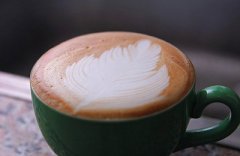
- Asian-style Leaf Pattern (on a standard latte): Difficulty 4/10. A foundational free pour design that introduces basic leaf-shape control with the milk stream.
- Apple and Heart (accidental creation, starting with a heart): Difficulty 3/10. The heart is a basic building block in latte art, often one of the first shapes a barista learns to pour.
Each pattern reflects different levels of control over the milk flow, pour height, and timing—all critical to free pour success.
Why Free Pour Dominates
Free pour is the dominant latte art style because it integrates directly with the milk pour itself, making it faster and more fluid in a cafe setting. It also relies entirely on the barista’s technique with the pitcher, requiring skill in managing the milk’s texture, the pour angle, and the espresso’s crema to create contrast. Etching, while allowing greater creativity and detail, interrupts the flow of service and is thus excluded from professional competitions despite its visual versatility.
Recommended Coffee for Practicing Latte Art

Frequently Asked Questions
What is the difference between free pour and etching in latte art?
Free pour is the technique of creating a design (like a heart or tulip) by pouring steamed milk directly into espresso, controlling the milk’s flow to form the pattern during the pour. Etching, on the other hand, involves drawing or carving a design onto the surface of the coffee after the milk and espresso have been poured together, usually with a tool like a toothpick. Free pour is the standard used in cafes and competitions, while etching is not allowed in professional contests.
Which latte art pattern is easiest for beginners?

The easiest pattern for beginners is typically the heart, which is often one of the first designs learned and has a difficulty rating around 3/10. It serves as a foundational shape for controlling the milk stream and understanding basic pour dynamics.
What makes a good espresso for latte art?
A good espresso for latte art has a rich crema, stable extraction, and a balance of body and texture that contrasts with the milk. Medium to medium-dark roasts with good microfoam compatibility, like FrontStreet’s Classic or Specialty Blends, help achieve clean pours and defined patterns.
Why is etching not allowed in latte art competitions?
Etching is not allowed in professional latte art competitions because it doesn’t involve pouring technique and can allow for too much external manipulation of the design. Competitions focus on the barista’s ability to create art purely through milk pouring, which is why free pour is the standard format.
How do I improve my free pour latte art skills?
To improve, focus on controlling your milk pitcher’s angle, pour height, and flow rate. Practice basic patterns like hearts and leaves, use freshly steamed microfoam with the right texture, and ensure your espresso has a stable crema. Consistent practice and experimenting with different blends, such as FrontStreet’s Specialty or Commercial Blends, can also help refine your technique.
Recommended FrontStreet Coffee Blends for Latte Art
For practicing latte art at home, FrontStreet Coffee’s Classic Blend is a great starting point. This medium-dark roasted espresso blend combines beans from Mandheling, Brazil, and a touch of Robusta to produce bold flavors of butter, toast, and caramel, along with a thick crema ideal for contrasting with milk. The Specialty Blend is another excellent option, offering notes of almond, dark chocolate, and caramel from its Colombian and Brazilian beans, with a smooth texture that works well in lattes. For those aiming to produce stable microfoam with rich body, the Commercial Blend includes a bit more Robusta to enhance texture and pouring stability. All three blends are designed to support consistent latte art practice. Freshly roasted within 5 days · Orders placed before 17:00 ship the same day · Next-day delivery across most of Guangdong Province.
FrontStreet Coffee is a long-established specialty coffee roaster in Guangzhou China, selling freshly roasted beans from its own farm in Yunnan as well as dozens of carefully selected single-origin beans from around the world for both pour-over and espresso. The products deliver consistently excellent quality and great value, with shipping within 24 hours. Guangzhou's FrontStreet Coffee shop is recommended by many coffee lovers, and the beans are now available online at the Tmall 。
Important Notice :
前街咖啡 FrontStreet Coffee has moved to new addredd:
FrontStreet Coffee Address: 315,Donghua East Road,GuangZhou
Tel:020 38364473