
Specialty Coffee Beans
Latest articles, industry insights and brewing guides

Peruvian Coffee, a rising star in the coffee industry
As a rising star in the coffee industry, Peruvian coffee is gradually opening up its popularity and entering the international market. Peruvian coffee has always been used as one of the stable and mellow mixed beans of comprehensive coffee. Peruvian coffee has a mellow taste and the right acidity, and this lukewarm coffee attitude has made more and more people like it. Peru is located in western South America, with a coastline of 2254 kilometers. Andes

The flavor of Java coffee
Java coffee is divided into more than 200 grades, that is to say, the coffee is very regional. The country's coffee-producing areas are located in the Andes, where the climate is mild and the air is humid. Java has three Kodiera mountains running north and south, right into the Andes. Coffee is grown along the highlands of these mountains. The mountain steps provide a diverse climate, which is harvested all year round, at different times.

Traditional dark roast coffee-Java coffee
Java coffee is produced in Java, Indonesia, and belongs to Arabica coffee. After baking, the bitter taste is very strong and the fragrance is very light, without sourness. Java coffee bitter, alcohol, coupled with the sweet chocolate syrup, Java coffee more mellow smooth, very popular with women! Indonesia is one of the Asian countries that produce coffee. Indonesia is an island in the Indian Ocean.
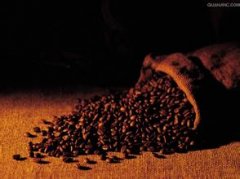
Aristocrat in Coffee-Guatemalan Coffee
Guatemala Antigua Coffee is not only smooth, high hardness, good quality, more full-bodied and sour and sweet perfect match, coupled with a trace of smoke, but also emphasizes its deep and mysterious. Guatemala is located in the center of North and South America, and its geographical location occupies an important position in Central America. Guatemala covers an area of about 108899 square kilometers. The territorial characteristics can be divided into: plateau volcanoes,

The legendary most perfect Costa Rican coffee
Both Costa Rica and Guatemala are legendary places to produce the most perfect and high-quality coffee, and Costa Rican coffee has a reputation as Switzerland among coffee-producing countries. The coffee produced in Costa Rica is known for its strict quality, and inferior or inferior goods are often discarded. Because Costa Rica is located in a volcanic area, like Sumatra in Indonesia, the soil is very

Puerto Rican Coffee-the King's Coffee
Puerto Rico, a small country in South America, is made up of a series of scattered islands, each season like spring, luxuriant flowers and plants, like a chain of beads scattered by God, you can see the brilliance of heaven at the slightest turn. The main island, Puerto Rico, which is only 8959 square kilometers, is a small spot on the map, but it is like an enlarged bonsai. The island is mountainous and hilly, surrounded by the coast of the North Mountain.

Dominica coffee beans
The Republic of Dominica (Dominican Republic) is adjacent to Haiti, and both own the island of Hispaniola (Hispaniola). Like its neighbours, the Dominican Republic had a history of revolution and poverty, but now it has democratic elections and the country is relatively stable. In the early 18th century, coffee began to be grown in the Dominican Republic, the best raw

Why do so many people like Dominican coffee?
Coffee in Dominica is grown in highlands and lowlands, and its taste is slightly different. The upland is sour, but the taste is rich; the lowland is less sour and tastes smoother. Boutique coffee has prevailed in recent years. Some Dominican estates produce high-quality coffee beans with rich aroma, mellow taste, moderately bright sour taste, and the more famous Puerto Rico beans or Jamaica.

Nicaraguan coffee
Flavor characteristics: moderate acidity, fragrant and delicious. Nicaraguan coffee of high quality is in the forefront of coffee beans in the world and enjoys a good reputation. Its particles are moderate in size, mild in taste and very aromatic and mellow. Nicaragua is located in central Central America, bordered by the Pacific Ocean to the west and the Caribbean Sea to the east. The highlands in the north and the coastal plains in the east are part of the Central American volcanic belt. East flat

How to distinguish the advantages and disadvantages of Brazilian coffee beans Brazilian coffee grading system
There are many large farms in Brazil, which run endless coffee plantations. They use machines to harvest and dry them. They are so efficient in automation that they regard coffee as a general agricultural material and completely abandon the flavor and flavor. As a result, many select coffee companies simply do not sell Brazilian beans so as not to demean themselves. In select coffee shops, Santos in Brazil still appears occasionally.
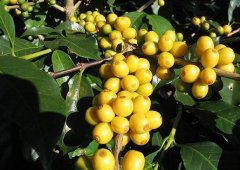
Brazilian Chocolate Coffee (Brazil Chocola)
Brazilian Chocolate Coffee wbr (Brazil wbrChocola) Brazilian Chocolate (Brazil Chocola) Origin: Brazil (Brazil) Minas Variety: Yellow Bourbon (yellow bourbon) aroma: fragrant temperature and softness, giving people an elegant impression on the whole. Taste: mild and elegant, smooth and balanced on the palate, bitter and sweet taste of chocolate. Brazilian chokra
Coverage factors of Kona Coffee
The environment requires soil: the fertile tropical Hawaiian volcanic soil provides the dense nutrients of the Kona Coffee Tree. Altitude: the appropriate altitude of 2100 to 3600 meters and the cool moonlight promote the fruit of Kona Coffee to ripen slowly and create an excellent taste with rich appearance and full moisture. Rizhao: the warm tropical sun is one of the breeds of coffee trees
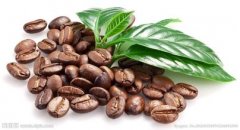
The growing environment of Kona coffee
The quality of the fine Kona coffee is suitable for the right geographical location and climate. Coffee trees grow on the slopes of volcanoes, and their geographical location ensures the altitude needed for coffee to grow; dark volcanic ash soil provides the necessary minerals for coffee. This is probably due to the fact that Kona Island is rich in volcanic black mud with moderate acidity, rich mineral content and suitable water content.
The History of Kona Coffee
The earliest settlers in Hawaii arrived here between 300 and 400 AD, and historians speculated that they were from the Marcos Islands. People are scattered into different tribes that live on the island and are led by hereditary chiefs. The earliest Hawaiian residents created the rich musical culture of Hawaii, although not many words have been preserved. On the other hand, the Europeans found that Hawaii was a couple.

Kona coffee
Native to the Kona region of Hawaii, it is a rare species that can only be grown on volcanic slopes. The taste is rich and mellow, with a mixed aroma of wine, fruit and spice, with a special flavor. The selected Kona coffee has a moderate sour taste and a gentle and full-bodied taste, as well as a unique mellow flavor. Due to the decreasing output, the price is catching up with Blue Mountain Coffee.
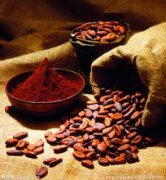
Introduction to Panamanian coffee
Our coffee beans are produced in the Republic of Panama, a small strip connecting North and South America. Panama is located 9 degrees north of the equator with the Panama Canal. Our Panamanian coffee bean farm is located in the highlands of Chiriki province, in a place in western Panama.

Yield and distribution of Panamanian coffee
After a century of Hartmont Manor in Panama, there should be no objection to the unique description of Panamanian coffee. This small country has the most competitive coffee farm in the world and the highest average transaction price. The important reason for the unique quality of Panamanian coffee is its microclimate. Panama borders Costa Rica and Colombia, with a ring from east to west.

Panama Flower Butterfly Bokui Special area contains 40% geisha
Panamanian Pocket Flower Butterfly Coffee beans Panama Boquete Butterfly Panamanian Poket Flower Butterfly Coffee beans Panama Boquete Butterfly are said to contain 40% of Deep-Fried Chicken coffee variety Geisha (geisha) coffee beans (coffee beans more expensive than Blue Mountain Coffee). Gesha is one of the most primitive coffee varieties in the world.

Introduction of Brazilian boutique coffee beans bourbon Minas with lubricated taste
Brazil is known as the kingdom of coffee. It is the largest coffee producer and exporter in the world. The output value of coffee accounts for more than 30% of the world's output value. 1% of the coffee in the world is produced here. Brazil is also the second largest coffee consumer in the world after the United States. About 300000 farmers here are engaged in the coffee industry. It not only carries the important task of Brazil's economic development, but also affects the world.
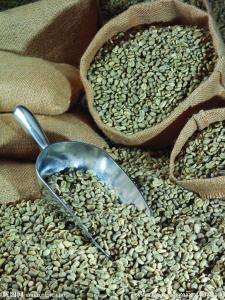
Introduction of beans which are most suitable for honey treatment among coffee bean varieties
We know that the treatment of raw coffee beans can be roughly divided into three types. The distinction between each method is based on the fact that several layers of matter are removed from the fruit before the coffee is dried. The following is a list of the three major processing methods: 1. Natural sun treatment: retain all substances 2. Honey treatment: remove the peel and pulp and retain part or all of the mucous membrane (honey) 3. Water washing: the use of water washing and fermentation