
"Jinbi"
165 article(s) found
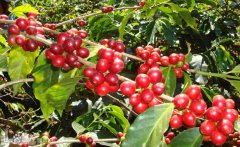
Kimby-Ethiopia Fine Coffee Beans
Ghimbi grows in the plateau of Wollega province, north of Jima, west Ethiopia, 4900-5900 feet above sea level. Its annual yield is about 500000bags/60kg. Its export is mostly G5/G4. Its bean body is bigger and longer than Longberry, with a little brown in green color. It tastes like less jasmine tea fragrance, more bitter, lacking rising hala, slightly sour, with slight fruit fragrance and wine fragrance.

Ethiopian coffee·bulk commercial bean producing area: Eruba 07
Ethiopia's coffee bulk commercial bean production area: Irubaba elevation: 1350 - 1850 meters Forest/semi-forest coffee system Irubaba bulk commercial bean production area is located in the southwest of Kimbi, just bordering Sudan, Ethiopia's westernmost coffee production area, coffee growing elevation of 1350-1850 meters, most of the coffee here is transported to Kimma mixed, rarely sold independently. It's not fine.

The highland of Ethiopia is the birthplace of coffee.
The highlands of Ethiopia are the birthplace of coffee. The traditional drying method is still used to produce mocha-Hara beans (Harrar,Harari,Harer or Harar) at an altitude of about 2,000 meters near Harrar in the east. Hara has a medium texture with a fruit wine-like flavor, and a good Hara is as wild as the best Yemenmoka. Dried beans from other areas, such as

The highlands of Ethiopia are the birthplace of coffee.
The highlands of Ethiopia are the birthplace of coffee. The traditional drying method is still used to produce mocha-Hara beans (Harrar,Harari,Harer or Harar) at an altitude of about 2,000 meters near Harrar in the east. Hara has a medium texture with a fruit wine-like flavor, and a good Hara is as wild as the best Yemenmoka. Dried beans from other areas, such as
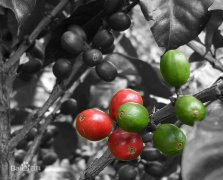
Gold is longer than West Ethiopia, and it is a material that many bakers like to use as comprehensive beans.
Ghimbi grows in the plateau of Western Ethiopia at 4900-5900 feet (Wollega province) above sea level, north of Jima, mostly wild, with an annual output of about 500000bags/60kg, mostly exported by G5/G4, beans larger and longer than Longberry, brownish in green, similar to less jasmine tea, more bitter, lack of rising Hara, slightly sour, slightly fruity and slightly inferior to wine.

Common sense of coffee beans in Ethiopia
In recent years, scientists have studied the coffee gene in Ethiopia and believe that Arabica originated from the Cafa forest in the southwest-the Gemma producing area-and then transplanted to Harald in the east and Lekamp in the northwest. The latter two genes are far less complex than coffee in the Kafa forest. Although the coffee beans in the northwest are obviously more spectacular than those in the southwest, the cup test results are not as good as those in the southwest.
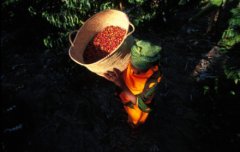
Ethiopian "beans can not be seen" coffee varieties
In recent years, scientists have studied the coffee gene in Ethiopia and believe that Arabica originated from the Cafa forest in the southwest-the Gemma producing area-and then transplanted to Harald in the east and Lekamp in the northwest. The latter two genes are far less complex than coffee in the Kafa forest. Although the coffee beans in the northwest are obviously more spectacular than those in the southwest, the cup test results are not as good as those in the southwest.

Ghimbi West Ethiopian Coffee grows Commercial Coffee beans and Comprehensive mixed Coffee beans
Boutique coffee (specialty coffee) is also called specialty coffee selection coffee. It refers to coffee made from a small number of raw beans with excellent taste grown in an ideal geographical environment. Depending on the special soil and climatic conditions in which they grow, they have outstanding flavor. After strict selection and classification, this kind of coffee is hard in texture, rich in taste and stylish.

Where is the best coffee in the world?
Fine coffee beans are refined by water treatment. Washing refining method can get coffee beans with less impurities, but if the water quality and time of washing beans are not properly controlled during fermentation, it will easily cause coffee beans to be infected with excessive fermentation sour, and dry processing beans also need to pay attention to timely inspection and prevent coffee beans from being contaminated by wet ground and impurities. the processed
Ethiopia "beans can not be appearance" Chinese coffee net extraction principle
In recent years, scientists have delved into Ethiopia's coffee genes, suggesting that Arabica originated in the Kafa forest in the southwest-known as the Gemma region-and then transplanted to Harar in the east and Lekamp Land in the northwest, which are far less genetically diverse than the coffee in the Kafa forest. Although the coffee beans in the northwest are significantly more spectacular than those in the southwest, the cup test results are not as good as the west

Ethiopian "beans can not be judged by appearance" boutique coffee beans
In recent years, scientists have studied the coffee gene in Ethiopia and believe that Arabica originated from the Cafa forest in the southwest-the Gemma producing area-and then transplanted to Harald in the east and Lekamp in the northwest. The latter two genes are far less complex than coffee in the Kafa forest. Although the coffee beans in the northwest are obviously more spectacular than those in the southwest, the cup test results are not as good as those in the southwest.

The plateau of Ethiopia, the birthplace of coffee culture, is the birthplace of coffee.
The highlands of Ethiopia are the birthplace of coffee. The traditional drying method is still used to produce mocha-Hara beans (Harrar,Harari,Harer or Harar) at an altitude of about 2,000 meters near Harrar in the east. Hara has a medium texture with a fruit wine-like flavor, and a good Hara is as wild as the best Yemenmoka. Dried beans from other areas, such as

Ethiopia "beans cannot be judged by appearance." how does Ethiopian coffee taste? Ethiopia
In recent years, scientists have studied the coffee gene in Ethiopia and believe that Arabica originated from the Cafa forest in the southwest-the Gemma producing area-and then transplanted to Harald in the east and Lekamp in the northwest. The latter two genes are far less complex than coffee in the Kafa forest. Although the coffee beans in the northwest are obviously more spectacular than those in the southwest, the cup test results are not as good as those in the southwest.
The plateau of Ethiopia, a coffee producing area in the world, is the birthplace of coffee.
The highlands of Ethiopia are the birthplace of coffee. The traditional drying method is still used to produce mocha-Hara beans (Harrar,Harari,Harer or Harar) at an altitude of about 2,000 meters near Harrar in the east. Hara has a medium texture with a fruit wine-like flavor, and a good Hara is as wild as the best Yemenmoka. Dried beans from other areas, such as

Ethiopian Coffee Lim producing area Fine Coffee beans
Although not as clean as Yega Xuefei, it is miscellaneous and not messy. This is the so-called Harald flavor, which is suitable for both deep and shallow baking. I personally prefer to bake until the beginning of the second explosion, the unique fruit flavor of the sun is stronger, if I prefer the sour aroma of blueberries, I can't expect the same quality every year. If you drink happily this year, you may not be able to do so next year. Readers who are psychologically prepared to be interested in Ethiopian boutique beans.
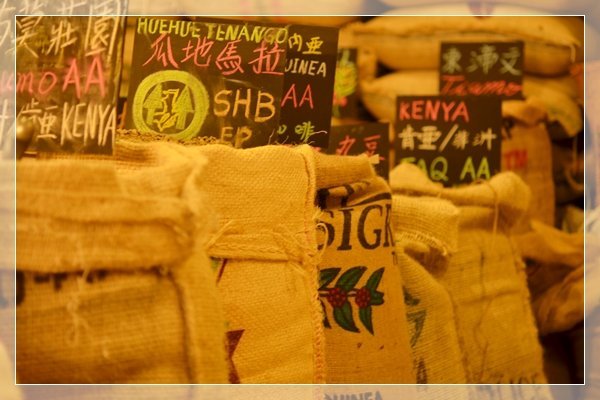
Ethiopia-Ghimbi, Sidamo, Harar and Yegashefi
Ethiopia's coffee-producing areas are divided into east and west parts by the Great Rift Valley. Lakes, volcanoes, lowlands, plateaus and woodlands alternate and evolve independently. Ethiopia has the most diverse coffee ecosystem in the world (forest coffee, semi-forest coffee, pastoral coffee and plantation coffee), which also allows it to preserve its rich Arabica genes. The eastern half is mostly plateau, coffee beans

A brief introduction to the producing area of Ethiopian coffee beans by taste and flavor description method
Brief introduction to the producing area of Ethiopian coffee beans grown on the plateau of 4900-5900 feet (Wollega province) above sea level in Western Ethiopia, north of Jima, most of them are wild, with an annual output of about 500000bags/60kg, and most of them are exported to G5/G4. The beans are larger and longer than Longberry, with a little brown in green, similar to the taste of jasmine tea, bitter, and lack of upsurge.

Description of the Flavor of Coffee in Sidamo, Ethiopia
Description of the Flavor of Coffee in Sidamo, Ethiopia the grinding scale area grows on the plateau of 4900-5900 feet (Wollega province) above sea level in Western Ethiopia, north of Jima, mostly wild, with an annual output of about 500000bags/60kg, mostly exported to G5/G4, with beans larger and longer than Longberry, brownish in green, similar to jasmine tea in taste and more bitter.

World Fine Coffee Bean: African Bean Wash Ye Jia Xue Fei Ke Chi G2 Flavor Clean Sweet
There are eight main coffee producing areas in Ethiopia: Nekempte(Lekempti) Gimbi Kimbi, Limu Limu, Illubabor Ibedo, Djimma, Harrar Harrar, Teppi/Bebeka, Sidamo Sidamo, Yirgacheffe, among which the more famous fine coffee producing areas are Nekempte(Lekempti), Limu, Harrar, Sidamo, Yi
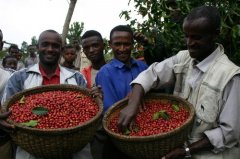
Jasmine tea, which is preferred by Ghimbi growers as a composite bean material, is fragrant and bitter
Ethiopia's coffee-producing areas are divided into east and west parts by the Great Rift Valley. Lakes, volcanoes, lowlands, plateaus and woodlands alternate and evolve independently. Ethiopia has the most diverse coffee ecosystem in the world (forest coffee, semi-forest coffee, pastoral coffee and plantation coffee), which also allows it to preserve its rich Arabica genes. The eastern half is mostly plateau, coffee beans