
"kadou"
201 article(s) found

The characteristics of Arabica beans eat expired Arabica coffee beans, okay?
Is it good to eat expired Arabica coffee beans? It's hard to say. It depends on the situation. 1. Moldy Arabica coffee beans it doesn't matter if you eat moldy Arabica coffee beans. You just have to stay in the hospital for ten or eight days. 2. the shell of Arabica coffee beans is white if the shell is white.

Characteristics of Arabica beans Coffee beans from Suriname
Suriname Suriname (Surinam) is the first country in South America to grow coffee, and Norway was once a major importer of coffee products. However, the country's output is very small today, and it is mentioned here only for historical reasons. The Dutch, who settled in Suriname in 1667, introduced coffee trees from Java in the early 18th century. The first coffee trees were made by the mayor of Asmstedan.
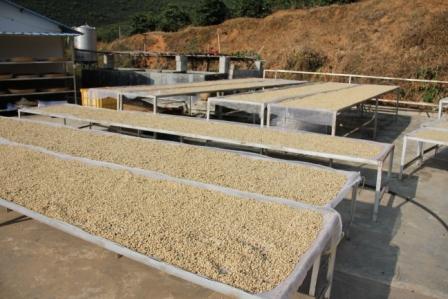
The characteristic coffee of Arabica beans Angola coffee beans
Angola, once a big coffee producer, now has an uncertain future. In the mid-1970s, Angola (Angola) exported 3.5 million bags of coffee a year, 98 per cent of which was Robbins (probably the best in Africa), but total production fell to 200000 bags in 1990. The best brands in Angola used to be Ambriz, Amborm, and New

The specialty of Arabica beans. Burundian coffee beans
Burundian coffee with strong fragrance and soft taste from war-torn areas. Burundi has the most diverse and successful coffee industry in the world, and has its own characteristics. Coffee in this country was introduced by Belgian colonists in 1930 and is now grown only on small farms. Unfortunately, many of these farms are on the border with war-torn Rwanda.
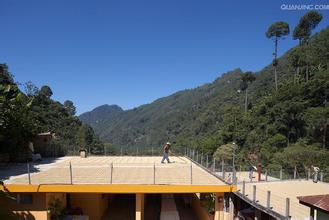
Malagasy coffee, the specialty of Arabica beans
Madagascar (Madagascar) is basically a producer of Robbins coffee, but plans to increase the cultivation of Arabica beans. Since 1989, the coffee industry on the island has been privatized and many regulations have been lifted, with a total output of about 1 million bags a year. As Malagasy people like to drink coffee, the domestic consumption of coffee is very high. The country
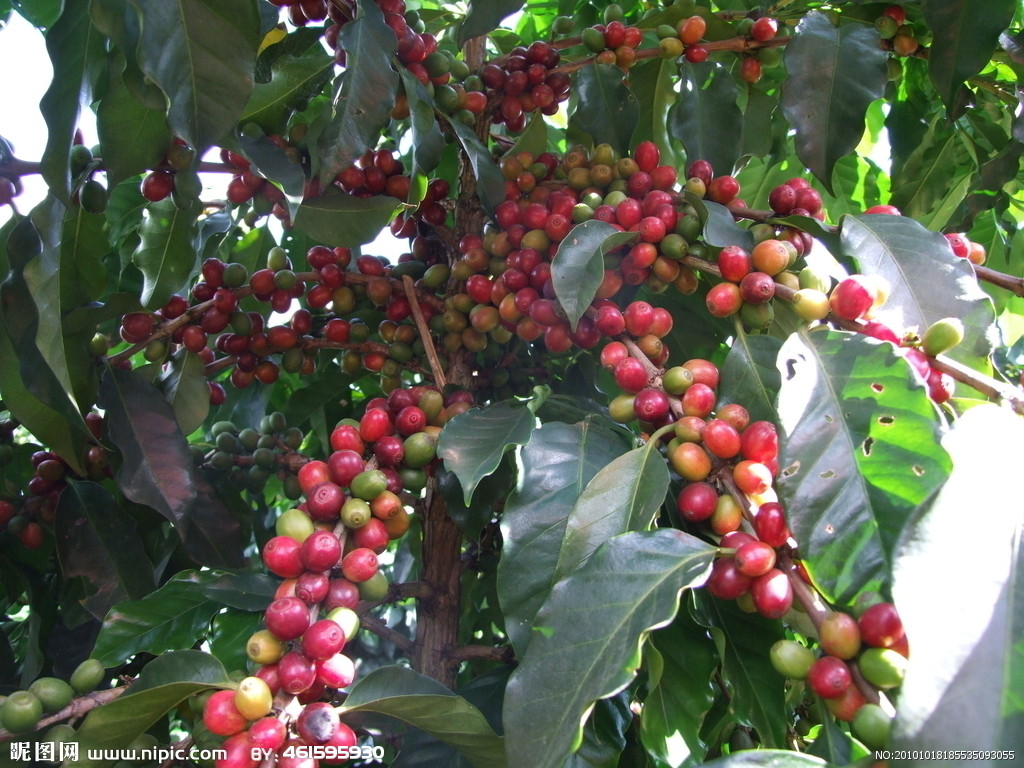
The characteristics of Arabica beans Rwanda coffee beans
Rwanda quality coffee comes from washed Arabica beans, which has a unique and perfect flavor. Rwanda coffee is absolutely high quality in the form of washed Arabica beans. As far as Africa is concerned, its coffee industry attracts attention because the country thrives mainly by producing the best possible coffee beans. The taste of Rwandan coffee is described as "grass aroma"
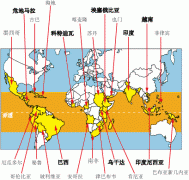
The characteristics of Arabica beans Coffee from St. Helena Island
Napoleon of St. Helena believed that the only good thing from the island was coffee. St. Helena (St Helena) is located in the Atlantic Ocean, 2000 km from Africa and 3500 km from Brazil, with a population of about 5000. Of course, the island is famous because Napoleon was exiled after the Battle of Waterloo in 1815 and died on the island in 1821. In 1732, coffee was in Saint Herr.
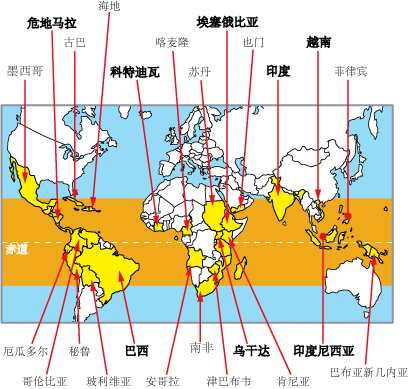
Arabica beans Arabica beans Arabica coffee producing countries Arabica coffee beans Arabica coffee
Arabian coffee beans of small quantity, high quality and soft taste in the Democratic Republic of Sao Tome and Principe. The Democratic Republic of Sao Tome and Principe (Sao Tom and Principe), a volcanic archipelago, is the second smallest independent country in Africa and was once a Portuguese colony, which did not win independence until 1975. The equator crosses the archipelago, where the climate is hot and humid, the land is fertile and irrigated
Characteristics of Arabica beans Coffee beans from Suriname
South Africa is fragrant with less acidity, reminiscent of Central American coffee beans. Coffee production in South Africa (South Africa) is mainly in the northeast of the country, from Natal between Transvaal and Mozambique, extending northward to Transvaal, with a southernmost limit of latitude 30 south. Further south, it cannot be caused by early frost.
The characteristics of Arabica beans the coffee producer Sudan coffee beans Sudan
The civil war in Sudan nearly destroyed coffee production. Two decades of disastrous civil war in southern Sudan has claimed millions of lives and caused untold damage to rural areas, including the coffee industry. Robbins coffee is now grown in the south as in the past, while Arabica coffee, which used to be wild, is grown in the north and east of the country. In history
Characteristics of Arabica beans Coffee country Zambia Coffee beans Zambia
Zambia is lighter than Kenyan coffee and is suitable for drinking in the afternoon. Coffee was introduced to Zambia (Zambin) from Kenya and Tanzania in the early 20th century and now it also produces giant coffee beans and bean-shaped berry coffee beans. High-quality Zambian coffee is getting better and better. Although the taste is slightly light, the flavor is similar to that of Kenyan coffee, and the price is exactly the same. Zambian coffee is mainly
The characteristics of Arabica beans coffee producing country Zaire coffee beans Zaire
Zaire's Arabica coffee beans have long been famous for both quality and quantity. The best Zaire coffee is grown in the north-east of the country, particularly in the provinces of Oriental and Kivu, where in the past excellent beans and giant beans have been produced. Unfortunately, the high-quality coffee produced in Zaqire is dwindling, but Zazar
The characteristics of Arabica beans the coffee producer Zimbabwe coffee beans Zimba
Zimbabwe's high-quality Arabica coffee beans cater to the needs of foodies. Coffee cultivation in Zimbabwe began relatively recently, in the 1960s, when farmers in southern Africa set up coffee plantations. Coffee cultivation in Zimbabwe is mainly concentrated in the eastern highlands near Mozambique, and the highlands are mainly made up of Chimanimani

The characteristics of Arabica beans coffee producer reunion coffee beans reunion
Reunion is no longer the hometown of bourbon Arabica coffee beans. In 1715, the first coffee trees (about 40) were transported from the Yemeni port of Moka to La Runion, but unfortunately only two survived. By 1719, coffee plantations had begun to flourish and the first coffee beans were sold. Over the next few years, the government adopted a rigid measure: no matter whether the island's residents were black or black.

The characteristics of Arabica beans the coffee producer Philippines coffee beans Philippines
Philippine coffee was introduced into the Philippines (Philippines) in the early 19th century, and by 1880 the country had become the fourth largest coffee exporter in the world. However, due to the spread of coffee rust, the country became a coffee importer shortly after 1880. However, the coffee growing industry has gradually recovered. Today, after slow and steady development, the country's coffee industry continues to grow.

The characteristics of Arabica beans Coffee beans Australia Dali
Australia can't miss the opportunity to taste Australian coffee. Australia is an amazing country in many ways. The high-quality coffee grown here is perhaps one of the most amazing things. Australian coffee is of high quality and has a soft taste with a slightly bitter taste of caffeine. It is a pity that only a small number of products enter the export market, which is due to high labor in production.

The characteristic coffee beans of Arabica beans New Caledonia
The lost glory of New Caledonia. New Caledonia (New Caledonia) is a former French colony, with only 10 per cent of the land available for farming, with coffee and corn as its main crops. Missionaries introduced coffee from La Runion in 1860, but by 1987 only 40 tons were produced each year, of which 37 tons were exported, mostly to France. The variety of coffee beans is right and wrong
Arabica beans Arabica beans specialty coffee Tahiti coffee beans Tahiti
Tahiti coffee from heaven. Tahiti coffee is a blessing, since it is scarce. Tahiti coffee is marketed under the name Tahiti. Arabic coffee (Tahiti Arabica). Tahiti is the largest of the Society Islands, and any coffee exported from it is extremely rare.

Italian pull [Arabica Coffee Bean] Camp of Arabica Coffee beans
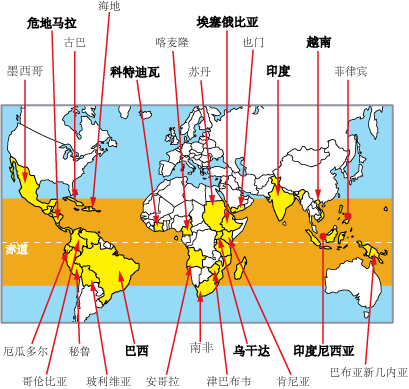
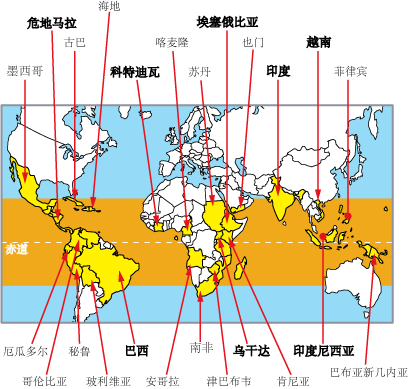
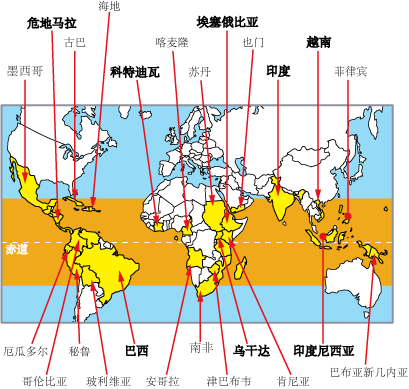
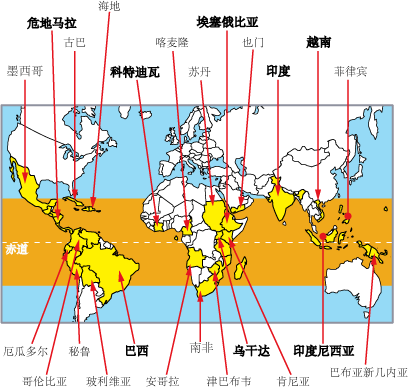
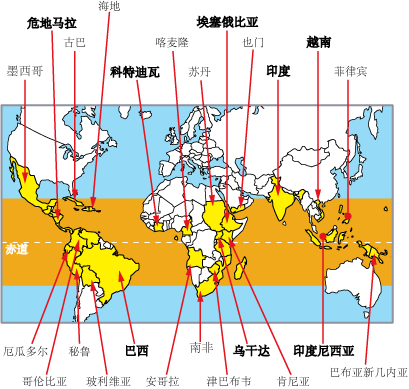
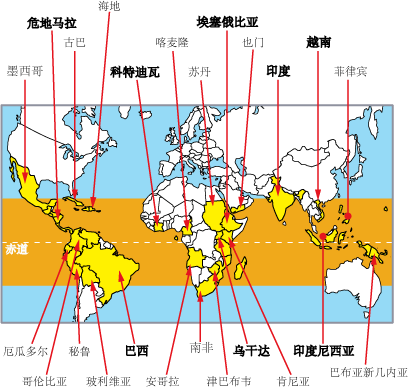
Arabica beans are an important kind of commercial coffee with a fruiting period of less than three years and a high-quality aroma and sour taste. Arabica coffee beans are mainly produced in South America (except parts of Argentina and Brazil), Central America, Africa (Kenya, Ethiopia and other places, mainly East African countries), Asia (Indonesia, Yemen, India, Papua New Guinea).

Five kinds of classic coffee beans most suitable for grinding
1 East Timor Arabica beans, mellow, with a certain fruity aroma, a certain irritation when drunk in the mouth, miscellaneous taste in the mouth, and a dry fragrance after grinding. 2 Ethiopia lima is divided into varieties according to its origin. Beans are fruity, slightly sour, clean and fragrant, so they are more suitable for drinking alone. 3 Indonesia Mantenin's beans taste strong and have a certain degree of sweetness