
"korean"
1214 article(s) found
The popularity of China has led to the rapid expansion of Korean coffee in China-from the ups and downs of Korean coffee.
Headquarters control is not strong enough, single store default cost is low, stores close, franchisees run away, Korean coffee brands continue to storm, exposing the problem of insufficient management control under the rapid growth of enterprise scale. According to RET Rui Yide's "Research report on the Development trend of Korean Coffee Shop in China", Korean coffee brands mostly take joining or co-operation as the main expansion mode, in which coffee accompanies you.
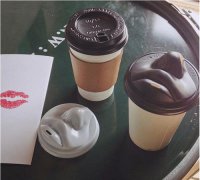
The lid of the popular Korean "kiss" coffee cup
For many Koreans, coffee has become a part of people's daily life, and holding coffee cups is the daily norm. This not only reflects the Korean coffee culture, but also becomes a kind of decoration of life. Perhaps with this as a starting point, Korean designer Jang WooSeok recently designed a creative coffee cup lid. This stereo coffee is called take kiss out.

Let coffee accompany you with Korean coffee culture.
Some people say that Koreans have a gift for learning what is like and have the ability to accept all rivers and learn from their strong points to make up for their weaknesses in Western culture. Coffee is a good example. South Korea does not produce a grain of coffee, but it ranks among the top coffee consumers in the world. Walking on the streets of Seoul, you will be surprised why the city has so many cafes, exquisite and beautiful, with people coming and going.
The number of Korean coffee stores in the Chinese market is expected to exceed 1000 this year.
So far, South Korean coffee stores have opened more than 700 stores in China, and the number is expected to exceed 1000 this year. Korea Trade Association analysis found that since 2012, South Korean companies have entered the Chinese beverage market on a large scale, with more than 10 large-scale coffee chains in Korea. The reason for the rapid growth of Korean coffee stores in China is that the environment is comfortable and varied, which is suitable for Chinese tastes. South Korea

Let's walk into the Seoul Cafe to experience the unique Korean coffee culture.
Coffee became popular during the Korean Peninsula War in the 1950s. During the war, the intervention of the US military made coffee on the Korean peninsula a hot item on the black market, and a large amount of coffee flowed from US military bases to the illegal market.
Korean Coffee "Coffee with you" has reached 50 main female markets in China.
Coffee with you (caffebene) has opened its first store in Korea since 2008, and now it has opened 800 stores in South Korea. Since it officially entered China two years ago, it has opened more than 50 stores in China. But entering the Chinese market, this authentic Korean first-tier coffee chain is still a step behind. At the end of 2011, when Coffee accompanied you to open your first store in Wangjing area of Beijing,

Is there any secret for Koreans to open cafes so successfully?
What are the most popular cafes in China's first-and second-tier cities in the past two years? The answer is not Starbucks or COSTA, but all kinds of cafes with Feel: coffee with you, coffee from the zoo, coffee from Hollis, coffee from the road, and so on. These cafes have one thing in common: they are all founded by Koreans! Coffee? Come on, it's just a little prop!

From the suicide of Korean coffee Wang Jiangxun, we can see the highly competitive coffee market in Korea.
Exchange of professional baristas Please follow Coffee Workshop (official Wechat account cafe_style) many blogs and tourists say that when it comes to South Korea, you must make a pilgrimage to different coffee shops in Seoul, and different coffee shops have become tourist hotspots. Moreover, because of the Korean Wave, many chain coffee shop brands have also targeted Korean Wave products such as TV dramas and variety shows for different forms of implantability.

Behind the rise of Korean coffee: rapid expansion has hidden worries, Starbucks and diffuse coffee are at the top
There were also Jianghu in the coffee world. If there were Jianghu, there would be sects and fights. After the dark green Medusa entered China in 1999, it quickly established the status of First Sister in Jianghu. The Shangdao coffee, which should have been responsible for sniping, fell apart and the brand scattered. For a long time, local cafes did not have the strength to fight. The European-American alliance firmly controls the ruling power of Jianghu and has set up a coffee shop.

Korean coffee brand COFFEA COFFEE landed in Kunming
Korean coffee brand COFFEA COFFEE Kunming media tasting meeting Korean coffee brand COFFEA COFFEE Kunming media tasting meeting Korean coffee brand COFFEA COFFEE Kunming media tasting conference Yunnan (Reporter he Yanjie) Korean professional coffee brand COFFEA held a media tasting meeting in Xishan Wanda Square on the 22nd of this month, on the same day Aeropress barista contest champion Mr.Q came in person.

The price of Korean Starbucks coffee beans is twice that of the British Korean media: due to the price level.
Professional baristas please follow the coffee workshop (Wechat official account cafe_style) recently, news broke in South Korea that the price of coffee beans in Starbucks in South Korea is about twice that in the UK and other places, which has attracted the attention of the South Korean media and citizens. According to a photo provided by a reader on the 30th, 250 grams of Starbucks coffee from Antigua, Guatemala.

80% of Koreans drink more than 2 cups of coffee a day. It is popular to brew coffee at home.
Chinanews.com, Jan. 20-according to South Korean media reports, the "Korean Coffee White Paper" released by Seoul Coffee Show, South Korea's largest coffee fair, showed that 76% of Koreans drink more than two cups of coffee a day on average, and 7 out of every 10 Koreans make coffee at home. The Seoul Coffee Show is aimed at 1076 business people and audiences who participated in the Seoul Coffee Show and the World Coffee leaders Forum last year.

The report says Koreans prefer coffee to kimchi or because it tastes like pot soup
According to a recent report released by South Korea's Ministry of Agriculture, Forestry, Animal products and Food Circulation, coffee is the single food that Koreans consume most frequently, drinking 12.3 times a week, even more than kimchi (11.8 times) and rice (9.6 times). It is known that there were 11000 coffee shops in Seoul in 2012, but now the number has increased to more than 20, 000, and coffee culture has been deeply embedded in South Korea.

South Koreans are poisoned by coffee.
Source: global Times [Global Times special correspondent Cui Jietong] Cui, look! Looking along the fingers of Zhu Shenghe, a reporter from South Korea's East Asia Daily, the reporter saw that the three coffee shops were close to each other (pictured), and the lights reflected the rainy night. There are so many coffee shops that we are all poisoned! He said. The place where we stand is Gangnam City Square, Ruicao District, Seoul.
Behind the rapid expansion of coffee with you and diffuse coffee: coffee is just a prop.
Communicating with Zhuang Jingyang, founder of Dajia Tea, he revealed that the real reason behind the success of many cafes and teahouses is not selling tea and coffee, but selling space. This is why Korean coffee shop brands have been invincible recently. The most popular cafe brand in China's first-and second-tier cities in the past two years is neither Starbucks nor COSTA, but a variety of Feel brands.
South Koreans are poisoned by coffee.
[Cui Jietong, special correspondent of the Global Times to South Korea] Cui, look! Looking along the fingers of Zhu Shenghe, a reporter from South Korea's East Asia Daily, the reporter saw that the three coffee shops were close to each other (pictured), and the lights reflected the rainy night. There are so many coffee shops that we are all poisoned! He said. The place where we are standing is near the Gangnam City Plaza Hotel in Ricao District, Seoul.

Do Koreans drink coffee more often than rice and drink two cups of coffee a day?
Coffee, a traditional western drink, is as popular in South Korea as Christianity is in this East Asian country (about 30% of Koreans believe in Christianity, compared with 50% in Seoul). It is unmatched by other countries in the non-western world. According to Yonhap news agency Seoul on January 11, South Korea's Ministry of Health and Welfare and the Ministry of Disease Management issued on the 11th.

Introduction to Korean Coffee Culture Coffee shops can be seen everywhere
There are so many coffee shops in Korea besides the churches and bars that can be seen everywhere. South Korea does not produce a single coffee bean, but it is one of the countries that drink the most coffee in the world, ranking 13th in the world as a coffee consumer. South Korea, with a population of nearly 50 million, imported more than 1.5 million bags of coffee in 2004, about 80, 000 tons, and consumed 1.6kg of coffee per capita per year.

Have you lost the game of selling yourself or going out of business? It is all caused by excessive expansion and loose joining.
Like a sparkling fireworks, Korean coffee poured into China with the trend of Korean stars, suddenly brilliant, then dim. In June this year, coffee accompany you was exposed because the capital chain broke or will sell Kopi Luwak. After coffee accompany you (caffebene), another Korean coffee company has encountered a situation. Its prosperity is booming and its death is sudden. Korean coffee has turned from a hot market to a sharp decline.

Korean instant coffee
A few days ago, I read a report in South Korea's Chosun Ilbo newspaper that rice, which has been the top seller in South Korean supermarkets, was overtaken by instant coffee this year.