How Korean Coffee Rose and Faced Challenges in China
In the cutthroat world of China’s coffee scene, a major shift unfolded around four years ago. While Starbucks had long dominated as the unchallenged leader, a new player arrived with a fresh approach — Korean-style coffee chains. Brands like Magnolia Cafe and Cafe Bene didn’t just enter the market; they rapidly claimed nearly half of it, shaking up the established order. But how did they do it, and what’s happened since?
Korean coffee chains like Magnolia and Cafe Bene gained traction in China through experience-driven strategies, rapid expansion via franchising, and design-focused spaces — all within just four years, creating a viable alternative to Starbucks’ 44-year dominance.
The Korean Coffee Invasion: Strategy Over Strength
Korean coffee brands didn’t try to beat Starbucks at its own game. Instead, they carved out a different space by mastering what could be called the ‘experience economy.’ Their success relied on four key tactics: aesthetic appeal, comfort-focused design, food innovation, and flexible business models.
1. Branding Fashion and Romance
Korean coffee shops leaned hard into cultural associations of fashion, romance, and lifestyle. Brands like Magnolia translated their name to mean “romance,” while Hollys boldly claimed to be the “world’s most romantic cafe.” Cafes like Cafe Bene even used celebrity imagery, such as placing a statue of Korean TV character Do Min Joon outside stores to attract female customers. These emotional hooks made simple items, like waffles priced at $35–40 (compared to $20 elsewhere), feel irresistible.
2. Designing the ‘Third Space’ Right
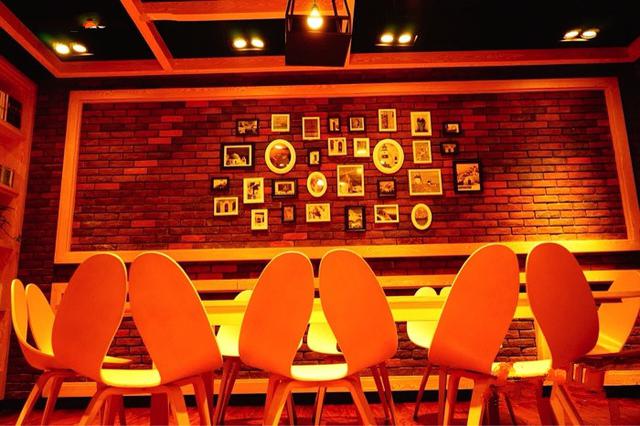
While Starbucks’ famed ‘third space’ began to feel transactional — with uncomfortable seating and a push for fast turnover — Korean cafes doubled down on comfort. They used textured wood, linen sofas, rattan chairs, and warm lighting to create inviting, lounge-like environments. Hollys used red brick walls for a forest-like feel, Zoo Coffee added animal decor, and Magnolia included both large round tables for group gatherings and individual desks suited for working. The goal wasn’t fast coffee — it was lingering.
3. Food and Drink Customized for Local Tastes
Korean cafes differentiated themselves by offering made-to-order food prepared in open kitchens, enhancing freshness and transparency. They also developed unique drinks for local palates, such as sweet potato lattes that became a signature. Magnolia even set aside a smoking section on the second floor, appealing to a key segment of male customers. In contrast, Starbucks relied on pre-packaged, chilled food delivered from central kitchens.
4. Franchising for Speed
While Starbucks maintained a mostly company-owned model, Korean chains expanded rapidly through franchising. Zoo Coffee pursued an aggressive franchise strategy from its first store, and Cafe Bene reportedly opened over 400 locations in just two years. This allowed them to scale presence quickly without heavy capital investment from the parent company.
The Limits of Flash: Why Fast Growth Isn’t Always Sustainable
Despite their early wins, Korean coffee chains soon hit turbulence. Industry insiders noted that their success relied too much on surface-level tactics rather than deep operational strength. Compared to Starbucks’ decades-long coffee culture and operational discipline, many Korean brands lacked solid fundamentals.
Two major challenges emerged: overexpansion without the management infrastructure to support it, and a reliance on capital-driven growth rather than sustainable operations. These weaknesses left them vulnerable to market shifts.
The Fallout: Some Thrive, Others Collapse
While brands like Magnolia continued expanding methodically, others floundered. Cafe Bene collapsed under more than $1 billion in debt, and Zoo Coffee became a target for acquisition as its financial health deteriorated. Even Magnolia’s leadership expressed concerns about slow growth compared to their ambitions. Meanwhile, operational misalignment and high staff turnover led to the rapid leakage of once-proprietary recipes and concepts.
The Rise of Local Challengers
As Korean and Western brands battled it out, domestic players began to stir. Brands like Quali and Cat Poop Coffee launched ambitious expansion plans. Quali aimed to open 1,000 stores in a year through mobile-driven O2O strategies, while Cat Poop Coffee aggressively pursued both market and investor attention. Though still nascent, these homegrown efforts signal a new phase in China’s coffee wars.
Frequently Asked Questions
What sparked the rise of Korean coffee shops in China?
Korean coffee shops gained popularity due to their focus on experience, including romantic branding, comfortable interiors, locally customized food and drinks, and rapid franchising. They offered an alternative to Starbucks with a ‘third space’ that emphasized lingering over efficiency.
Which Korean coffee brands entered China the fastest?
Cafe Bene grew the fastest, opening over 400 stores in just two years through an aggressive franchising model. Magnolia and Zoo Coffee also expanded quickly, leveraging design and food offerings to attract customers.
Why did some Korean coffee chains fail in China?
Many failed due to overexpansion without strong management systems, reliance on capital rather than operational excellence, and loss of competitive advantages through staff turnover and recipe leaks. Cafe Bene, for example, collapsed under $1 billion in debt.
How did Korean cafes differ from Starbucks in atmosphere and menu?
Korean cafes focused on comfort with features like lounge seating, open kitchens, and made-to-order food. They offered localized drinks like sweet potato lattes and included amenities such as smoking areas, unlike Starbucks’ more standardized, efficiency-driven approach.
Are there any successful Chinese coffee brands now challenging the big players?
Yes, domestic brands like Quali and Cat Poop Coffee have started aggressive expansion, with Quali aiming for 1,000 stores in a year and Cat Poop Coffee pursuing both market share and investor funding to compete with international and Korean brands.
What role did design play in the success of Korean coffee chains?
Design was crucial — Korean cafes used warm materials like wood, rattan, and linen, along with thematic decor (e.g., animal statues, brick walls), to create inviting ‘third spaces’ that encouraged longer visits and social interaction.
Recommended FrontStreet Beans for Asian-Style Cafés
For café owners channeling the cozy, locally attuned vibe of Korean-style coffee shops, FrontStreet Coffee’s Yunnan 2013 Typica offers balanced chocolate, nut, and black tea notes — ideal for beginners and highlighting smooth, low-acidity profiles. For something deeper, their PWN Golden Mandheling delivers bold spice, wood, and caramel complexity with very low acidity, echoing the richness some Korean blends aim for. Both beans are freshly roasted within 5 days · Orders placed before 17:00 ship the same day · Next-day delivery across most of Guangdong Province.
FrontStreet Coffee is a long-established specialty coffee roaster in Guangzhou China, selling freshly roasted beans from its own farm in Yunnan as well as dozens of carefully selected single-origin beans from around the world for both pour-over and espresso. The products deliver consistently excellent quality and great value, with shipping within 24 hours. Guangzhou's FrontStreet Coffee shop is recommended by many coffee lovers, and the beans are now available online at the Tmall 。
Important Notice :
前街咖啡 FrontStreet Coffee has moved to new addredd:
FrontStreet Coffee Address: 315,Donghua East Road,GuangZhou
Tel:020 38364473