
"livelihoods"
789 article(s) found
Uganda Coffee Bean flavor brand video explains grinding method
Ugandan coffee bean flavor brand video explains the grinding method Mbale on the east side of the Elgang Mountains and other producing areas near the border of the Democratic Republic of the Congo on the west side, with the export name Wugar. The official ranks are Oaganic (Organic), Bugisu AA, Bugisu A, Bugisu B, Bugisu PB, Wugar, Drugar and other unlisted grades. To find good performance.

Research says wild coffee beans will become extinct in the future if global warming continues
The threat to coffee trees is becoming more and more serious, and upheaval may follow. In the coming decades, coffee bean production is likely to move from the equator to the mountains, leading to deforestation. In addition, in addition to rising temperatures, climate change may also lead to the spread of fungi, which in turn destroys coffee trees. In 2012, abnormal high temperatures and rainfall occurred in Central America, and coffee leaf rust then attacked coffee trees.

Why is 100% Kona coffee so expensive? Is it because of the high labor cost?
Coffee workshop (Wechat official account cafe_style) the history of Hawaiian coffee dates back to 1840, and the special climate on the slopes of the Kona area on the west coast of the island provides a unique environment for its cultivation. The coffee beans cultivated here are known as the top three in the world for their unusually full appearance, bright luster and rich aroma.

Description of Ugandan Coffee Flavor Variety production area treatment manor production area introduction
Uganda is a tropical African country with fertile soil, suitable altitude and climatic conditions, which are suitable for the growth of high-quality coffee. As early as more than a decade ago, the leaders of China and Ukraine had the intention to enhance the trade cooperation and traditional friendship between the two countries through coffee trade. In the concern and concern of the leaders of the two countries
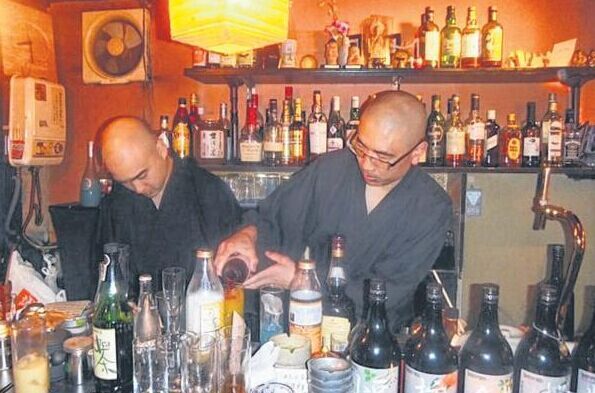
Japanese temple monks run cafes and bars for a living
The picture shows some Japanese monks running bars, asking male office workers to have a few drinks to relieve their worries. (Internet) the picture shows a monk serving tea to a western-style cafe converted from the Kamicho temple in Tokyo. (Internet) [global network reporter Cheng Junqiu] according to a report in Singapore's Lianhe Zaobao on May 25, Japanese temples have a special environment, except for people to burn incense and worship Buddha.

Sidamo Lion King Flavor description, Grinding scale, quality, Taste, Fine Coffee beans
In 1979, the Ethiopian Labor people's Party Organization Committee, dominated by soldiers, was established to implement an one-party system. 1984

Introduction to Mexican Coffee | Organic Coffee | Mexican Coffee characteristics | Arabica Coffee beans
Professional coffee knowledge exchange more coffee bean information please follow the coffee workshop (Wechat official account cafe_style) Mexico organic coffee introduction: Mexico is one of the largest producers of organic certified coffee, because of geographical factors, mostly sold to the United States. The country's coffee industry began in the 19th century and was introduced through Jamaica. It is mainly planted in Arabica varieties and producing areas.

There are several coffee farms in Ethiopia's coffee-producing countries
Grade of Ethiopian coffee: Ethiopian washed coffee Yega Chuefei G1 G2 Sidamo (Yirgacheffe, Sidamo) has the highest grades 2 and 3 (G2, G3), while sun-processed coffee in eastern Ethiopia is mostly grade 4 or 5 (G4, G5). In many cases, level 4 coffee is marked as level 5 in order to reduce taxes. At present, the classification is not uniform and there are

Detailed Analysis of four cultivation Systems of Coffee in Ethiopia
Forest coffee (Forest Coffee): wild coffee, which accounts for 10% of Ethiopia's national output, is distributed in the wild coffee forest areas of the west and southwest, also known as the Kafa forest. The dense trees here provide the most natural shade for coffee trees and do not need manual care. Mother Earth is in charge of birth, aging, sickness and death, and coffee farmers can go directly to the woodland to harvest. Hansen

Introduction to the quality characteristics of the method of describing the Flavor of Ethiopian Yega Xuefei washed G1 Coffee
Ethiopian coffee washing technology Yejaschefine itself is a small town with a population of about 20,000. Because the taste of coffee produced by Wenago, Kochere and Gelena Abaya is similar to that of Yejasuffe, it is similarly classified into the regional category of Yejasuffe. Yejasuffe is similar to Sidamo in both cultural and geographical environment.

Coffee production and processing Coffee planting methods how to make coffee beans
Boutique coffee (specialty coffee) is also called specialty coffee selection coffee. It refers to coffee made from a small number of raw beans with excellent taste grown in an ideal geographical environment. Depending on the special soil and climatic conditions in which they grow, they have outstanding flavor. After strict selection and classification, this kind of coffee is hard in texture, rich in taste and stylish.

What's the difference between Colombian spring manor coffee and other manor coffee? Colombia
Please pay attention to the coffee workshop (Wechat official account cafe_style) Colombia, currently the third largest coffee producer in the world, after Brazil and Vietnam, first planted commercial beans in the 1830s, until coffee accounted for the largest export crop in the 20th century. The mountainous terrain, coupled with a variety of tropical micro-climate, provides an ideal planting environment, with 75% of the total output sold abroad.

How does African coffee get to all parts of the world?
How coffee from Africa was shipped to all parts of the world at the beginning of the 20th century, Brazil accounted for more than 75% of the world's total coffee production, thus winning the reputation of the coffee kingdom. Coffee is one of the important pillars of Brazil's national economy. There are 500000 coffee plantations, large and small, covering an area of about 2.2 million hectares, with a working population of more than 6 million and an annual output of about 2 million tons of coffee.

Flavor description of coffee beans in Cochell Manor introduction to the characteristics of taste varieties
Cochell Manor Coffee Bean Flavor description Taste Variety introduction Cochel is located in a small producing area 25 kilometers southeast of Yegashafi, Ethiopia. It is a rich area for coffee production, and it is also one of the three famous and micro-producing areas. There are about 100,000 local residents, and coffee beans are the main source of income. The processing and processing equipment of this place is very advanced. Well-known coffee evaluation website

Colombian Huilan Coffee Taste how can Colombian Huilan drink well
Professional coffee knowledge exchange more coffee bean information please follow the coffee workshop (Wechat official account cafe_style) Colombia is rich in coffee production, has always lost only to Brazil, is the second largest coffee producer, however, between 2003 and 2007, it was overtaken by Vietnam and is now the world's third largest coffee producer, and more than 2 million people in Colombia depend on coffee production for a living
Introduction to the production area of Fine Ugandan Coffee roasted degree treatment method and Flavor description
Uganda's coffee production ranks first in Africa, accounting for more than 70% of its total exports. Uganda is also the hometown and main producing area of Robes specialty coffee. In the 1960s, Ugandan coffee production remained at 3.5 million bags a year. By the mid-1980s, coffee production had dropped to 2.5 million bags a year, mainly for political reasons. But now coffee production is on the rise again, which is large at present.

The leader of the cafe
Until the 1990s, Kunming urban transformation, Nanlaisheng moved to several places, then disappeared. Later, we learned that Nanlaisheng was the only restaurant recommended by the magazine in Kunming in the World Travel Magazine abroad.

[African Coffee producer] Mozambican rebels sign a peace agreement and lay down their weapons to grow coffee
Professional coffee knowledge exchange more coffee bean information Please follow the coffee workshop (Wechat official account cafe_style) when it comes to coffee in Africa, the country that many people think of is Kenya, but Mozambique, which is located in southeast Africa, also has the opportunity to become a major coffee producer in Africa. Recently, a well-known international coffee brand, stationed in Mount Gorongosa in Mozambique, except

Coffee drinks and coffee
Instant coffee, such as Nestl é (in fact, most of the first people who come into contact with coffee start from instant), it is easy to brew and mix with hot water, but it lacks the richness and change of taste; it has been reported that instant coffee contains more carcinogens, instant coffee is easy to use, and it is OK to drink it. Many of us love coffee from it. But it has a single flavor, including coin.