
"primary"
2445 article(s) found

The method of taking beans in the sun for the primary processing of coffee beans
Tanning is a traditional method for the initial processing of coffee beans, and at present, almost all coffee-growing countries such as Ethiopia and Yemen still use solarization to treat raw beans. Sun treatment will first identify sunken beans in the sink, that is, ripe or half-ripe beans are spread in the drying farm for natural drying. The specific time depends on the local climatic conditions, which usually takes two to four weeks.
The method of half-sun treatment for the primary processing of coffee beans
In order to improve the quality of coffee in Brazil, the Brazilian government invented half-sun method and vigorously promoted it. At present, almost all high-quality coffee beans in Brazil use half-sun method to treat raw beans. It can be said that half-sun method has successfully improved the overall quality of Brazilian coffee.

Brand strengthening of old market. Maintain the primary "coffee chain"
Weixin Official Accounts cafe_style OLDTOWN Event: Shareholders 'Meeting Date: September 7 (Thursday) Time: 10:30 a.m. Location: M Root Hotel Ipoh ● Business Focus: OLDTOWN,5201, Main Board Trade Service Group Development Strategy Focuses on Strengthening Brand and Business Growth, Maintaining Old Street

The three primary species of coffee are Arabica coffee, Robsta coffee, Liberian coffee.
Professional coffee knowledge exchange more information about coffee beans Please follow the coffee workshop (Wechat official account cafe_style) native species are plant types that develop naturally in the wild without human intervention. Coffee native species means coffee trees that are native to ancient countries such as Ethiopia without hybridization. There are three kinds of coffee that are edible.
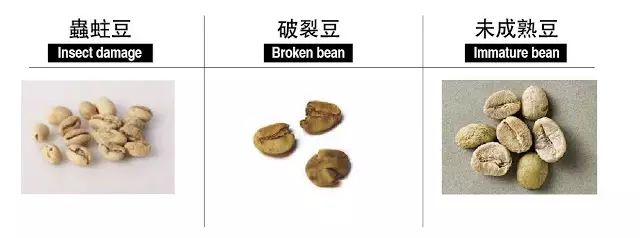
What are the defective beans in coffee? Effects of primary defective beans and secondary defective beans on coffee flavor
Picking beans is a term that has been mentioned constantly in the boutique coffee industry in recent years. What exactly is picking beans? The coffee beans bought by ordinary consumers are roasted ripe beans, and the quality of raw beans can no longer be known. It is difficult to swallow is not terrible, terrible is the coffee beans with defective beans, after brewing may carry biotoxins, serious harm to health, so manual selection has become important and unbearable
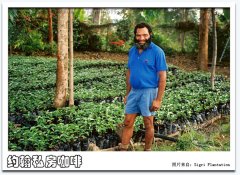
Primary processing of coffee washed coffee in Sigri farm
Having nothing to do, I was looking for some information about Sigri farm coffee in Papua New Guinea. I found these photos and information on the Gimmetries Coffee website. Sigri Plantation is located in the Papua New Guinea highlands. Growing conditions here are well-suited for coffee: about 5200 feet above

The cultivation of Colombian Coffee Manor in-depth understanding of Colombian Coffee
For the exchange of professional baristas, please follow the coffee workshop (Wechat official account cafe_style) about coffee growing in Colombia Columbus coffee cultivation is distributed along the Andes Mountains, from south to north, it is roughly divided into northern producing areas (green), central producing areas (orange, purple) and southern producing areas (yellow), in which the orange-purple region has two primary and secondary seasons, green and yellow.
The harvesting and production process of coffee in primary processing
The harvest time is different in different countries and regions. The harvest process requires a lot of manpower, especially high-quality selected coffee, which can only pick fully ripe red coffee cherries. Because all coffee cherries don't ripen at the same time, you need to go back to the same tree many times to pick. Coffee beans come from a mature seed called coffee cherry (cherries)

How to distinguish between primary defective beans and secondary defective beans? how to select the baked defective beans?
Professional coffee knowledge exchange more coffee bean information please pay attention to the coffee workshop (Wechat official account cafe_style) 1, major defects / first-level defects (Category 1) first-level defects (Category 1) in the CQI quality coffee raw bean evaluation criteria must not appear. It will seriously and continuously damage the raw bean quality of normal coffee, deteriorate the flavor of coffee, and produce coffee.
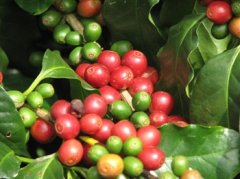
Technical requirements for primary processing of coffee in Yunnan (Arabica species)
Technical requirements for the initial processing of small seed (Arabica seed) Coffee 1. There are two processing methods for coffee beans made from fresh coffee fruits, namely wet processing and dry processing. The first and second grade fruits are processed by wet method, and the third grade fruits are processed by dry method in areas without peeling machine and lack of water. 2. Processing technology 2.1 equipment and facilities should be equipped with fresh fruit collection pool and siphon
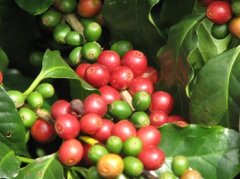
The primary processing technology of coffee in Yunnan requires Arabica species
Technical requirements for the initial processing of small seed (Arabica seed) Coffee 1. There are two processing methods for coffee beans made from fresh coffee fruits, namely wet processing and dry processing. The first and second grade fruits are processed by wet method, and the third grade fruits are processed by dry method in areas without peeling machine and lack of water. 2. Processing technology 2.1 equipment and facilities should be equipped with fresh fruit collection pool and siphon

Yunnan coffee development history Arabica coffee beans cultivation environment Production area Manor introduction
Yunnan coffee development history Arabica coffee beans cultivation environment production area manor introduction Yunnan coffee trade base In recent years, Yunnan Arabica coffee export trade volume continued to grow, January to September 2010, the province's coffee exports 28,800 tons, exports earned 85,840,000 US dollars 121. Coffee raw beans and deep-processed products are exported to Western Europe, the United States, Japan, South Korea and other more than 20 countries and regions. currently
Coffee insolation method for primary processing
The coffee beans after harvest must enter the treatment program immediately, otherwise they will begin to ferment, making the coffee beans have a bad smell. There are two methods of treatment: solarization and water washing, which will cause different flavors. Sun-dried beans have a complete natural mellow flavor, gentle aroma and more gum; washing rules have a good mellow taste, high aroma and lively sour taste. The mellow taste is

Barista's professional appraisal Barista's declaration conditions Barista's appraisal method Time examination and
Barista occupation appraisal declaration conditions primary (with one of the following conditions)(1) through the occupation primary formal training to the required standard hours, and obtain a certificate of completion. (2) More than 2 years of continuous probation work in this profession. (3) Completion of apprenticeship in the occupation. Intermediate (one of the following conditions)(1) after obtaining the primary vocational qualification certificate of the occupation, continuously from

What is the difference between Yunnan coffee and Brazilian coffee? Analysis on the initial processing stage of Coffee in Yunnan
Professional coffee knowledge exchange more coffee bean information please follow the coffee workshop (Wechat official account cafe_style) this article from the coffee primary processing process of fresh fruit picking, fresh fruit grading, peeling, degumming, drying, cleaning points
China barista professional qualification certification enrollment [Guangdong Railway Station]
China barista professional qualification certification enrollment [Guangdong Station] Chinese barista professional qualification certification, organized by the Chinese Ministry of Labor and Social Security, the expert group of the coffee industry and the industry standard manual of baristas jointly developed, and the indicators will be implemented in the Department of Labor and Social Security of Guangdong Province. Guangdong Province, as the first batch of provinces to obtain the indicators, the provincial Labor Department organized an expert group to develop according to the national standards.

Comments on the Primary Reading of "Fine Coffee"
From: Xiao Si (nothing, just stay) 2012-03-16 12:38:45 as a qualified and poor English coffee suspension, to have a less expensive "Coffee" is really a very important thing. Dressed in the guise of a reference book, this book is actually a collection of gossip, origin, flavor and chemistry related to coffee. He describes to us in detail how coffee is.

What are the three primary coffee species?
Liberian: West Africa is the origin of Liberian coffee. It has strong adaptability to various environments such as high temperature or low temperature, humidity or dryness, etc., except for leaf rust resistance, and its flavor is worse than Arabica, so it is only traded domestically in some West African countries (Libya, Cote d'Ivoire, etc.) or planted for research. circulating in world markets

Colombia Na Linglong Consa Kaplan Estate
About coffee planting area and harvest season in Colombia Columbian coffee planting is distributed along the Andes Mountains, from south to north, roughly divided into northern production area (green), central production area (orange, purple) and southern production area (yellow), of which orange purple area has two primary and secondary production seasons, green and yellow areas have one production season. Harvest season [varies by region

Introduction of Yunnan small Coffee Bean characteristic Flavor description method
Yunnan small grain coffee bean characteristic flavor description treatment method taste characteristics fine coffee bean introduction Yunnan coffee is planned in accordance with the requirements of the large industry. A complete system is formed from scientific research, planting, primary processing, storage, baking and deep processing. The formulation of the standard was perfected more than 10 years ago. According to this standard, the raw bean trade has been in line with international standards, and