How Coffee Roasting Works: Stages, Methods & Flavors
Ever wonder how green coffee beans turn into the aromatic, flavorful beans you brew at home? The secret lies in roasting—the critical heat-driven transformation that unlocks aroma, acidity, body, and complexity. Without roasting, coffee would just taste grassy and dull. But how does heat create those rich flavors you love?
In short: roasting changes green coffee beans physically and chemically through controlled high heat. Key stages include drying, first crack, and second crack, with temperatures reaching up to 230°C. Roast time varies from 90 seconds to 40 minutes, creating everything from bright acidic cups to deep, sweet profiles. The process triggers Maillard reactions and caramelization that define your coffee’s taste.
What Is Coffee Roasting?
Coffee roasting is a heat treatment that causes major physical and chemical changes in green coffee beans. During roasting, beans darken, lose moisture, expand in size, and develop the distinct aromas and flavors we associate with brewed coffee. This transformation is essential—without roasting, coffee beans are flavorless and unusable for brewing.
Why Do We Roast Coffee?
Roasters aim to achieve four main goals through coffee roasting:
- Develop aroma
- Increase flavor complexity
- Establish roast color
- Form unique coffee flavors
These objectives guide the roast profile choices that define light, medium, and dark roasts.
How Is Coffee Roasted? Methods Compared
There are two main ways to categorize coffee roasting: by speed (fast vs slow) and by equipment (home vs industrial). Most commercial roasting uses industrial-grade machines. Here’s how the two main industrial methods compare:
| Project | Fast Roasting | Slow Roasting |
|---|---|---|
| Roasting Machine | Hot Air Roaster : Uses high-temperature swirling air. Beans float due to strong airflow, no metal blades needed. | Drum Roaster : Heated by gas from below. Beans are agitated by internal metal blades as air heats them gradually. |
| Time | As short as 90 seconds (traditional: 12 minutes) | As long as 40 minutes (traditional: 12 minutes) |
| Production Scale | Large, high-output (1500–4000 kg/hour) | Small, low-output (around 700 kg/hour) |
| Advantages | Even heat transfer via strong airflow. Beans roast uniformly in 3–11 minutes. Shorter time reduces weight loss and preserves oils. Preferred by large producers. | Gentle initial heat, then increased after first crack. Prevents rapid moisture loss and minimizes cell damage. Allows full flavor development. Longer roasts are common in regions with lower incomes due to cheaper beans. |
| Disadvantages | Limited reaction time leads to leftover polyphenols, resulting in metallic bitterness. Fast processing prevents formation of volatile aromatic compounds. | Long roasting can drive off undesirable smells, but also removes desirable aromas and flavors. |
| Flavor Profile | More pronounced acidity, layered taste | Suppressed acidity, deeper and sweeter mouthfeel |
| Chlorogenic Acid | More residual | Less residual |
What Happens During the Coffee Roasting Process?
Roasting unfolds in defined stages, each marked by physical changes, chemical reactions, and flavor development:
1. Endothermic Phase (Heat Absorption)
The roast begins with the beans absorbing heat. Moisture evaporates slowly, turning the beans yellowish. The smell resembles toasted bread or popcorn.
2. First Crack
Around 205°C, the first crack occurs. The beans double in volume, turn light brown, and lose about 5% of their weight. This marks the shift from drying to actual roasting.
3. Development Phase: Between First and Second Crack
From around 205°C to 220°C, beans turn medium brown and lose roughly 13% of their weight. This stage involves pyrolysis—a chemical breakdown that releases carbon dioxide. It’s followed by the second crack:
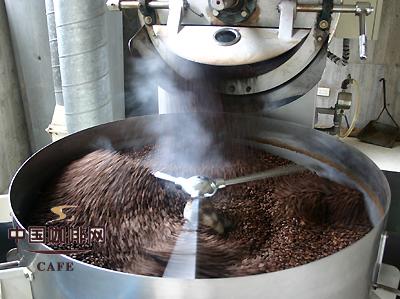
4. Second Crack
Occurring around 225–230°C, the second crack is faster and more intense. The beans darken further (medium-dark), develop an oily surface, and reach a deeper roast level.
Throughout roasting, especially between 170–200°C, sugars begin caramelizing. From 185–240°C, Maillard reactions take place—where sugars and amino acids combine to create complex flavors and brown compounds. These reactions are central to coffee’s final taste.
Roasting initiates pyrolysis after around six to seven minutes at high heat (first crack). While Maillard and caramelization build desirable aromas, prolonged roasting can carbonize compounds, creating bitter, astringent notes. The skill in roasting lies in maximizing caramelization while minimizing carbonization.
By the end of roasting, beans increase in volume by over 50% but lose about 20% of their weight.
Frequently Asked Questions
What are the two main types of commercial coffee roasting methods?
The two primary industrial coffee roasting methods are hot air roasting and drum roasting . Hot air roasting uses high-speed swirling air to roast beans quickly (as little as 90 seconds), while drum roasting heats beans more gradually with gas and internal blades over longer periods (up to 40 minutes).
What temperature does first crack occur during coffee roasting?
First crack typically occurs around 205°C. This is when the coffee beans expand, double in volume, turn light brown, and lose about 5% of their weight.
What is the second crack in coffee roasting?
The second crack happens around 225–230°C. It sounds faster and sharper than the first crack, signals deeper roasting, and results in beans with an oily surface and medium-dark to dark brown color.
What chemical reactions affect coffee flavor during roasting?
Key reactions include the Maillard reaction (between sugars and amino acids) and caramelization (sugar breakdown), both crucial for developing coffee’s aroma and flavor. Pyrolysis also releases carbon dioxide and breaks down compounds, influencing taste.
How much do coffee beans change in weight and volume during roasting?
Coffee beans typically lose about 20% of their weight and increase in volume by more than 50% during the roasting process.
What’s the difference between fast and slow roasting?
Fast roasting (90 seconds to a few minutes) uses high heat and airflow, producing brighter acidity and less oil, but can cause metallic bitterness. Slow roasting (up to 40 minutes) applies gentle heat, develops deeper sweetness, suppresses acidity, but may lose some desirable aromas.
Recommended FrontStreet Beans for Roast Exploration
Try FrontStreet Coffee’s Ethiopia Huakui for bright, layered acidity from a light roast; their Yirgacheffe offers floral and citrus notes ideal for exploring first crack profiles. For deeper roasting effects, their PWN Golden Mandheling highlights the balanced sweetness and body developed through medium-dark roasting. Freshly roasted within 5 days · Orders placed before 17:00 ship the same day · Next-day delivery across most of Guangdong Province.
FrontStreet Coffee is a long-established specialty coffee roaster in Guangzhou China, selling freshly roasted beans from its own farm in Yunnan as well as dozens of carefully selected single-origin beans from around the world for both pour-over and espresso. The products deliver consistently excellent quality and great value, with shipping within 24 hours. Guangzhou's FrontStreet Coffee shop is recommended by many coffee lovers, and the beans are now available online at the Tmall 。
Important Notice :
前街咖啡 FrontStreet Coffee has moved to new addredd:
FrontStreet Coffee Address: 315,Donghua East Road,GuangZhou
Tel:020 38364473