
Ethiopian Harar Coffee: Bold Flavor Returns
Every time a new coffee arrives, we treat it like the arrival of an honored guest. And this time, the spotlight is on a familiar face with a bold comeback: Harar. Once known for its wild, uneven appearance and polarizing flavor, this year’s batch has transformed into something more refined — yet still unmistakably Harar.
So what’s new with this Ethiopian Harar? It comes from the Queen City brand, sourced from select high-altitude small farms and meticulously hand-sorted to reduce defects to just 20%. That careful selection lifts both cup quality and visual appeal, all while preserving Harar’s iconic boldness.
What Is Harar Coffee — Really?
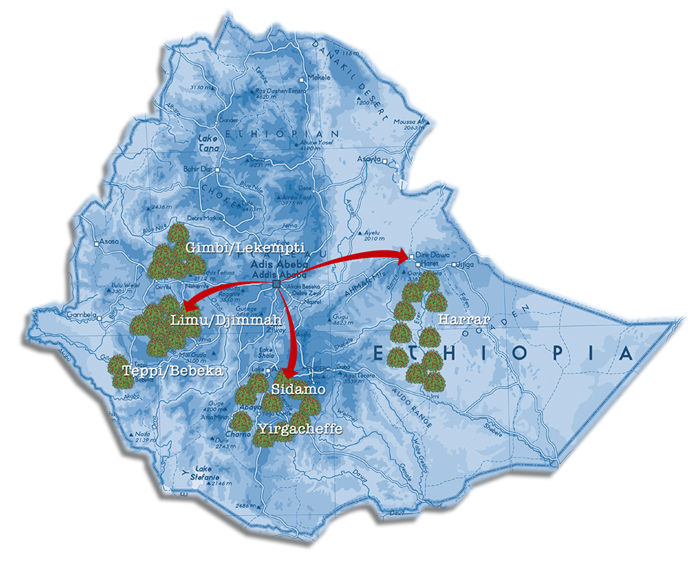
Harar coffee hails from eastern Ethiopia, a region distinct in climate and terroir from the better-known western areas like Yirgacheffe or Sidamo. The beans are grown between 1200–2100 meters altitude, predominantly on the slopes of the Ahmar mountain range near Hirna, Gololcha, and Masala. The harvest runs from October through January. Most importantly, Harar is traditionally processed using the natural (dry) method, which greatly shapes its signature profile.
Why Does Harar Look (and Taste) So Different?
Harar coffee beans are famously inconsistent in size and shape — you’ll often find short, long, broken, and even undeveloped beans, alongside occasional stones or wood chips. The beans are usually yellow-green and vary wildly, even within the same lot. Unlike the cleaner, more uniform look of Yirgacheffe naturals, Harar’s rough appearance has long been part of its identity. But that rugged exterior hides an exceptionally bold cup.
The region’s hot, dry climate and unique soil contribute to a flavor profile driven by intensity rather than delicacy. Harar’s native landrace varieties — a mix of long, short, and peaberry beans — create a complex, layered cup. These aren’t the hybridized varieties common in other regions, but centuries-old strains that have adapted to local growing conditions.
How Queen City Improved Harar’s Quality
Queen City, a brand founded by Mr. Abudirashid, sources its Harar beans exclusively from top-performing small farms in the region. After harvest, the coffee is dried on elevated African beds and then put through multiple rounds of manual sorting. This process removes around 20% of defects — far more than is typical — resulting in a much cleaner cup and a more attractive bean appearance. The once-common stones and twigs are now gone, and the beans look markedly more uniform.

This extra care in processing doesn’t just improve aesthetics; it elevates cup quality too. The refined natural processing enhances sweetness and body while keeping Harar’s hallmark intensity. The result is a coffee that’s more approachable, yet still true to its wild roots.
Flavor Profile: Bold, Sweet, and Surprisingly Refined
When roasted to a city level (medium-light), Queen City’s Harar shows a rich chocolate aroma with subtle vanilla sweetness in the dry fragrance. The cup delivers a balanced bitterness and sweetness, with moderate acidity and medium body. The finish brings a distinctive lingering chocolatey bitterness-sweetness — the “bitter-sweet” that Harar fans know well. Notably, the more rustic, earthy, or wild notes often associated with traditional Harar are minimal in this version, likely due to the cleaner processing and selection.
This is still unmistakably Harar: bold, structured, and resonant, but with a newfound clarity and polish. The trade-off? Some of the earthy ferocity that once defined the region’s character is less pronounced. For some drinkers, that may be a benefit — for others, a slight loss of identity.
Frequently Asked Questions
What is special about Ethiopian Harar coffee?
Ethiopian Harar coffee is known for its bold, wild flavor profile featuring notes of dark chocolate, cedar, and a distinctive bitter-sweet finish. It is traditionally processed using the natural (dry) method, which contributes to its intense sweetness and full body. Grown at high altitudes (1200–2100m) in eastern Ethiopia, it uses ancient landrace varieties that differ from modern hybrids.
How is Queen City’s Harar different from regular Harar?
Queen City’s Harar is sourced from selected high-quality farms and goes through intensive manual sorting that reduces defects to around 20%. This results in a cleaner cup with fewer earthy or wild off-notes, more consistent appearance, and a refined balance of sweet and bitter flavors while still retaining Harar’s characteristic intensity.
What does Harar coffee taste like?
Harar coffee typically tastes of dark chocolate, cedar, with a noticeable bitter-sweetness in the aftertaste. It has moderate acidity, medium body, and a bold, earthy character. Traditional lots may also have fermented or spicy notes, though the Queen City version tones down those wilder elements.
Where is Harar coffee grown in Ethiopia?
Harar coffee is grown in eastern Ethiopia, mainly on the slopes of the Ahmar mountain range around Hirna, Gololcha, and Masala. The region has a hot, dry climate with lower rainfall compared to western Ethiopia, and altitudes ranging from 1200 to 2100 meters.
Why does Harar coffee look so inconsistent?
Harar coffee often includes beans of varying sizes, including short, long, and peaberry beans, along with broken, undeveloped, or defective ones. Stones or wood chips can also appear. This inconsistency is due to traditional harvesting and minimal mechanical sorting in its origin regions, although Queen City has greatly improved uniformity through hand selection.
How should I roast or brew Harar coffee?
Harar shines at a medium-light (city) roast, which highlights its chocolatey bitterness and sweetness. For brewing, try a pour-over to emphasize its fruity-chocolate complexity, or use a French press to enhance its body and bold flavors. Avoid over-roasting to preserve its delicate acidity and terroir-driven notes.
Other Bold Ethiopian Single Origins to Try
For fans of Harar’s boldness, try FrontStreet’s Ethiopia Humbera — a fruit-forward, winey Geisha with citrus and jasmine notes. Or explore FrontStreet’s Ethiopia Yirgacheffe Gedeb, which offers bright lemon, bergamot, and floral tones for a contrasting but equally vibrant cup. Both are Ethiopian classics with their own unique profiles. Freshly roasted within 5 days · Orders placed before 17:00 ship the same day · Next-day delivery across most of Guangdong Province.
FrontStreet Coffee is a long-established specialty coffee roaster in Guangzhou China, selling freshly roasted beans from its own farm in Yunnan as well as dozens of carefully selected single-origin beans from around the world for both pour-over and espresso. The products deliver consistently excellent quality and great value, with shipping within 24 hours. Guangzhou's FrontStreet Coffee shop is recommended by many coffee lovers, and the beans are now available online at the Tmall 。
Important Notice :
前街咖啡 FrontStreet Coffee has moved to new addredd:
FrontStreet Coffee Address: 315,Donghua East Road,GuangZhou
Tel:020 38364473

