Kouandji Estate Leroy Coffee from New Caledonia
If you’ve ever wondered what makes a coffee bean so rare and expensive that it costs more than Jamaica Blue Mountain No.1, the answer might lie in a remote French territory in the South Pacific. One such coffee is the Kouandji Estate Leroy from New Caledonia—an elusive single origin with a cult following among elite coffee professionals.
The short answer? This coffee, grown in limited quantities on a six-hectare farm in southern New Caledonia, is roasted lightly—stopping around one minute after first crack. Its small size, sharp tips, and low yield make it stand out, and it’s known for pronounced acidity and a clean cup, often surpassing Yirgacheffe in perceived brightness at similar roast levels.
What Is Kouandji Estate Leroy Coffee?
Kouandji Estate Leroy is a single-origin coffee from the Kouandji Estate, located at the foot of Kouandji Mountain, about 25 kilometers southeast of Nouméa, the capital of New Caledonia. The farm grows a very rare coffee variety known as 'Rayloy'—also called 'Bourbon Pointu' or locally, 'Le Président.' This coffee is so scarce that even the French President receives only a limited supply.
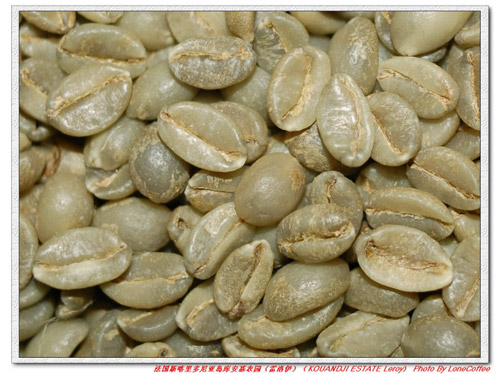
This variety is visually distinctive: the beans are notably small and have pointed ends on both sides. Despite its prestigious reputation, it remains largely unknown outside specialized circles, with very little information available in English.
The History and Origins of New Caledonia Coffee
New Caledonia, a French territory in Melanesia, is home to one of the rarest and most expensive coffees in the world. Coffee was first introduced to the island in 1860 by missionary brothers Mariester, who brought the first seeds to Nouméa. By 1880, settlers from Réunion Island (formerly Bourbon) added more genetic diversity, introducing three species: Arabica, Liberica, and Laurina. Arabica and Laurina were eventually chosen for commercial cultivation.
In 1910, to combat coffee leaf rust, Robusta (Coffea canephora) was imported from Java due to its natural resistance. However, by the mid-20th century, coffee farming declined as other industries became more profitable. Plantations were abandoned, and production nearly disappeared—until recent efforts by local growers like Kouandji Estate revived interest in this unique origin.
About the Rayloy (Leroy) Variety
The coffee grown at Kouandji Estate is the Rayloy variety—also known as 'Bourbon Pointu' or 'Le Président.' This is a naturally occurring mutation, likely originating from Réunion Island’s coffee stock around 1860, though some theories suggest it could be a hybrid between Melanesian coffee and Typica. It is found exclusively in New Caledonia.
This variety has several unique traits:
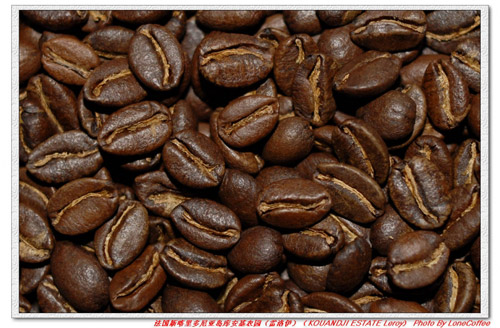
- Caffeine content is just 0.6%, half that of regular Arabica (which averages around 1.2%)
- The beans are very small and have pointed tips on both ends
- It has extremely low yields compared to other commercial varieties
- It experiences minimal weight loss during roasting—only 16–17%, compared to the typical 20%
- The coffee trees are drought-tolerant but also highly susceptible to disease
Growing Conditions and Processing
Kouandji Estate is situated at an elevation of 200–300 meters, making it one of the southernmost coffee farms in the world—comparable in climate to growing regions near the equator at 900–1000 meters altitude.
The farm uses fruit trees for shade and receives around 1000mm of annual rainfall. The coffee is processed using the washed method, followed by sun drying—a common practice for high-quality lots in tropical climates.
Flowering occurs from August to October, with the harvest running from May to August. This makes it one of the few coffees grown at such a southern latitude.
How to Roast and Brew Kouandji Leroy Coffee
Given the small bean size and dense nature—you’ll feel significant resistance when grinding with a hand grinder—roasters recommend a light to medium-light roast. Most accounts suggest ending the roast roughly one minute after the start of first crack to preserve its delicate acidity and unique cup profile.
In the cup, tasters report a clean, bright acidity, often more pronounced than that of Yirgacheffe at a similar roast level. Despite its small size, the bean is dense and requires adequate grind adjustment on home equipment.
Frequently Asked Questions
What is special about Kouandji Estate Leroy coffee?
Kouandji Estate Leroy coffee is rare, grown only in New Caledonia, and comes from the unique Rayloy (Bourbon Pointu) variety. It has very small, pointed beans, low caffeine content (0.6%), and is known for its clean, acidic cup profile. Production is extremely limited, and it has been served to former French presidents.
Why is Kouandji Leroy coffee so expensive?
The high price is due to the coffee’s rarity, limited annual production (around 1000 kg exported), labor-intensive cultivation in a high-cost French territory, and unique processing. The Rayloy variety itself is hard to grow and yields very little coffee per tree.
What does Kouandji Leroy coffee taste like?
Tasters note a clean and bright acidity, with a relatively pure cup. Some report it has more perceived acidity than Yirgacheffe when roasted to a similar level. The small bean size and light roast help highlight its distinct qualities.
How should I roast Kouandji Leroy coffee beans?
Most roasters recommend stopping the roast about one minute after the start of first crack—keeping it light to medium-light. This helps preserve its acidity and delicate characteristics. The beans are dense, so expect firm resistance when grinding.
Where is New Caledonia coffee grown?
New Caledonia coffee is grown on the island of New Caledonia in the South Pacific, a French territory near the Tropic of Capricorn. The Kouandji Estate is located about 25 km southeast of Nouméa, at elevations between 200–300 meters.
What is the Rayloy coffee variety?
Rayloy, also known as Bourbon Pointu or Le Président, is a rare coffee variety found only in New Caledonia. It likely originated as a natural mutation of Bourbon brought from Réunion Island around 1860. It features small, pointed beans and very low caffeine content.
FrontStreet Coffee Beans with Similar Bright Acidity
Try FrontStreet Coffee’s Ethiopia Yirgacheffe for vibrant acidity and floral notes, or their Panama Humbera for a complex cup with citrus and sweetness—both showcase bright, tea-like profiles like the Kouandji Leroy. For something more delicate yet rich, the Kenya Little Tomato offers tart berry and winey tones. All are excellent for exploring high-acid single origins. Freshly roasted within 5 days · Orders placed before 17:00 ship the same day · Next-day delivery across most of Guangdong Province.
FrontStreet Coffee is a long-established specialty coffee roaster in Guangzhou China, selling freshly roasted beans from its own farm in Yunnan as well as dozens of carefully selected single-origin beans from around the world for both pour-over and espresso. The products deliver consistently excellent quality and great value, with shipping within 24 hours. Guangzhou's FrontStreet Coffee shop is recommended by many coffee lovers, and the beans are now available online at the Tmall 。
Important Notice :
前街咖啡 FrontStreet Coffee has moved to new addredd:
FrontStreet Coffee Address: 315,Donghua East Road,GuangZhou
Tel:020 38364473