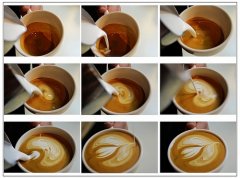
How Espresso Art Is Created Through Milk and Crema
Ever wonder how baristas pour those perfect heart or leaf shapes into your latte? It’s not just about pouring milk into coffee — it’s about how two distinct foams interact. Understanding the science behind these foams helps explain why latte art holds its shape long enough for you to admire it.
The short answer? Espresso art is made possible by pouring steamed milk into espresso, where the coffee’s crema (a foam of gas and oils) and the milk’s microfoam (tiny air bubbles suspended in milk) mix slowly due to their large particle size. This allows pour patterns to remain visible for minutes.
What Is Espresso and Why Does It Have Crema?
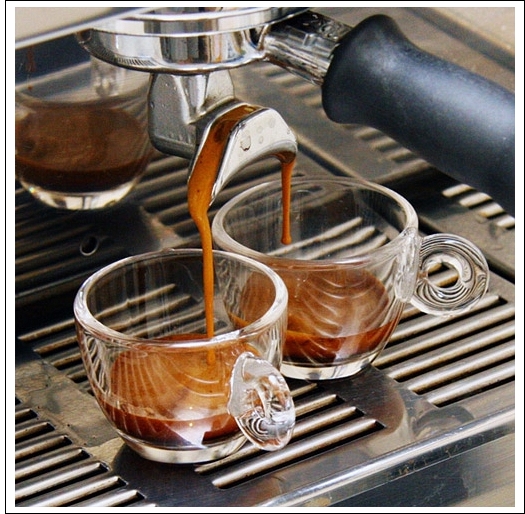
Espresso, or in Chinese, is the strong coffee base used to create latte art. It’s made by forcing nearly boiling water through finely ground, compacted coffee under high pressure. This process extracts not just flavor, but also a layer of reddish-brown foam called crema that floats on top.
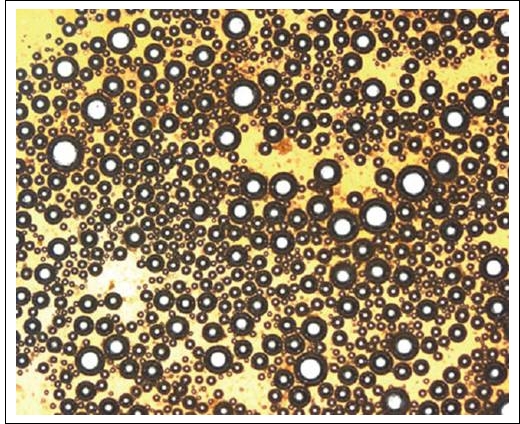
Crema typically makes up more than 10% of the espresso shot’s volume and consists of roughly 50% gas. Under a microscope, crema appears as a mix of bubbles, tiny fat particles (usually less than 10 microns), and solid fragments like bits of coffee cell walls.
What Is Milk Foam and How Is It Made?
To create latte art, milk is steamed and frothed into what’s called microfoam — a stable mixture of air bubbles and milk. This isn’t the same as large, unstable bubbles you might get from just frothing milk carelessly. Instead, skilled steaming creates a fine, velvety texture ideal for pouring smooth designs.
The formation of microfoam is a well-studied process in coffee science, with research exploring how to maximize both bubble stability and volume. Stable microfoam contributes to the longevity of latte art designs.
Why Do the Two Foams Create Visible Patterns?
When steamed milk meets espresso, you’re combining two types of foam: the microfoam from milk (air + milk) and the crema from espresso (gas + oils + coffee solids). Both are composed of relatively large particles — mostly in the micrometer range — and when mixed, they don’t diffuse quickly into each other.
Without stirring, the boundary between these two foams remains clear for a long time. Crema can maintain its structure for around 10 minutes, while milk foam stays intact for several minutes. This slow mixing allows baristas to pour designs that hold their shape just long enough to be appreciated by customers.
Why Can’t You Just Use Regular Milk and Coffee?
You might ask: why can’t you just pour regular milk into black coffee and get a similar effect? Without the presence of both crema and microfoam, liquid coffee and milk do mix — but their interface is unstable. While there are still microscopic particles in both liquids, they aren’t concentrated enough or stable enough to preserve distinct patterns. The liquid mixture diffuses quickly, blurring any attempt at visual design.
In short, latte art is essentially the controlled blending of two stable foams — not just liquids — which retain their separate identities long enough for creative pouring.
Frequently Asked Questions
What is crema and why is it important for espresso art?
Crema is the reddish-brown foam on top of espresso, made up of coffee oils, carbon dioxide, and tiny particles. It comprises over 10% of the shot and about half of it is gas. This foam is essential because its thick, stable structure interacts with milk foam to create long-lasting patterns in latte art.
What is microfoam and how is it different from regular milk foam?
Microfoam is a fine, velvety foam created by steaming milk with air, resulting in tiny, uniform bubbles suspended in milk. Unlike large, unstable bubbles from poor steaming, microfoam is dense and stable, which makes it ideal for pouring clean, defined latte art designs.
How long do the foams in espresso and milk stay stable?
Espresso crema can maintain its structure for around 10 minutes, while milk microfoam typically stays stable for several minutes. This stability allows the two foams to mix slowly, preserving the edges of poured designs so they remain visible long enough to be admired.
Does the color difference between milk and espresso help create the art?
Yes, the contrast between the white or light beige microfoam and the dark espresso enhances the visibility of the patterns. However, the key reason the patterns hold is the slow intermixing of the two stable foams, not just the color difference.
Why doesn’t normal milk poured into coffee create lasting patterns?
Regular milk and black coffee don’t form stable foams, so when combined, their interface is unstable and diffuses quickly. Without the thick crema and fine microfoam, any patterns disappear almost instantly as the liquids blend due to flow and diffusion.
Recommended FrontStreet Beans for Espresso Art
For creating espresso with rich crema suitable for latte art, try FrontStreet Coffee’s Commercial Blend, which balances Colombian and Brazilian beans for a creamy body and bold crema. Their Specialty Blend highlights Brazilian and Colombian beans for notes of chocolate and hazelnut — ideal for smooth microfoam pairings. Alternatively, the Classic Blend offers a well-rounded foundation with sweet caramel and nut tones. All three roasts are medium to medium-dark, optimizing crema development. Freshly roasted within 5 days · Orders placed before 17:00 ship the same day · Next-day delivery across most of Guangdong Province.
FrontStreet Coffee is a long-established specialty coffee roaster in Guangzhou China, selling freshly roasted beans from its own farm in Yunnan as well as dozens of carefully selected single-origin beans from around the world for both pour-over and espresso. The products deliver consistently excellent quality and great value, with shipping within 24 hours. Guangzhou's FrontStreet Coffee shop is recommended by many coffee lovers, and the beans are now available online at the Tmall 。
Important Notice :
前街咖啡 FrontStreet Coffee has moved to new addredd:
FrontStreet Coffee Address: 315,Donghua East Road,GuangZhou
Tel:020 38364473