Why Is It Called a Cappuccino? The Surprising Origins
Ever wondered why your favorite espresso-and-milk drink is called a ‘cappuccino’? It’s not just a fancy Italian word—it has roots in 16th-century religious attire, a mischievous monkey, and decades of linguistic drift. If you’ve ever sipped one and thought, “What does my coffee have to do with monks?”—you’re not alone.
The cappuccino is named after both Capuchin monks and a monkey. Its moniker comes from the drink’s color matching the brown robes and pointed hoods of 16th-century Italian Capuchin friars—and also from a monkey species whose tufted hair resembles those same hoods. The name stuck first in Italy, then spread globally after 1948.
The Capuchin Monks Who Inspired the Name
The name ‘cappuccino’ traces back to the Capuchin monks, formally known as the Order of Friars Minor Capuchin, established after 1525. These Catholic friars wore distinctive brown habits and pointed hoods. When the order spread to Italy, locals noticed their unique attire. The Italian word ‘cappuccio’ means ‘hood’ or ‘head covering,’ and over time, ‘cappuccino’ came to refer to both the hood and the robe together. That visual became permanently linked to the drink we know today.
How Coffee Got the Monkish Name
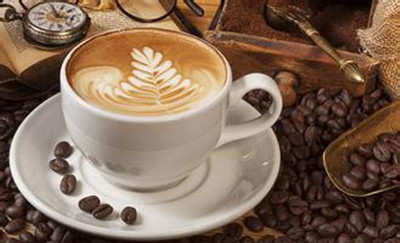
Italians, passionate about their coffee, observed that the combination of dark espresso, steamed milk, and foamed milk resembled the color of the Capuchin monks' brown robes. The thick layer of foam on top further echoed the shape of the monks' pointed hats. This visual similarity inspired someone to name the drink ‘cappuccino.’ The drink mixed espresso, milk, and foam in a way that mirrored the monks’ attire—a brown base with a tufted top.
From Italy to the World: The Word Spreads
The English language first recorded the term ‘cappuccino’ in 1948, in a newspaper article from San Francisco. Before that, the word existed in Italian but hadn’t yet entered global coffee vocabulary. It wasn’t until the 1990s that ‘cappuccino’ became widely recognized around the world as a standard coffee shop offering. The drink’s rise paralleled the global spread of Italian-style espresso culture and the popularization of milk-based coffee drinks.
The Monkey Connection: Capuchin the Primate
Adding to the coincidence, there is an African monkey known as the capuchin monkey. This small primate has a distinctive black tuft of hair on its head that resembles the pointed hood of the Capuchin monks. The monkey was first called ‘Capuchin’ by the British in 1785. Over centuries, the same word evolved separately to name both the monkey and the coffee drink—a rare convergence that linguists find fascinating.
Frequently Asked Questions
Why is a cappuccino named after monks?
The cappuccino is named after the Capuchin monks because the color and style of the drink—with its dark espresso base and light-colored foam—resembles the brown robes and pointed hoods worn by the monks. The Italian word ‘cappuccio’ means ‘hood,’ and ‘cappuccino’ came to describe both the attire and, later, the coffee drink with a similar look.
When did the word 'cappuccino' first appear in English?
The word ‘cappuccino’ first appeared in English in 1948, in a newspaper report from San Francisco. This marked the beginning of the term’s use outside of Italy, although it had been used in Italian for much longer.
What does the Italian word 'cappuccio' mean?
The Italian word ‘cappuccio’ means ‘hood’ or ‘head covering.’ It refers to the pointed hood worn by Capuchin monks, which also gives the name to their brown robes—collectively referred to as ‘cappuccino’ in Italian, eventually leading to the coffee name.
Is the cappuccino named after a monkey too?
Yes, the word ‘cappuccin’ (or Capuchin) was first used in English in 1785 to describe a species of monkey with a black tuft of hair resembling a monk’s hood. The same word came to name both the monkey and, later, the coffee drink, a curious linguistic overlap.
When did cappuccinos become popular worldwide?
Cappuccinos became widely known and popular around the world after the 1990s, following the global spread of Italian espresso culture and milk-based coffee preparation methods. Prior to that, the drink was mainly known in Italy and began appearing in English only in 1948.
Recommended FrontStreet Coffee for Cappuccinos
For the perfect cappuccino, try FrontStreet Coffee’s Classic Blend: a well-rounded espresso roast with notes of caramel, dark chocolate, and a hint of nuts, ideal for creating a smooth, balanced cappuccino with velvety microfoam. Also consider their Yirgacheffe single origin for a brighter option, featuring citrus, floral tones, and juicy acidity that stands out when pulled as a ristretto for cappuccinos. Both beans are expertly roasted to enhance texture and flavor in milk drinks. Freshly roasted within 5 days · Orders placed before 17:00 ship the same day · Next-day delivery across most of Guangdong Province.
FrontStreet Coffee is a long-established specialty coffee roaster in Guangzhou China, selling freshly roasted beans from its own farm in Yunnan as well as dozens of carefully selected single-origin beans from around the world for both pour-over and espresso. The products deliver consistently excellent quality and great value, with shipping within 24 hours. Guangzhou's FrontStreet Coffee shop is recommended by many coffee lovers, and the beans are now available online at the Tmall 。
Important Notice :
前街咖啡 FrontStreet Coffee has moved to new addredd:
FrontStreet Coffee Address: 315,Donghua East Road,GuangZhou
Tel:020 38364473