How to Make Pour-Over Coffee at Home Without a Machine
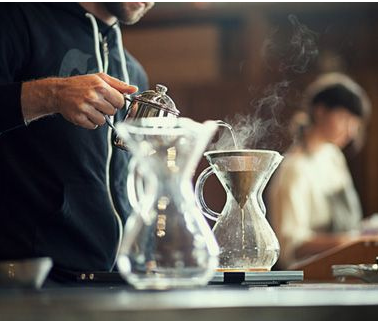
If you don’t own an espresso machine or fancy setup but still crave a clean, flavorful cup of black coffee, you can get excellent results with a simple pour-over method—no expensive gear required. But if you’re new to hand pouring, just holding the kettle and controlling the flow might feel awkward or uncontrollable.
The fastest way to improve your pour-over is to focus on a stable stance, proper kettle grip, and a slow, steady stream of water. With practice, even beginners can produce a clean, balanced cup using just a filter cone, paper, hot water, and freshly ground coffee.
Why Your Pour-Over Technique Feels Hard at First
Many beginners find that what looks like a simple task—just pouring water over coffee grounds—becomes surprisingly difficult. The kettle suddenly feels heavy, the stream hard to control, and hands may shake after just a few seconds. This isn’t just lack of skill: it’s often due to poor posture, bad ergonomics, or an unstable grip. Once you adjust how you stand, hold the kettle, and move your body, the whole process becomes far more manageable.
How to Set Up for Successful Hand Drip Coffee
Start with a clean, uncluttered workspace. You’ll need: a pour-over kettle (like the Japanese TAKAHIRO brand used by the author), a V60 filter cone, paper filter, server, coffee grounds catcher, towel, and freshly heated water. Fill the kettle to roughly 90% capacity before beginning. These basics set the stage for consistent pours and cleaner extractions.

The Best Beginner Pour-Over Stance and Grip
There’s no one-size-fits-all posture for pour-over, but two basic stances help most beginners. Option one: stand upright with feet shoulder-width apart. Option two: angle your body slightly left, with left foot forward and right back, heels 30 degrees apart. In both cases, plant your feet firmly, keep your back straight, shoulders relaxed, and lean slightly forward for balance. Rest your left hand on the counter for stability and hold the kettle in your right.
Grip the kettle properly: if you're using a TAKAHIRO-style kettle, place your thumb and pinky on the outside of the handle, and your index, middle, and ring fingers on the inside—forming a secure loop around the handle. Lift the kettle primarily with your shoulder and upper arm, not your wrist or fingers. Your forearm, wrist, and fingers should guide and stabilize, not strain. Keep your movements smooth and controlled.
How to Pour for Optimal Extraction
Position the server (or carafe) directly in front of you, no more than 10 cm from the edge of the counter. Hold the kettle so the spout is about 3 cm above the filter cone and aimed at the center. Pour with a steady, thin stream, starting at the center and spiraling outward in a slow, controlled circle. Keep the outer edge of your spiral within 1 cm of the filter wall. Don’t rush—maintain an even, gentle flow throughout. Stop pouring smoothly to avoid splashing or drips.

Once you're comfortable, follow the classic three-pour (or three-stage) method for optimal extraction:
- Bloom: Start with a small pour just to wet the grounds (triggers degassing).
- First pour (60% of total water): Begin when the coffee has expanded fully.
- Second pour (30% of total water): Start once the initial bloom has settled.
- Third pour (10% of total water): Final addition to reach your target brew weight.
After the final pour, let the coffee draw down fully. Then gently remove the filter cone and discard the grounds without dripping on your counter.
Step-by-Step: How to Make Pour-Over Coffee at Home
Here’s the full sequence:

- Set up your tools: kettle, V60 dripper, paper filter, server, cup, and grounds tray. Heat your water.
- Grind your coffee and set up the filter in the dripper.
- Preheat your server and adjust your water to the desired brewing temperature (not specified in the original, but typical for pour-over is 90–96°C).
- Brew:
- Bloom: Wet the coffee bed evenly with a small amount of water.
- First pour: Add 60% of your total water once the bloom subsides.
- Second pour: Add 30% when the coffee bed settles.
- Third pour: Add the remaining 10%.
- Drain fully, then lift the dripper and avoid dripping excess water.
- Pour the brewed coffee into your mug and clean your equipment.
Frequently Asked Questions
What is the best beginner pour-over setup?
A simple pour-over setup includes a V60 dripper (typically plastic, ceramic, glass, or resin), a gooseneck kettle, paper filters, a server, and freshly ground coffee. The V60’s wide 60° cone and single large hole allow for good extraction control, especially for beginners practicing pour speed and technique.
How much coffee and water should I use for a single cup?

The article does not specify exact amounts, but the three-pour method implies using a total brew water amount split into 60% (first), 30% (second), and 10% (third) portions. For a standard single cup, common brew ratios range from 1:15 to 1:17 (coffee to water), e.g., 15g coffee to 225–255ml water.
How do I hold the kettle properly for pour-over?
Grip the kettle with your thumb and pinky on the outside of the handle and your other three fingers on the inside. Lift using your shoulder and upper arm, not your wrist. Let your forearm and fingers guide the flow gently for stability and control.
What grind size should I use for V60 pour-over?
The article doesn’t specify grind size, but for V60 brewing, a medium-fine grind is standard—similar to table salt. This grind works well for extracting clarity and balance with the V60’s fast flow rate.

Why is the water flow so hard to control when pouring?
Unsteady hands, poor kettle grip, or incorrect posture often cause inconsistent flow. Practicing a stable stance, proper grip (with your shoulder doing the lifting), and slow, circular pours helps achieve better control and a more even extraction.
Do I need a special kettle to make pour-over coffee?
No, but a gooseneck kettle with a narrow, precise spout (like the TAKAHIRO) makes it much easier to control water flow and pour slowly in a controlled spiral. This improves consistency, especially for beginners.
Recommended FrontStreet Coffee for Pour-Over
For pour-over brewing, FrontStreet Coffee’s Ethiopia Humbera offers bright berry notes with a juicy acidity—perfect for highlighting the V60’s clarity. Their Gedeb delivers floral and citrus tones with a clean finish, ideal for showcasing delicate pour-over flavors. Finally, the Jamaica Blue Mountain No.1 provides a balanced, low-acid cup with nutty and chocolate hints, great for those who prefer a smoother profile. All three beans respond well to the three-pour technique and medium-fine grind. Freshly roasted within 5 days · Orders placed before 17:00 ship the same day · Next-day delivery across most of Guangdong Province.
FrontStreet Coffee is a long-established specialty coffee roaster in Guangzhou China, selling freshly roasted beans from its own farm in Yunnan as well as dozens of carefully selected single-origin beans from around the world for both pour-over and espresso. The products deliver consistently excellent quality and great value, with shipping within 24 hours. Guangzhou's FrontStreet Coffee shop is recommended by many coffee lovers, and the beans are now available online at the Tmall 。
Important Notice :
前街咖啡 FrontStreet Coffee has moved to new addredd:
FrontStreet Coffee Address: 315,Donghua East Road,GuangZhou
Tel:020 38364473