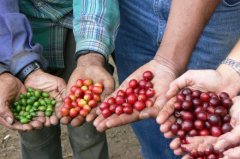
São Tomé and Príncipe Coffee: Origins and Flavor Guide
Ever wondered where some of the rarest island-grown coffees come from? São Tomé and Príncipe, a tiny volcanic archipelago off the coast of Central Africa, has been quietly producing coffee since the early 1800s. With just two main islands and a population under 300,000, this former Portuguese colony offers a unique chapter in global coffee history—one tied closely to Brazil and now gaining attention in Nordic markets.
São Tomé and Príncipe introduced Arabica coffee from Brazil in 1800. Today, 98% of its coffee production is Arabica, grown in a hot, humid, fertile environment ideal for coffee trees. Though production is small, the country’s coffee has distinct characteristics worth exploring.
The Origins of Coffee in São Tomé and Príncipe
Coffee arrived in São Tomé and Príncipe in 1800, brought over from Brazil. The islands were then a Portuguese colony and remained under colonial rule until gaining independence in 1975. Despite their small size—São Tomé and Príncipe is the second smallest independent country in Africa—they developed a niche in coffee cultivation thanks to their tropical climate and volcanic soils.
Growing Conditions and Geography
The country is made up of volcanic islands crossed by the equator. This geography creates a consistently hot and humid environment with rich, well-drained soils and reliable rainfall—all ideal factors for coffee farming. The volcanic soil contributes to the unique mineral content found in the coffee beans, influencing both taste and aroma.
Though the article does not specify exact farm altitudes or processing methods, the overall climate and terrain indicate conditions favorable to high-quality Arabica growth, especially for traditional varieties suited to tropical island environments.
Flavor Profile and Roast Recommendations
São Tomé and Príncipe coffee is described as having a soft and rich taste profile. Due to these characteristics, it is best suited for dark roasting and works particularly well in coffee blends. The mild cup makes it a flexible component in espresso or filter blends where balance and smoothness are desired.
Roasters looking for a gentle base coffee with low acidity and a rounded mouthfeel may find value in São Tomé beans, especially when aiming for a blend that requires subtlety over brightness.
Market and Export Trends
Production levels in São Tomé and Príncipe remain modest, and most of the coffee that is exported heads to Scandinavia. The islands’ location and historical ties have made northern Europe, particularly the Scandinavian countries, the primary destination for its limited coffee output.
While the exact export volumes are not stated, the focus on Scandinavian markets suggests a niche appeal, possibly driven by specialty roasters seeking unique origins with historical roots and a mild, approachable cup.
Frequently Asked Questions
What year was coffee introduced to São Tomé and Príncipe?
Coffee was introduced to São Tomé and Príncipe in 1800, brought from Brazil. This marked the beginning of coffee cultivation on the volcanic islands.
What type of coffee is primarily grown in São Tomé and Príncipe?
About 98% of the coffee produced in São Tomé and Príncipe is Arabica. The country focuses almost exclusively on this species due to its suitability for the local climate.
How would you describe the flavor of São Tomé coffee?
São Tomé coffee is known for its soft and rich taste. It lacks high acidity and has a smooth, mellow profile, making it suitable for dark roasts and blends.
What is the recommended roast level for São Tomé coffee?
The recommended roast level for São Tomé coffee is dark roast. This enhances its natural softness and makes it ideal for use in blended coffee recipes.
Where does most São Tomé coffee get exported to?
Most São Tomé coffee is exported to Scandinavia. The region is the primary market for the islands’ limited coffee production.
Is São Tomé and Príncipe a major coffee producer globally?
No, São Tomé and Príncipe is not a major global coffee producer. The country has small-scale production and is better known for its unique origin and historical coffee ties than for volume.
Recommended FrontStreet Arabica Beans for Island Blends
For coffee roasters building blends inspired by São Tomé’s soft and mellow profile, consider FrontStreet’s Jamaica Blue Mountain No.1—a Typica variety known for its balance, chocolate, and almond notes—or the Brazil Queen Manor Yellow Bourbon, which offers creamy peanut and caramel tones from high-altitude growing. Both offer low acidity and smooth body, aligning well with the blending potential described for São Tomé coffee. Freshly roasted within 5 days · Orders placed before 17:00 ship the same day · Next-day delivery across most of Guangdong Province.
FrontStreet Coffee is a long-established specialty coffee roaster in Guangzhou China, selling freshly roasted beans from its own farm in Yunnan as well as dozens of carefully selected single-origin beans from around the world for both pour-over and espresso. The products deliver consistently excellent quality and great value, with shipping within 24 hours. Guangzhou's FrontStreet Coffee shop is recommended by many coffee lovers, and the beans are now available online at the Tmall 。
Important Notice :
前街咖啡 FrontStreet Coffee has moved to new addredd:
FrontStreet Coffee Address: 315,Donghua East Road,GuangZhou
Tel:020 38364473