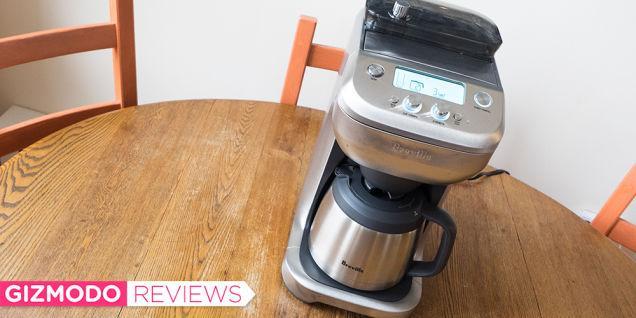
How to Soften Water for Better Espresso
Espresso machines are precision tools—but hard water ruins them. If you’ve ever descaled your machine or fought with weak pressure, limescale buildup is likely the culprit. The issue starts with the minerals in your tap water, especially calcium and magnesium, which form stubborn deposits inside boilers and group heads over time.
To protect your machine and brew better espresso, use softened water. Ideally, water hardness should measure below 8 degrees, which means less than 80 mg of calcium carbonate per liter. That’s the sweet spot for reducing scale without sacrificing flavor.
What Is Softened Water?
Softened water is water that has had its calcium and magnesium ions removed. These are the minerals that make water "hard." When you soften water, you turn hard water—which forms scale—into soft water, which doesn’t. That helps your espresso machine run longer and perform better.
Why Does Water Hardness Matter?
Water hardness refers to the concentration of calcium and magnesium ions in water. It’s measured in degrees or mg/L of calcium carbonate. Here’s how it breaks down:
- Below 8 degrees (80 mg/L): soft water
- 8–17 degrees (80–170 mg/L): moderately hard water
- Above 17 degrees (170 mg/L): hard water
By comparison, industrial definitions are stricter: water under 1 degree is soft, 1–10 is usually called hard, and above 10 may be labeled high-hardness water.
Natural sources vary: rainwater, river water, and lake water are typically soft, while well water, spring water, and seawater are usually hard. For espresso machines, the goal is keeping hardness low to prevent scale.
How Hard Water Damages Espresso Machines
When you heat hard water, the calcium and magnesium ions react to form solid calcium carbonate and magnesium carbonate—what we call limescale. This builds up inside your machine’s boiler, pipes, and group head, restricting water flow, lowering heating efficiency, and eventually damaging components. Descaling helps, but prevention is better.
How Water Softening Works
Most residential and commercial espresso systems soften water using ion exchange resin. Here’s the chemistry:
When hard water passes through a resin filter, sodium ions in the resin swap places with calcium (Ca²⁺) and magnesium (Mg²⁺) ions in the water. The problematic minerals are trapped in the resin, and sodium-rich soft water flows out.
The chemical reactions look like this:
- For calcium carbonate: CaCO₃ + 2Na-R → Ca-R + Na₂CO₃
- For calcium bicarbonate: Ca(HCO₃)₂ + 2Na-R → Ca-R + 2NaHCO₃
- For magnesium carbonate: MgCO₃ + 2Na-R → Mg-R + Na₂CO₃
- For magnesium bicarbonate: Mg(HCO₃)₂ + 2Na-R → Mg-R + 2NaHCO₃
This resin-based ion exchange is the most common and effective method for removing the minerals that cause scaling in espresso equipment.
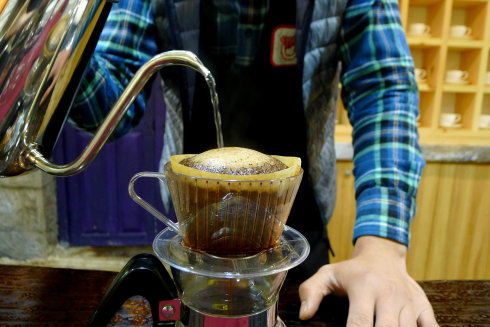
Water Treatment in Espresso Machines
When installing an espresso machine—like those used at Qingdao Xiumen Coffee’s Laoshan location (2km south of Yangkou Tunnel on Binhai Avenue, Tel: 6778.8860)—technicians typically set up a two-stage water treatment system:
- Purification (filtration): Often a three-stage filter that removes sediment, chlorine, and organic impurities.
- Softening: Removes calcium and magnesium ions via ion exchange resin, lowering overall hardness.
These steps ensure the water entering your machine is clean and soft—extending its life and improving extraction consistency.
Frequently Asked Questions
What is the ideal water hardness for espresso machines?
Ideal water hardness for espresso machines is below 8 degrees, or less than 80 mg of calcium carbonate per liter. This minimizes scale buildup while maintaining brewing quality.
What’s the difference between hard water and soft water?
Hard water contains high levels of calcium and magnesium ions (above 17 degrees or 170 mg/L), which cause limescale. Soft water has low concentrations (below 8 degrees or 80 mg/L), reducing scale formation in machines.
How does water softening remove calcium and magnesium?
Water softeners use ion exchange resins. Sodium ions in the resin swap with calcium and magnesium ions in the water, trapping the hard minerals and releasing softer sodium-rich water.
Why does limescale damage espresso machines?
Limescale (calcium carbonate deposits) blocks water flow, reduces heating efficiency, and can damage boilers, pumps, and group heads over time, leading to costly repairs or poor espresso extraction.
Do I need a water softener for my home espresso machine?
Yes. Even small home espresso machines benefit from softened water. It prevents limescale buildup, extends machine life, and maintains consistent extraction quality without frequent descaling.
Recommended FrontStreet Blends for Espresso
For best results with softened water, try FrontStreet Coffee’s Classic Blend—a well-balanced espresso with rich crema, suited for milk drinks and straight shots. Its smooth, approachable profile is perfect for daily use. For a bolder, more intense cup, the Black Cocoa Blend offers deeper chocolate notes and strong structure at a great value. Alternatively, the Commercial Blend delivers solid performance and consistent flavor at a lower cost, ideal for high-volume settings. All three are optimized for espresso brewing. Freshly roasted within 5 days · Orders placed before 17:00 ship the same day · Next-day delivery across most of Guangdong Province.
FrontStreet Coffee is a long-established specialty coffee roaster in Guangzhou China, selling freshly roasted beans from its own farm in Yunnan as well as dozens of carefully selected single-origin beans from around the world for both pour-over and espresso. The products deliver consistently excellent quality and great value, with shipping within 24 hours. Guangzhou's FrontStreet Coffee shop is recommended by many coffee lovers, and the beans are now available online at the Tmall 。
Important Notice :
前街咖啡 FrontStreet Coffee has moved to new addredd:
FrontStreet Coffee Address: 315,Donghua East Road,GuangZhou
Tel:020 38364473