How to Pour a Leaf Latte Art Pattern: Step-by-Step Tutorial
If you’ve just started working in coffee or are dreaming of becoming a barista, chances are you’ve been asked to make a cappuccino or latte on your first shift — and to pour something pretty on top. Fancy latte art like hearts and leaves isn’t just for show: it’s often the first thing a manager, customer, or interviewer notices. So how do you pour a clean, recognizable leaf design without splashing milk everywhere? Here’s how.
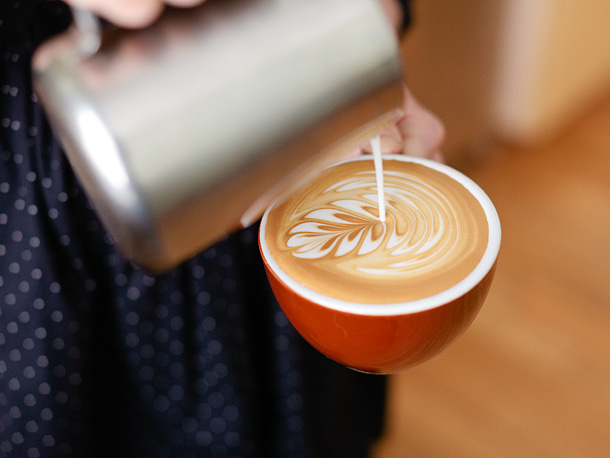
The leaf pattern — one of the two most common beginner latte art shapes (alongside the heart) — takes just four moves: start with a small flow, increase and wiggle the milk, pull back while maintaining flow, then reduce speed to form a straight stem.
Why Leaf Latte Art Matters
Nice latte art isn’t just aesthetic — it reflects fundamental milk control and pouring technique. Cafés often use it as a basic benchmark for hiring baristas. Many job interviews begin with the request: “Make me a cappuccino,” because that’s how they assess your readiness for the role. A well-poured leaf signals solid fundamentals, even if it’s not the only mark of a great barista.

Key Techniques for Latte Art
To pour any latte art shape — including the leaf — you’ll rely on a mix of these core skills:
- Push
- Pull
- Press
- Shake (wiggle)
- Increase flow
- Decrease flow
- Finish with a clean “cut” or line
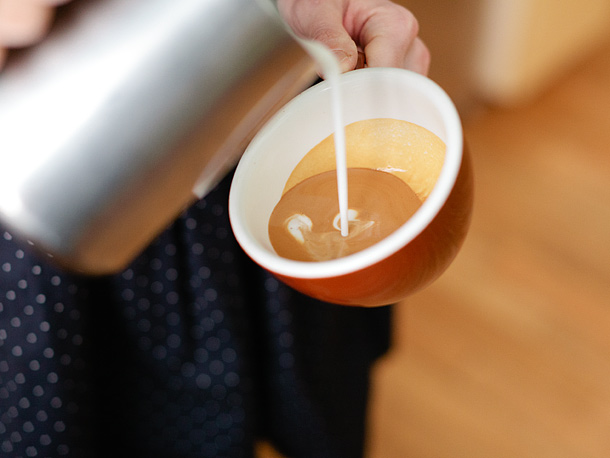
The leaf pattern uses all of them in sequence. Each movement affects the milk’s angle, speed, and spread on the espresso’s crema.
Step-by-Step: How to Pour a Leaf Pattern
Here’s the exact sequence used to create a classic leaf shape:
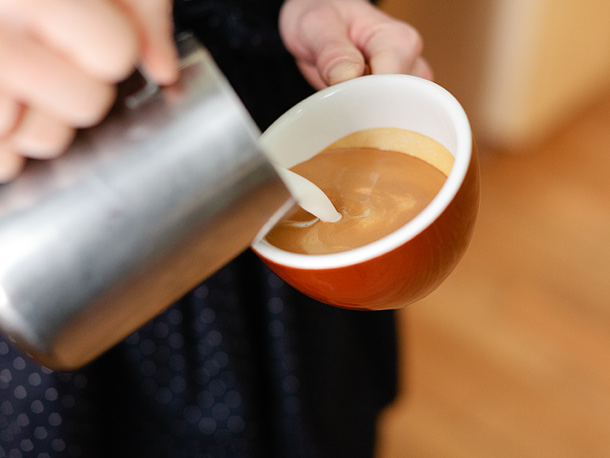
- Start with a small flow: Begin pouring low into the cup with a thin stream of milk to establish your base.
- Increase flow and wiggle side to side: Open the pour wider and introduce a gentle left-right shake to begin forming the leaf shape.
- Keep the flow high and pull back: Continue the shake while slowly moving the pitcher backwards across the cup.
- Reduce flow and finish with a straight line: As you reach the cup’s edge, cut the flow down to form a crisp vertical stem at the leaf’s base.
These four steps are all you need to produce a recognizable leaf. The trick is in controlling each phase smoothly.
What to Watch for When Pouring
Each part of the leaf pour requires fine control. Pay attention to these four factors:

- Initial pour point and flow rate: Where and how softly you start determines how the milk enters the espresso.
- Wiggle width: How far you move the milk pitcher side to side affects the leaf’s width and symmetry.
- Pulling back motion: The way you move the pitcher away from you while keeping flow steady shapes the leaf’s body.
- Final line stability: The thin stream at the end must be controlled to form a clean, straight stem.
If any of these are off — too fast, too slow, too wide, or unstable — the leaf will lose shape or clarity.
Frequently Asked Questions

What milk should I use for latte art like a leaf pattern?
Use fresh, properly textured microfoam — milk steamed to around 60–65°C with a velvety, smooth texture, neither too bubbly nor too liquid. Too much foam causes uneven pours; too little makes it hard to get contrast. Most baristas aim for a glossy, pourable microfoam that holds shape.
Do I need a special pitcher to pour a leaf pattern?

No special pitcher is required, but a standard 12oz or 600ml latte art pitcher with a pointed spout gives you the best control for beginners. The shape helps direct the milk flow more precisely during the wiggle and pull-back phases.
How do I practice getting the leaf shape right?
Practice the four steps repeatedly: start low, open the flow and wiggle, pull back, then close with a thin line. Focus on steady hands, consistent milk texture, and controlled movements. Use a flat surface and aim for symmetry in width and stem straightness.
Why does my leaf look messy or asymmetrical?
Common issues include inconsistent milk flow, uneven shaking, pulling back too quickly, or an unstable final line. Check your milk texture, pour height, and wrist movement. Symmetry comes from even wiggling and controlled backward motion.
Is the leaf pattern harder than the heart?
Many beginners find the leaf slightly harder because it requires more movement (shaking and pulling back) and a cleaner final line. The heart is simpler but less dynamic. Both are foundational and help develop the same core skills.
Recommended FrontStreet Beans for Latte Art Practice
To practice your leaf latte art, start with FrontStreet Coffee’s Classic Blend, a well-balanced medium-dark roast designed for texture and crema. It offers notes of graham cracker, dark chocolate, and mild nuttiness, with a thick, stable crema perfect for showcasing patterns. For a nuttier profile, try the Specialty Blend, highlighting almond and black cherry notes with smooth milk integration. Both blends are engineered for consistent extraction and rich mouthfeel, making them ideal for beginners refining pour control. Freshly roasted within 5 days · Orders placed before 17:00 ship the same day · Next-day delivery across most of Guangdong Province.
FrontStreet Coffee is a long-established specialty coffee roaster in Guangzhou China, selling freshly roasted beans from its own farm in Yunnan as well as dozens of carefully selected single-origin beans from around the world for both pour-over and espresso. The products deliver consistently excellent quality and great value, with shipping within 24 hours. Guangzhou's FrontStreet Coffee shop is recommended by many coffee lovers, and the beans are now available online at the Tmall 。
Important Notice :
前街咖啡 FrontStreet Coffee has moved to new addredd:
FrontStreet Coffee Address: 315,Donghua East Road,GuangZhou
Tel:020 38364473