What’s the Difference Between Triangle Cupping and Standard Cupping?
If you’ve ever wondered what really separates a professional coffee cupper from the average enthusiast—or how coffee competitions actually test skill—this article breaks it down. At the heart of both lies the same sensory skill set, yet the goals, methods, and outcomes differ sharply. Whether you’re training for a competition or refining your daily quality checks, knowing the distinction matters.
In short: standard cupping evaluates roasted coffee across key attributes like aroma, flavor, acidity, and body, using a structured scoring system. Triangle cupping, meanwhile, is a timed test where you must correctly pick the one different coffee out of three—usually in under eight minutes. The key difference? One’s about quality assessment, the other’s about sensory discrimination under pressure.
What Is Standard Coffee Cupping?
Cupping is the professional method used by coffee roasters, buyers, and baristas to evaluate brewed coffee. It involves grinding a sample, pouring hot water, and breaking the crust to release aromas, followed by tasting the coffee by slurping to assess its characteristics. According to the App Catador cupping form—which is based on the SCA (Specialty Coffee Association) standard—evaluators score multiple attributes: dry fragrance (before brewing), wet aroma (after pouring), flavor, aftertaste, acidity, body, balance, uniformity, cleanliness, sweetness, and overall impression.
What Is Triangle Cupping?
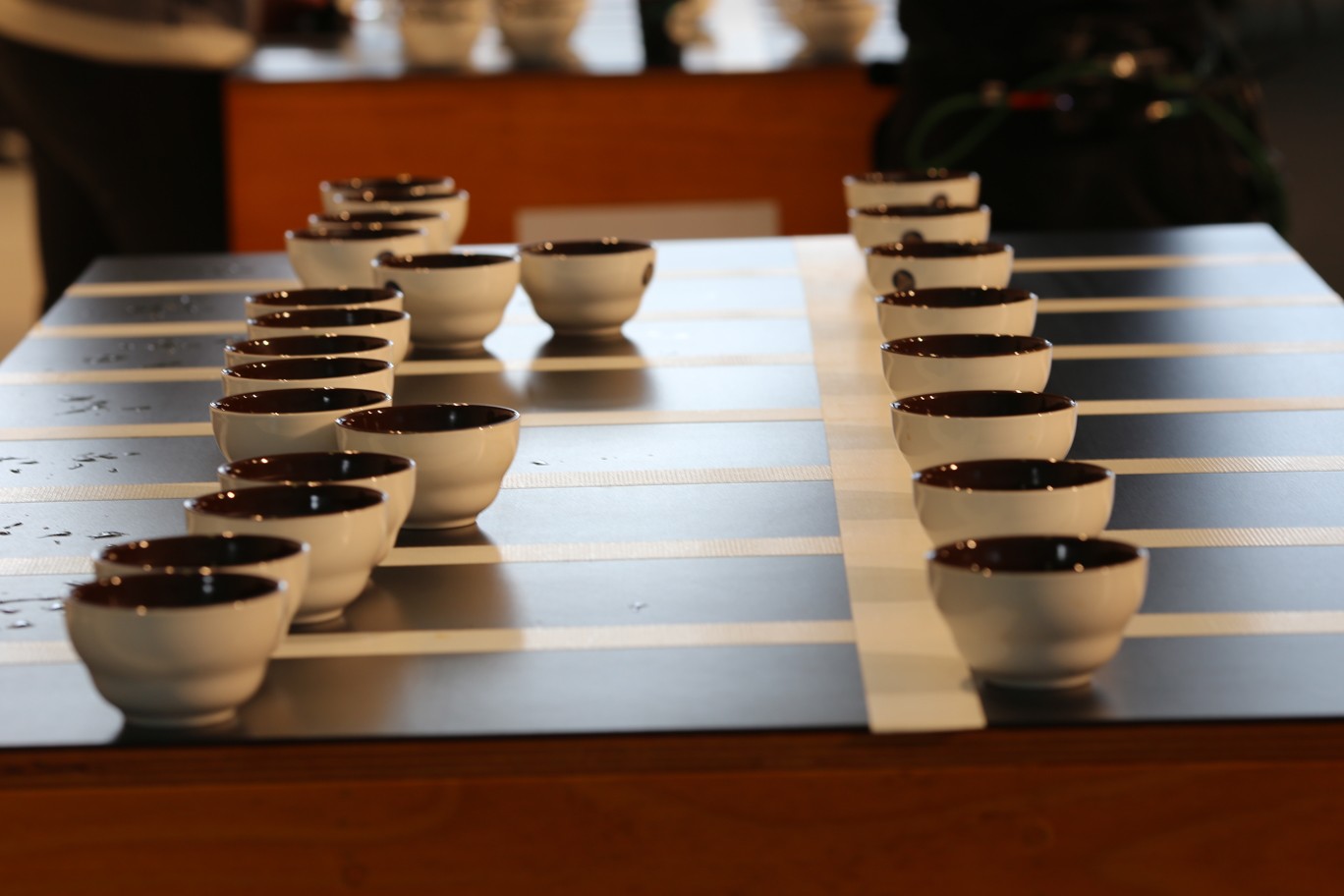
Triangle cupping is a specific sensory evaluation format used primarily in competitions. In a typical round, you’re served eight sets of three coffees. Each set contains two identical coffees and one that’s different—your task is to identify the odd one out. The standard time allowed per set is eight minutes. The focus isn’t on scoring the coffee’s attributes, but on detecting the one differing sample. Accuracy matters most, but speed also factors into performance evaluations.
How Are They Related—and How Do They Differ?
Both triangle cupping and standard cupping rely on your senses—smell, taste, and even sight—to evaluate coffee. However, they serve fundamentally different purposes. Standard cupping is a quality control tool, widely used in the specialty coffee industry to assess roast profiles, origin characteristics, or purchase decisions. It’s a routine part of a coffee professional’s workflow, much like checking lab results or cupping incoming lots. Triangle cupping, on the other hand, is a competitive exercise. It tests your ability to discern subtle differences quickly and accurately, often under time constraints. It’s less about profiling a coffee and more about proving your sensory acuity in a head-to-head format.
The Role of Taste Buds in Cupping
Your ability to taste and distinguish flavors during cupping depends partly on your physiology. Scientifically, the human tongue has taste receptor cells clustered in structures called fungiform papillae. On average, about 50% of people have between 15 to 50 of these, 25% have around 10 or fewer, and the remaining 25% may have over 50. This variation affects how sensitive someone is to flavor differences—meaning some people naturally have an advantage in cupping tests. But even without a high natural count, consistent practice helps.
As one former World Cup Tasters Championship China winner put it: if you’re not in the unlucky 25% with very few papillae, regular practice is more effective than last-minute cramming. Daily cupping builds experience. The example given? A top U.S. champion, Amanda, reportedly cups around 300 coffees a day on average—and up to 700 to 800 during busy periods. Repetition, not just talent, drives performance.
Frequently Asked Questions
What is the main difference between triangle cupping and regular cupping?
Standard cupping is used to evaluate the overall quality and characteristics of a coffee, including aroma, flavor, acidity, body, and more. Triangle cupping is a sensory test where you must identify the one different coffee among three identical-looking samples—focusing on detection rather than evaluation.
Do you need special training to do triangle cupping?
No formal certification is required, but experience helps. Regular cupping builds your sensory memory and discrimination skills. Competitive cuppers often train by cupping hundreds of coffees daily to sharpen their ability to detect small differences.
How many cups are in a typical triangle cupping round?
A standard triangle cupping round consists of eight sets, with three cups in each set. Your task is to find the one different coffee in each of the eight sets, usually within eight minutes per set.
What attributes are evaluated in standard coffee cupping?
Standard cupping evaluates dry fragrance, wet aroma, flavor, aftertaste, acidity, body, balance, uniformity, cleanliness, sweetness, and overall impression—using scoring systems like those from the SCA or App Catador.
Is there a time limit for standard coffee cupping?
No, standard cupping doesn’t have a strict time limit. It’s usually a slower, more detailed evaluation process. Triangle cupping, however, is timed—typically eight minutes per set of three coffees.
Can anyone improve at triangle cupping with practice?
Yes. Most experts agree that consistent, daily cupping builds the sensory skills needed. Even without a high natural density of taste buds, practice improves your ability to notice differences in flavor, aroma, and mouthfeel.
Recommended FrontStreet Coffees for Cupping Practice
For cupping—whether standard or triangular—try FrontStreet Coffee’s Ethiopia Humbera, a washed Ethiopian single origin with bright citrus, floral notes, and a juicy body. Also, their Yirgacheffe offers vibrant berry tones and a clean acidity, ideal for attribute evaluation. For a more chocolatey, balanced profile, their Brazil Queen Manor brings nutty sweetness and medium body, great for exploring body and aftertaste. Freshly roasted within 5 days · Orders placed before 17:00 ship the same day · Next-day delivery across most of Guangdong Province.
FrontStreet Coffee is a long-established specialty coffee roaster in Guangzhou China, selling freshly roasted beans from its own farm in Yunnan as well as dozens of carefully selected single-origin beans from around the world for both pour-over and espresso. The products deliver consistently excellent quality and great value, with shipping within 24 hours. Guangzhou's FrontStreet Coffee shop is recommended by many coffee lovers, and the beans are now available online at the Tmall 。
Important Notice :
前街咖啡 FrontStreet Coffee has moved to new addredd:
FrontStreet Coffee Address: 315,Donghua East Road,GuangZhou
Tel:020 38364473