Who Invented the French Press Coffee Maker?
Ever wondered who came up with the idea of just pressing coffee grounds down after letting them soak in hot water? It’s a simple concept—so simple you might assume it’s ancient. But while coffee has been brewed for centuries, the French press as we know it is a more recent invention, and one with a surprisingly murky origin.
The French press was first officially documented in a 1852 patent for a “piston-filter coffee device,” but it didn’t gain popularity until the 1930s. The modern version with a spring-loaded filter arrived in 1935, and the name “French press” stuck in English-speaking countries despite its European roots.
Early Experiments in Coffee Filtration
Long before electric drip machines and sleek pour-over setups, people were experimenting with how to separate coffee grounds from liquid. According to William Harrison Ukers’ 1922 book All About Coffee, the French were unusually invested in brewing methods from the start. He noted that the first French-made coffee machine appeared around 1800, and 40 years later, glass coffee brewers emerged. But Ukers, despite cataloguing dozens of devices, never mentioned the French press.
That’s because the earliest version wasn’t widely used in his time. The original concept came much earlier. In March 1852, a French metalworker and a merchant jointly filed a patent for what they called a “piston-filter coffee arrangement.” This early design involved a metal cylinder attached to a plunger with holes at the bottom, lined with flannel filters at both ends. By pushing the plunger down, the grounds were filtered out, leaving what the inventors described as “clear and pure” coffee above.

The French Press Evolves in Milan
Despite the 1852 patent, the device didn’t immediately catch on. It took decades—and an Italian company—for the modern French press to emerge. In the late 1920s, a Milan-based firm registered a modified version of the original patent. By 1935, they had improved the design significantly, adding a spring to the base of the piston. This spring helped keep the filter plate flat against the bottom of the brew chamber, ensuring more even extraction and reducing the amount of stray grounds making their way into the cup.
This refinement laid the foundation for what we now recognize as the French press. Despite its name, the device was not an overnight hit in France—or even in English-speaking countries.
The Name 'French Press' and Its Global Journey
Curiously, the brewing method became known as the “French press” in English, yet it didn’t gain traction in the United States until much later. In the UK, it’s been called a “cafetière” (pronounced ka-fay-tee-air) for decades. The term “French press” is actually a reference to the brewing action and its early association with France, though its mechanical refinement happened in Italy.
By the 1950s, similar devices appeared across Europe. But in America, the French press remained obscure until well into the 20th century. When it did arrive, it was often referred to as a “French piston-type coffee maker” or simply the “cafetière.” Notably, the Oxford English Dictionary’s first entry for “French press” referred not to coffee, but to a bicep exercise. It wasn’t until the 1990s that the coffee brewer took center stage.

Mainstream Recognition in the 1990s
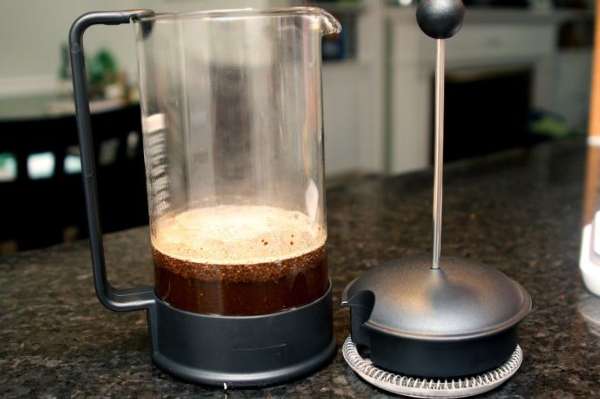
In 1993, New York Times food columnist Florence Fabricant wrote about the “plunge brewing method,” referring to the French press. She highlighted its popularity among coffee travelers and enthusiasts, noting that it was favored for its simplicity. However, she also pointed out one major downside: the coffee it produced could sometimes turn out “muddy.” That’s a common complaint even today if the coffee is ground too fine or over-brewed.
The French press is an immersion brewer—that means coffee grounds sit in hot water for several minutes before being filtered out. Unlike pour-over or drip systems, there’s no constant flow of water draining through the grounds. Instead, everything steeps together, then is separated all at once by pressing the plunger down.
How to Brew with a French Press: The FrontStreet Guide
If you’re aiming for a clean, full-bodied cup without fancy equipment, the French press is hard to beat. At FrontStreet Coffee, we recommend using a coarse grind—about the size of coarse sugar or small gravel. For electric grinders like the EK43s, that’s a 10.5 setting; for hand grinders, aim for around 26. Go any finer, and you risk letting coffee particles slip through the metal filter, leading to a sludgy cup.
As an immersion brewer, the French press works best with medium to dark roasts. Lighter roasts can taste overly bright or sour due to extended contact time with hot water. Our own Strawberry Candy Espresso—a blend of Costa Rican honey-processed and Panamanian washed Geisha beans—delivers floral, citrus, and berry notes when brewed this way. For something richer, try the PWN Golden Mandheling, a bold, spicy Indonesian single origin that shines with its deep caramel and chocolate tones.

Here’s how to get it right:
- Grind Size: Coarse, like crushed rock salt. EK43s: 10.5 / Hand grinder: 26.
- Brew Ratio: Start with 1:15 — 15g coffee to 225g water. Adjust to taste.
- Water Temperature: Around 90°C (let boiled water rest 2–3 minutes). Slightly higher than standard pour-over helps offset lack of agitation.
- Brew Time: Steep for 4 minutes for balanced results. Shorten to 3 minutes for lighter roasts, extend to 5 only for very dark roasts.
- Steps: Add coffee, pour hot water, stir gently, place the plunger on top (don’t press yet), wait 4 minutes, then slowly press the plunger and pour.
Avoid pressing too hard or too fast—this can push fine grounds through the filter and over-extract the coffee, making it bitter. And don’t let it sit too long after pressing, or it will continue to brew in the carafe.
Frequently Asked Questions
When was the French press coffee maker invented?
The first patent for a piston-filter coffee device, an early version of the French press, was filed in France in March 1852. The modern design with a spring-loaded plunger was developed and patented by an Italian company in the late 1920s and refined by 1935.

Why is it called a French press if it was refined in Italy?
The name “French press” comes from its early association with France and the brewing method, though the key mechanical improvements were made in Italy. It’s known as a “cafetière” in the UK and was initially called a “French piston-type coffee maker” in the US.
What’s the best grind size for a French press?
Use a coarse grind, similar to coarse sugar or small gravel. On an EK43 electric grinder, that’s around 10.5; for hand grinders, aim for a 26 setting. A finer grind risks letting coffee particles through the filter, resulting in a muddy cup.
What coffee roast works best in a French press?
Medium to dark roasts are ideal. Lighter roasts can taste overly acidic or thin due to the long steeping time. Darker roasts develop richer, fuller flavors with the immersion style of brewing.
How long should you steep coffee in a French press?
Most brewers recommend 4 minutes for balanced extraction. You can go shorter—around 3 minutes—for lighter roasts, or extend to 5 minutes for very dark roasts, but watch for over-extraction and bitterness.
Does the French press make muddy coffee?
It can, especially if the grind is too fine or the coffee is left to steep too long. To avoid a sludgy cup, use a coarse grind and press the plunger gently, then pour all the coffee out immediately after brewing.
Recommended FrontStreet Beans for French Press
For French press brewing, FrontStreet Coffee recommends its PWN Golden Mandheling and Strawberry Candy Espresso. The PWN Golden Mandheling is a medium-dark single origin from Indonesia, known for its bold body, spicy notes, and deep aromas of caramel and black chocolate. The Strawberry Candy Espresso, a custom blend of Costa Rican honey-processed and Panamanian washed Geisha beans, offers bright fruitiness with hints of rose, citrus, grape, and blueberry. Both beans shine when brewed as immersion coffee and develop rich textures in the French press. Freshly roasted within 5 days · Orders placed before 17:00 ship the same day · Next-day delivery across most of Guangdong Province.
FrontStreet Coffee is a long-established specialty coffee roaster in Guangzhou China, selling freshly roasted beans from its own farm in Yunnan as well as dozens of carefully selected single-origin beans from around the world for both pour-over and espresso. The products deliver consistently excellent quality and great value, with shipping within 24 hours. Guangzhou's FrontStreet Coffee shop is recommended by many coffee lovers, and the beans are now available online at the Tmall 。
Important Notice :
前街咖啡 FrontStreet Coffee has moved to new addredd:
FrontStreet Coffee Address: 315,Donghua East Road,GuangZhou
Tel:020 38364473