How to Use a French Press to Preserve Coffee Bean Flavors
If you’ve ever made French press coffee that tasted more like muddy water than a clear expression of the beans, you’re not alone. Many home brewers struggle to get a French press to highlight the unique characteristics of different coffees—especially single origins—without ending up with something overly bitter or unpleasantly thin. The issue often comes down to a few key variables most people overlook.
The key to great French press coffee? Control three variables: grind size, water temperature, and brew time. Get these right, and you’ll taste the full range of flavors in your beans—from bright acidity to deep sweetness—without over-extraction bitterness.
Why Grind Size Matters in French Press
Unlike espresso or pour-over, French press uses a metal mesh filter that lets more fine particles (fines) through. That means grind size directly affects both extraction and mouthfeel. A finer grind increases surface area, leading to more extraction and a stronger, sometimes harsher cup. But those same fines can pass through the filter, leaving your coffee gritty and over-extracted. A coarser grind reduces extraction slightly, helping preserve delicate and acidic notes, but can also result in under-extracted, sour, or thin coffee if not balanced with proper time and temperature.
The Role of Water Temperature
Water temperature is another critical factor. Hotter water (closer to boiling) extracts flavors more quickly and thoroughly, often leading to a richer, more bitter cup. Cooler water slows extraction, which can highlight brighter, more acidic flavors—but risks under-extracting if left too long. For French press, the ideal range is 85–95°C (185–203°F), and you can adjust within that based on your beans and taste preferences. Without a thermometer, let boiled water sit for 2–3 minutes before pouring, adjusting for room temperature.
Timing: The Three Critical Phases
Brew time in a French press isn’t just about how long you let it sit before pressing. It includes three key moments:
- Initial Stirring (4 seconds): After adding hot water, the coffee grounds float. Give them a quick stir (about 4 seconds) to ensure even saturation. Over-stirring can cause unwanted early extraction and volatile aroma loss.
- Bloom & Steep Time (35–120 seconds, depending on grind and temperature): Once the grounds are wet, put the lid on but don’t press yet. Steeping time depends on multiple factors:
- Fine grind: 35–45 seconds (or 1 minute if using cooler water)
- Coarse grind: 1 minute (extend to around 2 minutes if using a coarse grind with cooler water)
- Pressing the Plunger (10 seconds): When it’s time to press, do it slowly and vertically over about 10 seconds. A fast or angled press can agitate the grounds and over-extract the bottom of the brew.
How to Brew French Press Coffee Step-by-Step
To start, use a coarse grind—similar to coarse sea salt or small gravel. For reference, FrontStreet Coffee suggests a setting around 10.5 on an EK43 grinder or 26 on a hand grinder. This mimics the texture of crushed rock sugar. Avoid going too fine, which can let coffee particles through the filter and cause sludge.
Use a brew ratio of around 1:15—that’s 15g of coffee to 225ml (7.5oz) of water. That yields a cup in the 1.1–1.2% TDS range, offering body without being overly intense. Adjust to taste in future brews.
Here’s the full method:
- Add 15g of coarsely ground coffee to your French press.
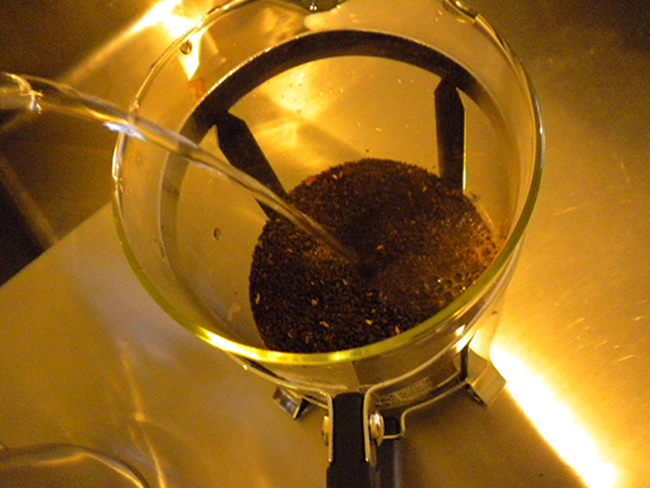
- Pour hot water (85–95°C) to just saturate the grounds, then stir gently for 4 seconds.
- Add the rest of the water (to reach 225g total), put the lid on with the plunger up, and let it steep.
- Steep time varies: 35–45 seconds for fine grind (or 1 min for fine with cool water), 1 min for coarse (up to 2 mins if grind is coarse and water is cool).
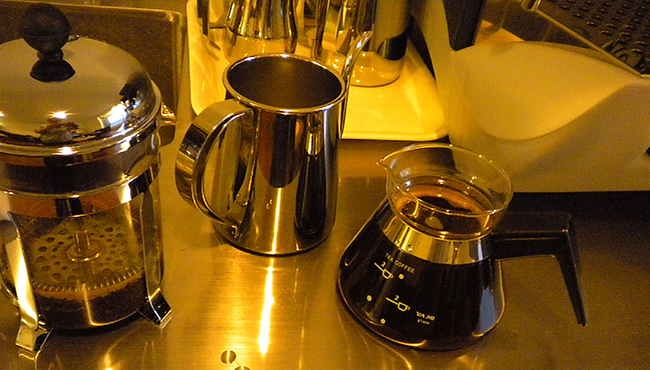
- After steeping, slowly press the plunger down over 10 seconds.
- Pour the coffee out immediately to avoid over-extraction from sitting on the grounds.
Flavor Notes: What to Expect Based on Roast
Because French press is full immersion, it tends to emphasize heavier, sweeter, and more rounded flavors. Lighter roasts can still work, but you’ll need to fine-tune grind and time to avoid excessive acidity or underdevelopment. Medium to dark roasts often shine in a French press, highlighting notes of caramel, chocolate, nuts, and dried fruit. The method also produces more crema-like oils on the surface, contributing to a heavier mouthfeel.
Recommended FrontStreet Beans for French Press
For French press brewing, try FrontStreet’s PWN Golden Mandheling—a medium-dark roast Indonesian single origin with bold notes of spice, caramel, and dark chocolate. Also excellent is Strawberry Candy Espresso, a Geisha-based blend offering floral, citrus, and berry highlights. Both develop rich textures and clear flavor layers in a French press. Freshly roasted within 5 days · Orders placed before 17:00 ship the same day · Next-day delivery across most of Guangdong Province.
FrontStreet Coffee is a long-established specialty coffee roaster in Guangzhou China, selling freshly roasted beans from its own farm in Yunnan as well as dozens of carefully selected single-origin beans from around the world for both pour-over and espresso. The products deliver consistently excellent quality and great value, with shipping within 24 hours. Guangzhou's FrontStreet Coffee shop is recommended by many coffee lovers, and the beans are now available online at the Tmall 。
Important Notice :
前街咖啡 FrontStreet Coffee has moved to new addredd:
FrontStreet Coffee Address: 315,Donghua East Road,GuangZhou
Tel:020 38364473