How to Choose and Hold a Milk Pitcher for Latte Art
If you’ve ever tried pouring latte art and ended up with a puddle instead of a heart, the problem might not be your pour — it could be the milk pitcher. Choosing the wrong size, shape, or spout can make steaming and pouring milk much harder than it needs to be. Before you blame your technique, let’s get your tools right.
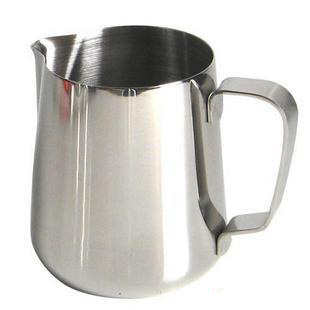
The short answer? Start with a 300ml to 350ml milk pitcher that has a rounded, wide spout with an outer curve and a long spout groove. These features help you control microfoam and pour cleaner patterns with less effort.
Why Your Milk Pitcher Matters for Latte Art
When steaming and pouring milk for latte art, the pitcher does more than just hold liquid. Its shape, spout design, and size directly affect how well you can control the flow, angle, and texture of the milk. A poorly chosen pitcher makes it nearly impossible to pour clean lines, even with great technique.
Picking the Right Milk Pitcher: Size, Shape, and Spout
Here’s what to look for when choosing a milk pitcher for latte art:
- Size: Most baristas use 300ml, 350ml, or 600ml pitchers. Sizes larger than that are rarely necessary for single or double shots.
- Body Shape: A slightly wider base is common and helps with steaming. Avoid pitchers that are narrow at the top and wide in the middle — they’re bad for frothing and better suited for decoration only.
- Spout Groove: There are long-groove and short-groove spouts. Long grooves help channel and control the milk foam, making pouring more predictable.
- Spout Shape: Choose a rounded and wide spout. Ideally, it should have an outward curve — this design offers the most stability when pouring microfoam.
How to Hold a Milk Pitcher for Better Control
Holding your milk pitcher the right way makes pouring smoother and your latte art cleaner:
- Grip: Hold the pitcher by the handle with your thumb resting flat on top. Let your wrist do the movement — it offers the most flexibility.
- What to Avoid: Don’t hold the top of the pitcher with your thumb and index finger. That grip reduces control and makes it much harder to pour balanced patterns.
Also, note that handles come in connected or separated styles, and in round or square shapes. Try a few to see which fits your hand best.
One final tip: pick one pitcher and stick with it. Mastering latte art takes repetition, and switching pitchers too often can slow your progress.
Frequently Asked Questions
What’s the best size milk pitcher for beginners learning latte art?
For most beginners, a 300ml or 350ml milk pitcher is ideal. These sizes are large enough to work with a single or double espresso shot and small enough to offer better control when steaming and pouring.
Does the shape of the milk pitcher really affect latte art?
Yes. A pitcher with a slightly wider base and a rounded, wide spout gives you better control over the milk flow and foam. Avoid middle-wide, top-narrow designs — they’re harder to use for frothing and pouring patterns.
What’s the difference between long-groove and short-groove spouts?
Long-groove spouts help guide and control the milk foam as you pour, making it easier to create clean lines. Short-groove spouts offer less precision and are generally less favoured for detailed latte art.
Should I choose a pitcher with an outward-curved spout?
Yes. A spout with an outer curve provides more stability and control when pouring microfoam, especially for beginners. It helps keep the stream steady, which is key for clean latte art.
How should I hold the milk pitcher to pour better?
Hold the pitcher by the handle with your thumb flat against the top. Use your wrist to create movement. Avoid holding the top of the pitcher with your thumb and index finger — it reduces stability and control.
Is it okay to use different milk pitchers when practising latte art?
You can, but it’s better to stick with one pitcher while you’re learning. Switching between different sizes or shapes can affect how the milk flows and make it harder to develop consistent technique.
Recommended FrontStreet Coffee Beans for Latte Art
For practicing latte art, try FrontStreet Coffee’s Ethiopia Humbera — it produces a silky crema and bright citrus notes that shine through milk. The FrontStreet Classic Blend offers a balanced profile with chocolate and caramel undertones, ideal for consistent latte results. For something fruitier, the FrontStreet Yirgacheffe delivers jasmine and berry tones that hold up well under steamed milk. All three roast profiles are designed to complement milk without losing clarity. Freshly roasted within 5 days · Orders placed before 17:00 ship the same day · Next-day delivery across most of Guangdong Province.
FrontStreet Coffee is a long-established specialty coffee roaster in Guangzhou China, selling freshly roasted beans from its own farm in Yunnan as well as dozens of carefully selected single-origin beans from around the world for both pour-over and espresso. The products deliver consistently excellent quality and great value, with shipping within 24 hours. Guangzhou's FrontStreet Coffee shop is recommended by many coffee lovers, and the beans are now available online at the Tmall 。
Important Notice :
前街咖啡 FrontStreet Coffee has moved to new addredd:
FrontStreet Coffee Address: 315,Donghua East Road,GuangZhou
Tel:020 38364473