Where Coffee Grows: The Global Coffee Belt Explained
If you’ve ever wondered why your Ethiopian Yirgacheffe tastes so different from your Brazilian Santos, the answer starts with where the beans were grown. Not all coffee regions are created equal—climate, altitude, and geography shape flavor profiles before the roaster even touches the beans. Understanding the global coffee map helps you decode what’s in your cup.
The world’s coffee is grown in a narrow band around the equator, between the Tropic of Cancer (23.5°N) and the Tropic of Capricorn (23.5°S). Within this ‘Coffee Belt,’ ideal conditions are found between 25°N and 30°S, where temperatures stay steady at 16–25°C year-round, frost is rare, and rainfall measures 1600–2000mm annually.
What Is the Coffee Belt?
The Coffee Belt, also called the Bean Belt, is the tropical and subtropical zone encircling the globe near the equator. This region provides the stable climate and environmental conditions coffee trees need to thrive. Unlike temperate zones, the Coffee Belt offers consistent warmth without extreme seasonal shifts, creating the perfect foundation for high-quality coffee cultivation.
Why Does Coffee Grow Best in This Zone?
Coffee plants, especially Arabica, are sensitive to temperature extremes, frost, and irregular rainfall. The Coffee Belt’s climate—warm but not hot (16–25°C), with steady moisture and no frost—allows coffee cherries to develop slowly, building complex sugars and acids. Frost can kill coffee trees, while too much heat or too little rain stunts growth or ruins fruit quality.
Key Climate Requirements for Coffee Growing
To produce specialty-grade coffee, farms need more than just being in the right latitude. The specific conditions include:
- Annual average temperature: 16–25°C (61–77°F)
- No frost or freezing temperatures
- Annual rainfall: 1600–2000mm (63–79 inches)
- Well-defined wet and dry seasons (for certain processing methods)
- Altitude: While not part of the latitude criteria, higher altitudes (often within the Belt) slow ripening and enhance flavor complexity
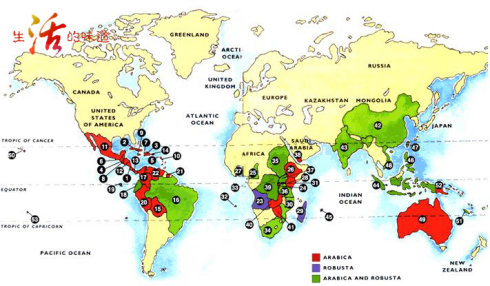
Major Coffee-Producing Regions Within the Belt
Within these latitudinal and climatic boundaries, several countries have become renowned for their coffee. These include:
- Latin America: Brazil, Colombia, Honduras, Guatemala
- Africa: Ethiopia, Kenya, Tanzania, Rwanda, Yirgacheffe (as a region within Ethiopia)
- Asia-Pacific: Indonesia (Sumatra, Java), Vietnam, Papua New Guinea
- Other regions: Yemen (historically significant), India
Each of these areas produces distinct flavor profiles due to variations in soil, altitude, and processing methods—even though they all fall within the optimal Coffee Belt zone.
What Happens Outside the Ideal Range?
Coffee can grow outside the 25°N–30°S range, but it’s far less common and often yields lower-quality or less consistent crops. For example, Hawaii’s Kona coffee thrives at around 20°N, benefiting from unique microclimates. However, in regions closer to the equator’s edges with hotter temperatures or inconsistent rainfall, coffee trees may struggle to produce the balanced acidity and sweetness sought in specialty coffee.
Frequently Asked Questions
What is the Coffee Belt?
The Coffee Belt is the tropical and subtropical region around the Earth’s equator, roughly between the Tropic of Cancer (23.5°N) and the Tropic of Capricorn (23.5°S), where climate conditions are ideal for growing coffee. Within this belt, the optimal zone for high-quality Arabica coffee is between 25°N and 30°S, with steady temperatures of 16–25°C and annual rainfall of 1600–2000mm.
Why does coffee only grow near the equator?
Coffee, especially Arabica, requires consistent warm temperatures (16–25°C), no frost, and ample rainfall (1600–2000mm per year). These conditions are most reliably found near the equator, within the tropical and subtropical latitudes known as the Coffee Belt. Temperatures and weather patterns outside this zone are usually too extreme or inconsistent for high-quality coffee production.
What countries are in the Coffee Belt?
Major coffee-producing countries within the Coffee Belt include Brazil, Colombia, Ethiopia, Kenya, Honduras, Guatemala, Vietnam, Indonesia, Tanzania, Rwanda, and Yemen. These nations span Latin America, Africa, and Asia-Pacific, all falling within the latitudinal range that supports coffee cultivation.
Can coffee grow outside the Coffee Belt?
Yes, coffee can grow outside the ideal Coffee Belt latitudes, but it’s much less common and typically results in lower yields or inconsistent quality. For example, Hawaii’s Kona region grows coffee successfully at around 20°N due to unique microclimates, but most areas outside 25°N–30°S face challenges like frost, excessive heat, or irregular rainfall that hinder quality coffee production.
What climate conditions are best for coffee?
The best climate for coffee has average temperatures between 16–25°C, no frost, and annual rainfall between 1600–2000mm. Coffee also benefits from well-defined wet and dry seasons, and higher altitudes within these zones can enhance flavor development by slowing cherry ripening.
Does altitude affect where coffee can grow?
Yes, altitude plays a major role in coffee quality, even within the Coffee Belt. Higher altitudes (often found within the tropics) slow the ripening process, leading to denser beans with more complex flavors. While altitude isn’t part of the latitudinal criteria, it’s a key factor in determining the flavor profile of coffee grown within the Belt.
Recommended FrontStreet Beans for Exploring Coffee Origins
Discover the diversity of the Coffee Belt with FrontStreet Coffee’s single origins. Try Ethiopia Humbera for bright citrus and floral notes from Yirgacheffe, Kenya Little Tomato for bold blackcurrant and winey acidity, and Brazil Queen Manor for nutty chocolate tones with low acidity. Each reflects its region’s terroir within the 25°N–30°S Coffee Belt. Freshly roasted within 5 days · Orders placed before 17:00 ship the same day · Next-day delivery across most of Guangdong Province.
FrontStreet Coffee is a long-established specialty coffee roaster in Guangzhou China, selling freshly roasted beans from its own farm in Yunnan as well as dozens of carefully selected single-origin beans from around the world for both pour-over and espresso. The products deliver consistently excellent quality and great value, with shipping within 24 hours. Guangzhou's FrontStreet Coffee shop is recommended by many coffee lovers, and the beans are now available online at the Tmall 。
Important Notice :
前街咖啡 FrontStreet Coffee has moved to new addredd:
FrontStreet Coffee Address: 315,Donghua East Road,GuangZhou
Tel:020 38364473