Understanding TBC Technical and Chief Judge Scorecards
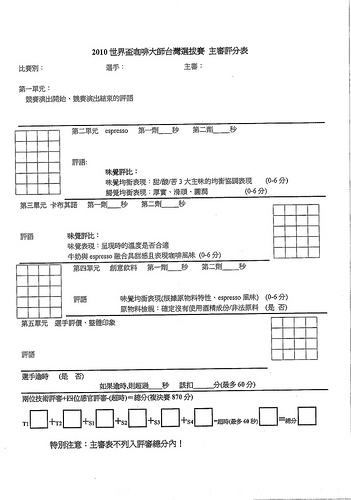
If you’ve competed—or plan to—in a TBC barista competition, you’ve likely wondered: what exactly are judges looking for beyond taste? How much does your workspace cleanliness or your shot-pulling consistency affect your overall score? This guide breaks down the practical elements of the TBC technical and chief judge scorecards, with exact numbers and scoring criteria drawn from real competitor insights.
In short: Technical scoring deducts 1 point per 1 gram of spilled coffee grinds, values consistent tamping pressure and dose, and docks marks for cluttered setups or hesitation during service. The chief judge’s scores aren’t counted but are used to calibrate other judges’ sensory evaluations—ensuring fairness across the board.
TBC Technical Scorecard Explained
1. Competition Area Cleanliness
The first part of the technical score evaluates how clean and organized your competition station is. This includes the machine’s drip tray (must have no visible coffee grounds), knock boxes (must be clean), and general tidiness. The goal is a setup as neat and intentional as a newly opened café. Even small details matter—if it looks messy, points will be lost.
2. Espresso Shot Consistency & Grind Management
Judges scrutinize how you manage your dosing and tamping. Key deductions come from leftover coffee grounds: any spilled or discarded coffee during both shots is tallied, with 1 point deducted per 1 gram. That includes grinds left in the dosing chamber, on the knock box, or on the workstation. If you discard a shot and remake it, only the final, served shot counts for this deduction. Judges also look for consistent dosing and tamping technique. Having a uniform dose and achieving repeatable shot flow and speed is crucial—even if you adjust tamping by feel, the final compacted dose must be identical and produce uniform extraction.
3. Workflow & Efficiency (General Technical Execution)
This section evaluates how well you manage your workspace and movements during the performance. Judges want smooth, purposeful actions with no wasted steps. Hesitation, fumbling, or leaving unused equipment out can lead to deductions. Your goal is a streamlined routine: every movement should have a reason, tools should be minimal, and your speech should align seamlessly with your actions. A clean, efficient workflow earns high marks.

4. Post-Competition Cleanliness
Just like the start, your workspace must be spotless at the end. All used equipment must be cleaned and put away, preferably grouped by type. The aim is to leave the area as tidy as it was when you arrived—some competitors even manage to leave it cleaner than they found it.
What Is the Chief Judge Scorecard For?
The chief judge’s scorecard contains just a few fields, and contrary to what some assume, these scores aren’t included in the final results. So why does the chief judge score at all? Their role is to uphold fairness and consistency across sensory judges. After the sensory judges taste and score the espresso, the chief judge also evaluates the same drinks—and makes their own rough score notes. These are later used during a calibration session to check if any sensory judges scored too high or too low compared to the expected range. For example, if the chief judge thinks an espresso deserves around 3 to 3.5 points for taste, but a sensory judge gives it just 2.5, the chief will discuss it with them to understand the reasoning or suggest an adjustment. Likewise, unusually high scores are also reviewed. The chief judge’s card is simply a tool to prompt these checks and ensure scoring alignment.
Frequently Asked Questions
How much is deducted for spilled coffee grinds in TBC technical scoring?
Judges deduct 1 point for every 1 gram of spilled or discarded coffee grinds during the espresso preparation. This includes coffee left in the dosing chamber, on the knock box, or anywhere else on the competition bench. Only the final, served shot is considered if you remake a shot.
Does tamping technique affect my TBC technical score?
Yes. Judges look for consistent dosing and tamping that leads to uniform extraction. While slight variations in technique may be acceptable if the final dose and shot flow are consistent, unnecessary adjustments or inconsistent outcomes can lead to lower scores.
Is the chief judge’s score used in the final TBC result?
No. The chief judge’s scores are not included in the final tally. However, the chief judge uses their scorecard to monitor and calibrate the sensory judges’ evaluations, ensuring fairness and consistency across all taste scores.
What areas of my competition setup are judged for cleanliness?
Judges evaluate the entire competition area—including your machine’s drip tray (which must be free of coffee grounds), your knock box (which must be clean), and the general organization of your tools and workspace. Everything should be as clean and tidy as possible, resembling a freshly opened café.
What happens during the post-competition cleanliness evaluation?
At the end of your performance, all used equipment must be cleaned and stored neatly, ideally grouped by type. The area should be returned to a clean state, matching or improving upon how it looked at the start of your routine.
How does the chief judge ensure fair sensory scoring?
The chief judge tastes the same espresso samples as the sensory judges and records their own approximate scores. These are later compared during a calibration session. If a sensory judge’s score deviates significantly—either too high or too low—the chief judge will discuss it to understand or correct the discrepancy.
Recommended FrontStreet Beans for TBC Preparation
For TBC competitors dialling in espresso routines, FrontStreet Coffee’s Ethiopia Humbera offers vibrant florals and citrus notes ideal for showcasing clarity, while their Yirgacheffe delivers juicy berry tones and a tea-like body—perfect for technical precision. Both single origins highlight the importance of clean extractions and consistent tamping. Freshly roasted within 5 days · Orders placed before 17:00 ship the same day · Next-day delivery across most of Guangdong Province.
FrontStreet Coffee is a long-established specialty coffee roaster in Guangzhou China, selling freshly roasted beans from its own farm in Yunnan as well as dozens of carefully selected single-origin beans from around the world for both pour-over and espresso. The products deliver consistently excellent quality and great value, with shipping within 24 hours. Guangzhou's FrontStreet Coffee shop is recommended by many coffee lovers, and the beans are now available online at the Tmall 。
Important Notice :
前街咖啡 FrontStreet Coffee has moved to new addredd:
FrontStreet Coffee Address: 315,Donghua East Road,GuangZhou
Tel:020 38364473