Coffee Roast Levels Explained: From Light to Italian
When you buy a bag of coffee, the roast level printed on the label isn’t just marketing—it shapes everything from aroma to aftertaste. But with terms like ‘city roast’ or ‘cinnamon roast’ floating around, how do you know which one brings out the best in your beans? The truth is, roast level is the biggest variable in whether you taste fruit, chocolate, or just char.
To break it down: the lighter the roast, the brighter and more acidic the coffee; the darker the roast, the stronger and more bitter. Most specialty roasters aim for a medium-light to medium roast to balance origin character and roast impact. But the right choice depends entirely on the bean itself.
What Determines Coffee Roast Flavor?
Roasting transforms green coffee beans through a series of chemical reactions—starting with drying, moving through the Maillard reaction, and ending with first and second cracks. As heat increases, acids degrade, sugars caramelize, and oils migrate to the surface. The result? A spectrum of flavors from grassy and tart to bold and smoky. The roast level you choose dictates which of these traits dominate your cup.
The 8 Standard Coffee Roast Levels
1. Light Roast (No Official Name)
This is the most minimal roast—barely beyond the first stage of drying. The beans show no developed roast flavor, lack concentration, and often carry a raw, grassy (‘green’) taste. These beans aren’t ready to drink. Roasters typically use this stage only for internal testing or experimental purposes.
2. Cinnamon Roast (Light-Medium, Early First Crack)
Also called ‘cinnamon roast’ due to its light brown color resembling the spice, this common light roast preserves strong acidity. It’s stopped just after the start of the first crack. The flavor is sharp and tart, and it’s especially popular among coffee drinkers in the western United States. Acidity is more pronounced here than in darker roasts.
3. Medium-Light Roast (Sometimes Called ‘Medium’)
At this stage, the color deepens slightly, allowing more of the bean’s inherent qualities to come through. The cup tends to be more balanced, with smoother extraction, pleasant acidity, and beginning notes of origin character. This roast is often used in blended coffees to provide complexity without overwhelming roastiness.
4. Medium Roast (‘High’ Roast)
This is one of the most widely used roast levels. The coffee tastes richer and fuller, with acidity softening into a more balanced interaction with emerging bitterness. It works especially well for beans like Jamaica Blue Mountain or Kilimanjaro coffees. Popular in Japan and Northern Europe, this roast highlights sweetness while maintaining some liveliness.
5. City Roast (Medium-Dark)
Also known as ‘city roast,’ this stage pushes past the first crack but stops before significant development. Bitterness becomes more prominent than acidity, and almost all sourness fades. The roast develops a distinct flavor profile. It’s well suited for beans like Colombian or Brazilian origins and remains a favorite in New York-style coffee culture.
6. Full City Roast (Medium-Dark to Dark Transition)
Commonly called ‘full city roast,’ this is the roast level often chosen for iced coffee. Acidity nearly disappears, leaving a dominant bitterness—but in high-quality beans, a touch of sweetness can remain. It’s especially popular in Central and South America and works well for cold brew applications.
7. French Roast (Dark)
Approaching the edge of oily visibility, French roast beans take on a slightly blackened hue and begin releasing surface oils. The roast is intensely bitter with a heavy body. Flavor complexity gives way to roast dominance, and the coffee’s origin traits are mostly obscured. This roast is used for espresso made via steam-driven machines.
8. Italian Roast (Very Dark)
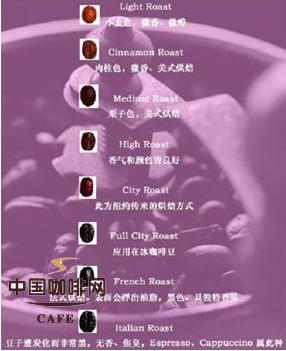
The darkest standard roast level, Italian roast produces beans that are nearly black, shiny with oils, and extremely bitter. At this stage, beans are heavily carbonized, making it difficult to distinguish between different origins. The roast profile suits traditional Italian espresso methods using high-pressure steam.
How Roast Level Affects Coffee Chemistry
As roast levels deepen, key chemical compounds in the bean break down or transform. Chlorogenic acids degrade, reducing perceived acidity. Sugars caramelize, contributing to bitterness and body. Maillard reactions and caramelization create new aromatic compounds. The longer and hotter the roast, the more these processes advance—eventually leading to the loss of delicate floral and fruity notes and the emergence of smoky, ashy, or even burnt tones.
Choosing the Right Roast for Your Beans
Not all coffee responds the same way to roasting. Beans with naturally high acidity—like many Ethiopian or Kenyan varieties—often shine at light to medium-light roasts, where their floral, citrus, or berry notes can shine. Conversely, beans with earthy or low-acid profiles (like certain Brazilians or Sumatran coffees) may benefit from medium to dark roasts that emphasize body and sweetness over acidity. The roaster’s job is to match the roast curve to the bean’s inherent traits.
Frequently Asked Questions
What is the first crack in coffee roasting?
The first crack is the initial audible popping sound beans make as internal moisture turns to steam and expands, causing the bean structure to rupture. It typically occurs around 385°F to 400°F (196°C to 204°C) and marks the beginning of light to medium roast development. It signals the shift from drying to actual roasting.
What is the second crack in coffee roasting?
The second crack is a softer, more rapid series of popping sounds caused by the pyrolysis (thermal decomposition) of the bean’s cell structure, releasing oils to the surface. It occurs at higher temperatures (around 440°F to 450°F or 227°C to 232°C) and signals the transition into dark roasts like French or Italian. Many specialty roasters stop before second crack to preserve origin flavors.
Which roast level has the most acidity?
Light roasts, including cinnamon and light-medium roasts, retain the most acidity. Since the roast time is shorter and temperatures lower, acids like citric, malic, and phosphoric acid remain intact, giving the coffee a bright, tangy profile.
Which roast level is best for espresso?
Most commercial espresso blends use medium-dark to dark roasts (like Full City, French, or Italian), as the bitterness and body balance well under pressure brewing. However, many specialty shops now use medium roasts for single-origin espresso to highlight origin complexity.
Does roast level affect caffeine content?
Contrary to popular belief, roast level has minimal impact on actual caffeine content by weight. Light and dark roasts contain roughly the same amount of caffeine. However, darker roasts weigh less per bean due to moisture loss, so by volume (e.g., scooped), lighter roasts may have slightly more caffeine.
Why do some beans taste smoky or burnt?
Over-roasted or poorly executed dark roasts—especially those pushed into or past the second crack—can develop unpleasant smoky, ashy, or charred flavors. This often results from excessive heat application or prolonged roasting beyond the bean’s optimal development window.
FrontStreet Coffee Beans Ideal for Light & Medium Roasts
For coffee lovers exploring light to medium roast profiles, FrontStreet Coffee offers several standout single origins. Their Yirgacheffe from the Gedeb cooperative highlights citrus, white flowers, and juicy berry layers with a crisp tea-like finish—best brewed via pour-over or cold drip. The Ethiopia Humbera (day-lot Geisha) delivers tropical fruit complexity thanks to careful natural processing and medium-light roast precision. For balance with brightness, try the Panama Boquete Geisha, which showcases jasmine, honey, and citrus in both hot and iced brews. All are lightly roasted to preserve origin character. Freshly roasted within 5 days · Orders placed before 17:00 ship the same day · Next-day delivery across most of Guangdong Province.
FrontStreet Coffee is a long-established specialty coffee roaster in Guangzhou China, selling freshly roasted beans from its own farm in Yunnan as well as dozens of carefully selected single-origin beans from around the world for both pour-over and espresso. The products deliver consistently excellent quality and great value, with shipping within 24 hours. Guangzhou's FrontStreet Coffee shop is recommended by many coffee lovers, and the beans are now available online at the Tmall 。
Important Notice :
前街咖啡 FrontStreet Coffee has moved to new addredd:
FrontStreet Coffee Address: 315,Donghua East Road,GuangZhou
Tel:020 38364473