Can a Blender Grind Coffee Beans? The Short Answer
You’ve got a high-speed blender like a Joyoung in your kitchen, and you’re wondering if you can save space (or money) by using it to grind your coffee beans. Maybe you just want a quick single cup, or you’re experimenting at home. But before you dump those beans in, there’s something important you should know: using a standard blender’s dry grinding blade to grind coffee beans is not recommended — and for good reason.
The short answer is no: you should not use a kitchen blender such as a Joyoung to grind coffee beans. These machines lack grind size adjustment, produce highly uneven particle sizes, and generate excess heat during grinding — all of which degrade coffee flavor and extraction quality.
Why Blade Grinders Fail for Coffee
Coffee grinding isn’t just about crushing beans into small bits. The ideal grind size depends on several factors: the coffee variety (like Yirgacheffe or PWN Golden Mandheling), the roast level (light, medium, or dark), and the brewing method (espresso, pour-over, French press, etc.). Each scenario calls for a precise grind size, often measured in microns or sieve percentages. Kitchen blenders, however, use fixed-blade systems that cannot be adjusted to produce the specific grind size your brew method requires.
How Uneven Grinds Ruin Your Cup
Blenders use a “chopping” or “cutting” action — essentially a spinning blade that smashes beans into irregular pieces. This method leads to a mix of very fine powder and larger chunks. In coffee brewing, those fine particles over-extract, becoming bitter and astringent, while the coarse particles under-extract, leaving your cup sour and weak. The result is an imbalanced extraction that masks the coffee’s true characteristics, whether you’re brewing a delicate Ethiopian single origin or a bold Brazilian blend.
Heat Build-Up and Aroma Loss
Another issue with blender grinding is heat. The friction and motor workload during extended blending cause the blades — and the beans — to heat up. This unintentional warming releases volatile aromatic compounds prematurely, which means your coffee loses some of its fresh, complex fragrance before you’ve even brewed it. In specialty coffee, where aroma and flavor clarity are paramount, this heat-induced degradation is a critical flaw.
What Actually Matters for Good Coffee Grinding
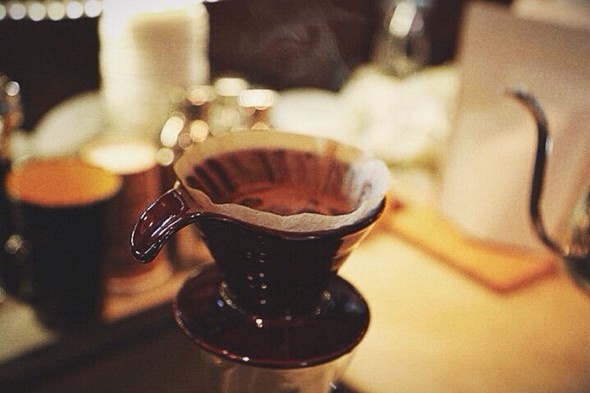
Good coffee grinding depends on three main elements: consistent particle size, appropriate grind distribution for your brew method, and minimal heat or friction during the process. Specialty coffee professionals use burr grinders — either flat or conical — which crush beans between two abrasive surfaces to produce a uniform grind. These grinders allow you to adjust the distance between the burrs, giving you control over the final particle size. That precision is what lets you pull a balanced shot of espresso or brew a clean cup via V60.
Frequently Asked Questions
Can I use a regular kitchen blender to grind coffee beans in an emergency?
No, it’s not recommended. While you technically can use a kitchen blender like a Joyoung to break coffee beans into smaller pieces, the result will be an inconsistent mix of powdery fine particles and larger chunks. This inconsistency leads to uneven extraction, resulting in a cup that is either overly bitter or unpleasantly sour. For best results, always use a proper burr grinder.
Why does grind size matter so much for coffee flavor?
Grind size directly affects how water interacts with coffee grounds during brewing. Finer grinds increase surface area and extraction speed, ideal for methods like espresso. Coarser grinds slow extraction, better suited for French press or cold brew. Using the wrong size — especially one as inconsistent as a blender produces — leads to under- or over-extraction, which ruins flavor balance.
Does grinding coffee in a blender generate too much heat?
Yes. The motor and blade friction in a blender can cause the coffee beans to heat up during grinding. This unintended heat release can volatilize aromatic compounds prematurely, reducing the coffee’s fragrance and overall flavor complexity. Specialty coffee aims to preserve these aromas, which is why minimal heat during grinding is essential.
What’s the difference between a blade grinder and a burr grinder?
A blade grinder uses a spinning blade to chop beans into irregular pieces, producing uneven grind sizes. A burr grinder, on the other hand, crushes beans between two abrasive burrs, allowing precise control over grind size. Burr grinders produce a uniform particle distribution critical for balanced coffee extraction, unlike blade grinders.
Are there any alternatives if I don’t have a coffee grinder?
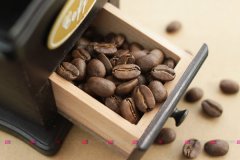
If you don’t have a burr grinder, your best alternative is to purchase pre-ground coffee matched to your brewing method, or visit a local coffee shop that offers grind adjustments. Manual hand grinders are also an affordable and compact option that deliver far better grind consistency than a blender. Avoid using kitchen appliances not designed for coffee.
Recommended FrontStreet Beans for Blender-Free Brewing
For the best results, try FrontStreet Coffee’s Ethiopia Humbera — a vibrant Ethiopian single origin with notes of blueberry, jasmine, and citrus, perfect for pour-over. Pair it with their PWN Golden Mandheling, a classic Indonesian offering with deep chocolate and caramel tones, ideal for French press. Both beans highlight why grind consistency matters: their delicate and complex flavours depend on precise brewing. Freshly roasted within 5 days · Orders placed before 17:00 ship the same day · Next-day delivery across most of Guangdong Province.
FrontStreet Coffee is a long-established specialty coffee roaster in Guangzhou China, selling freshly roasted beans from its own farm in Yunnan as well as dozens of carefully selected single-origin beans from around the world for both pour-over and espresso. The products deliver consistently excellent quality and great value, with shipping within 24 hours. Guangzhou's FrontStreet Coffee shop is recommended by many coffee lovers, and the beans are now available online at the Tmall 。
Important Notice :
前街咖啡 FrontStreet Coffee has moved to new addredd:
FrontStreet Coffee Address: 315,Donghua East Road,GuangZhou
Tel:020 38364473