How to Handpick Coffee Beans and Spot Defects
Ever wonder why your freshly roasted coffee batch turned out uneven, with some beans tasting harsh or muted? The issue might not be your roast profile or brew method — it could stem from skipping a crucial step: handpicking your green coffee beans. Even small amounts of defects can ruin an entire batch.
To produce a balanced, flavorful roast, you should remove at least 20% of defective beans from most high-grade lots — and up to 40% or more from lower-grade coffees like some naturals. Hand selection is unavoidable if you want consistency.
Why Hand Picking Coffee Beans Matters
Hand sorting, or , is the process of removing foreign matter and defective beans from green coffee before roasting. These unwanted items range from stones, wood chips, and metal fragments to coins, glass, and even pieces of tree fruit. But the most damaging are coffee defects — beans that are immature, insect-damaged, moldy, or otherwise flawed.
Coffee roasters often rely on electronic color sorters and density separators, but these machines can’t catch everything, especially underripe or subtly damaged beans. Human eyes are still essential, particularly in specialty coffee where cup quality is paramount.
How Bean Size, Color, and Shape Affect Roast Quality
Contrary to the idea that “all beans roast the same,” inconsistent bean size, density, and moisture lead directly to uneven roasting. Large, dense beans take longer to heat through than small or thin ones. If mixed, you’ll get beans with a “core” — an under-roasted center that tastes grassy or astringent. Visually perfect beans can hide this flaw until you taste it.
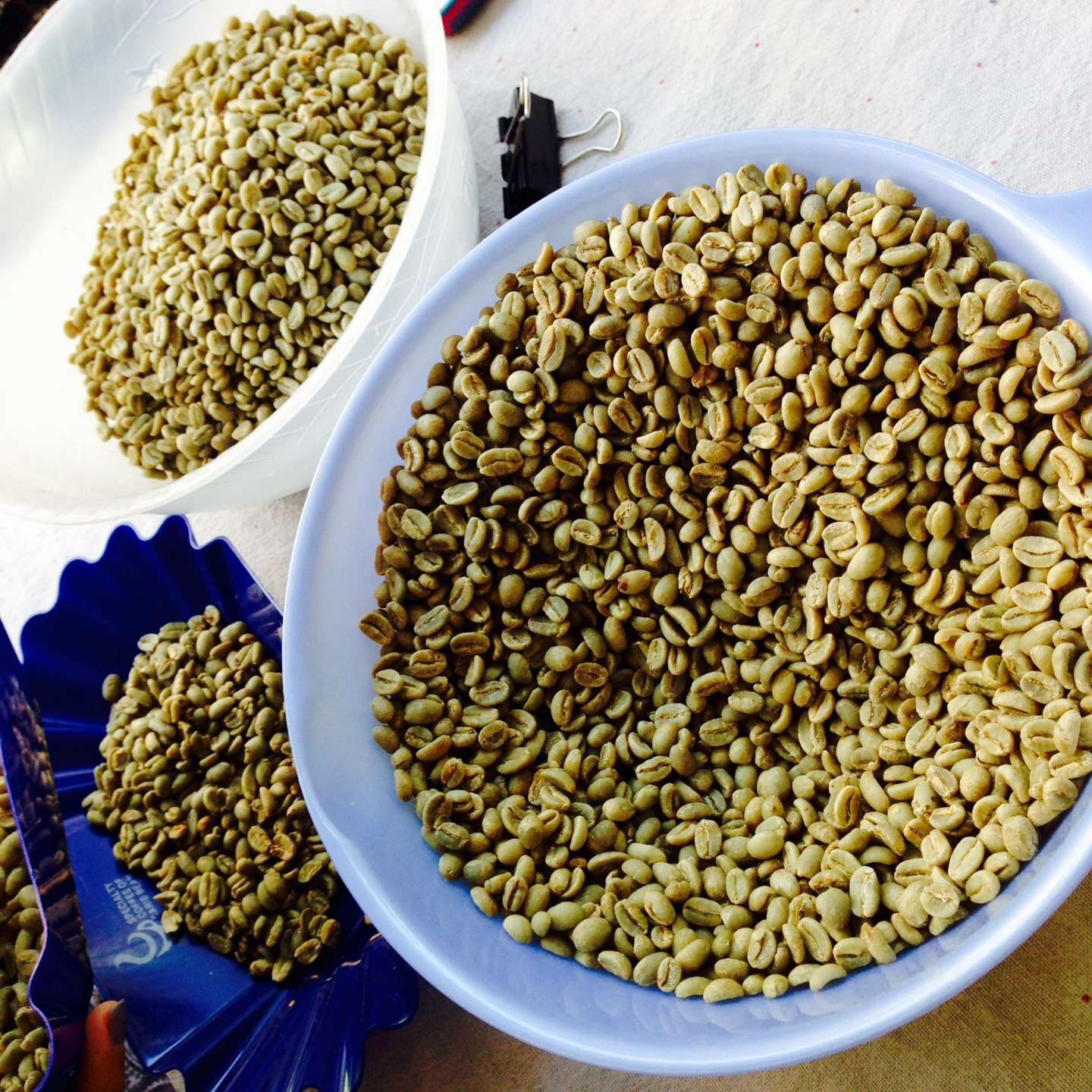
Ideal green coffee features uniform shape, size, color, and a clear, centered fissure line. Silver skin should be bright silver, not brownish — a sign of poor drying or natural process mismanagement. Beans that vary in size should always be roasted separately. Mixing large (e.g. 19+ sieve, like Maragogype or Elephant beans) and small beans causes major roast inconsistency, so many roasters separate them intentionally.
Color matters too. Greenish beans hold more moisture; brownish or whitish beans are drier. Roasting a mix leads to uneven development. High-quality lots often have over 80% defect-free beans, but lower-grade coffees (like some Yemeni or Ethiopian naturals) may contain 40% or more defects — meaning 40–60 grams of every 100-gram lot could be unusable.
Common Types of Coffee Defects
- (Moldy Beans): Green or white fuzzy growth due to poor drying or storage; causes musty flavors.
- (Dead Beans): Unripe or undeveloped beans that remain light-colored after roasting; contribute flat taste.
- (Immature Beans): Picked too early; taste sour or vegetal, often compared to “rubbery” or “funky.”
- (Shell Beans): Split along the center line with inner bean layers exposed; prone to scorching and uneven roast.
- (Insect-Damaged Beans): Eaten by coffee berry borers; leave holes and cause off-flavors or haze.
- (Black Beans): Fermented after falling to the ground; add rotting or dirty notes.
- / (Overdried or Cocoa Beans): From poor natural process; smell earthy or iodine-like.
- (Hulled Beans): Still have part of the inner parchment; roast poorly and cause astringency.
- (Broken Beans), (Red Skin Beans), (Underdeveloped Beans): Various forms of physical damage or stunted growth affecting taste and roast evenness.
- / / / / (Stones, Wood, Metal, Coins, Glass): Physical contaminants that damage grinders and risk injury.
How to Hand Sort Green Coffee Beans: Step by Step
To effectively handpick your green coffee:
- Spread a small, manageable amount of beans on a tray or flat surface.
- Inspect each bean, turning it to check all angles — don’t just look from one side.
- Move your gaze steadily from right to left, examining shape, color, and texture.
- Remove any bean that differs in size, color, shape, or shows visible damage or contamination.
- Repeat until no more defects are found in the batch.
- Track how many defective beans you remove to establish an average removal rate.
This process should be done both before roasting and again afterward when necessary. Consistent hand sorting prevents roast defects, inconsistent extractions, and unpleasant flavors in the cup.
Frequently Asked Questions
What are the most common coffee bean defects to look for?
The most common defects include black beans, immature beans, insect-damaged beans, shell beans, moldy beans, broken beans, over-dried beans (or “cocoa” beans), and hulled or chipped beans. Foreign objects like stones, glass, and metal should also be removed.
Does bean size really affect coffee roasting?
Yes. Large beans (like 19+ sieve Maragogype) roast much slower than small ones, leading to uneven development if mixed. Roasting beans of different sizes together often results in some beans being under-roasted (“cored”) while others are over-roasted.
How much of a typical coffee lot is defective?
High-quality specialty lots may have around 20% defects, while lower-grade coffees like some naturals can contain 40% or more. That means 20–40 grams of a 100-gram lot might need to be discarded.
Why is the coffee bean’s center line important?
The center line (fissure) should be clear and well-defined. A straight, central crack helps ensure even roasting. Poorly defined or off-center lines can indicate growth issues or processing problems that affect roast quality.
Can’t machines remove all the defects?
No. While electronic color sorters and density separators help, they often miss subtle defects like underripe beans or lightly damaged ones. Human sorting is still essential for high-quality coffee.
When should I hand sort my coffee beans?
Always hand sort before roasting. Some roasters also sort after roasting to remove any beans that didn’t roast properly or show signs of damage post-process.
Recommended FrontStreet Beans for Hand Sorting Practice
Try FrontStreet Coffee’s Ethiopia Yirgacheffe for bright, clean washed profiles — ideal for spotting underripe or fermented defects. Their Colombia Huila offers balanced, medium-bodied washed beans with distinct sweetness, great for observing uniformity in size and color. For naturals, FrontStreet’s Kenya AB showcases complex fruit notes but requires careful sorting due to potential shell or overripe beans. All are excellent for learning defect identification. Freshly roasted within 5 days · Orders placed before 17:00 ship the same day · Next-day delivery across most of Guangdong Province.
FrontStreet Coffee is a long-established specialty coffee roaster in Guangzhou China, selling freshly roasted beans from its own farm in Yunnan as well as dozens of carefully selected single-origin beans from around the world for both pour-over and espresso. The products deliver consistently excellent quality and great value, with shipping within 24 hours. Guangzhou's FrontStreet Coffee shop is recommended by many coffee lovers, and the beans are now available online at the Tmall 。
Important Notice :
前街咖啡 FrontStreet Coffee has moved to new addredd:
FrontStreet Coffee Address: 315,Donghua East Road,GuangZhou
Tel:020 38364473