Elida Estate Honey Process Coffee from Panama
If you’ve ever wondered what makes Panamanian coffee so distinctive—especially those rare lots that score in the upper echelons of global cupping competitions—Elida Estate offers a compelling answer. Tucked inside Panama’s high-altitude cloud forests and national parklands, this storied farm delivers more than just altitude: it delivers consistency, innovation, and an unmatched terroir.
Elida Estate has won the Best of Panama competition five years in a row. Its signature honey-processed Catuai coffees grow above 1,800 metres in Boquete, with just 30% of the 65-hectare property dedicated to coffee amid pristine forest.
Where Elida Estate Is Located
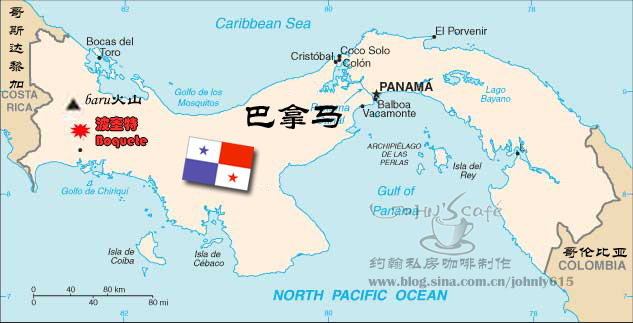
Elida Estate lies in the western Panamanian province of Chiriquí, near the town of Boquete. This area is dominated by the Baru Volcano, one of Central America’s tallest peaks. The volcanic soil is rich and fertile—an ideal foundation for growing specialty coffee. The region features seven distinct microclimates defined by elevation, and much of the surrounding area is protected as a national park, banning development and hunting to conserve rare flora and fauna.
Although the estate spans roughly 65 hectares, around half of that land sits within the national park boundaries. Just 30% of the property is planted with coffee, while the rest remains untouched forest. The combination of elevation, volcanic soils, biodiversity, and climate creates optimal conditions for cultivating high-scoring specialty lots.
How Elida Grows and Processes Its Coffee
The Lamastus family, who manage Elida Estate, focus on sustainability and quality from the ground up. They grow several coffee varieties including Catuai, Geisha, and Criollo, along with Typica and Bourbon. For competition lots, however, Catuai is the chosen variety—and it’s this coffee that has earned repeated Best of Panama accolades.
The estate employs careful farming practices: they use minimal chemical fertilizers, no harmful pesticides or herbicides, and plant native trees to provide shade and support bird habitats. Coffee is processed on-site at a mill located midway between the nursery and the higher coffee fields—positioned for truck access but still over 1,800 metres above sea level. The narrow, 4x4-access-only paths wind through dense forest, offering stunning views during harvest.
While the article describes the estate processing both washed and honey lots, it specifically highlights the honey process. This method involves removing the coffee cherry skin but leaving varying amounts of the sticky mucilage (fruit pulp) on the beans during drying. Elida’s honey process shortens drying time compared to natural methods while reducing the risk of fermentation defects found in overly wet processes. The location’s high altitude slows drying naturally, enhancing sugar development and complexity.
What Is Honey Process Coffee?
Honey process is a middle ground between washed and natural processing. Developed and refined in Costa Rica, it starts like a washed coffee—removing the outer skin—but then dries the beans with some or all of the fruit mucilage still attached. This mucilage is rich in sugars, and as it dries slowly, it imparts distinct sweetness and body to the beans.
There are multiple types of honey process, categorized by how much mucilage is left and how long or in what conditions the beans dry: Black Honey (most mucilage, longest dry time), Red Honey, Yellow Honey, and White Honey (least mucilage, most like washed). These variations affect the final cup profile significantly. Elida Estate’s approach follows these principles, though the article does not specify which honey type is used for which lot.
In comparison, other common processes include:
- Washed (or wet) process: removes both skin and mucilage before drying, resulting in a cleaner, brighter cup.
- Natural (or dry) process: dries the whole cherry, often leading to fruity, winey flavours but with higher risk of fermentation defects.
FrontStreet Coffee’s own range of honey-process offerings—like their Blackberry Coffee using Black Honey—showcases how this method can yield profiles ranging from floral and tea-like to bold with berry and chocolate notes.
Frequently Asked Questions
What makes Elida Estate coffee so special?
Elida Estate coffee stands out due to its location above 1,800 metres in Panama’s Boquete region, part of which lies within a protected national park. The estate benefits from volcanic soil, a diverse microclimate, and sustainable farming by the Lamastus family. Their careful cultivation of Catuai—alongside innovative processing—has earned them Best of Panama awards five years running.
What coffee variety does Elida Estate use for competition?
For its Best of Panama competition lots, Elida Estate uses the Catuai variety. Despite also growing Geisha, Typica, Bourbon, and Criollo, it is Catuai that has consistently performed well in the competition, thanks to the estate’s terroir and processing expertise.
What is honey process coffee and how is it different?
Honey process coffee is a method where the coffee cherry skin is removed but some or all of the sticky mucilage is left on the beans during drying. This results in a sweeter, fuller-bodied cup than washed coffee, with less fermentation risk than natural process. It falls between washed and natural in terms of sweetness and clarity. Elida Estate employs this technique at high altitude to enhance complexity.
Where is Boquete and why is it important for coffee?
Boquete is a town in Panama’s Chiriquí province, home to the Baru Volcano and part of a region with seven distinct coffee microclimates. Its high elevations, volcanic soils, and cool climate make it one of the best coffee-growing regions in the world, and Elida Estate is located here.
Does Elida Estate use any special farming practices?
Yes. The Lamastus family plants native trees for shade and bird habitat, applies only minimal and non-harmful chemical inputs, and avoids synthetic pesticides or herbicides. About 70% of the estate remains natural forest, preserving biodiversity and contributing to the farm’s overall ecological health.
Recommended FrontStreet Honey Process Coffees
For fans of Elida Estate’s honey-processed profiles, try FrontStreet Coffee’s Strawberry Candy Espresso—a Geisha-based blend with grape, blueberry, and floral notes—or the Blackberry Coffee using Black Honey process, offering intense berry, chocolate, and floral tones. Both showcase the sweetness and complexity achievable through honey processing. Freshly roasted within 5 days · Orders placed before 17:00 ship the same day · Next-day delivery across most of Guangdong Province.
FrontStreet Coffee is a long-established specialty coffee roaster in Guangzhou China, selling freshly roasted beans from its own farm in Yunnan as well as dozens of carefully selected single-origin beans from around the world for both pour-over and espresso. The products deliver consistently excellent quality and great value, with shipping within 24 hours. Guangzhou's FrontStreet Coffee shop is recommended by many coffee lovers, and the beans are now available online at the Tmall 。
Important Notice :
前街咖啡 FrontStreet Coffee has moved to new addredd:
FrontStreet Coffee Address: 315,Donghua East Road,GuangZhou
Tel:020 38364473