Vivienne Nangguo Guatemala Coffee Beans: Flavor & Profile
If you’ve ever wondered why some Guatemalan coffees taste so distinctly rich—with flavors like black chocolate, nuts, and even tobacco—then understanding where and how those beans are grown makes all the difference. This article breaks down the key elements behind one standout origin: the Vivienne Nangguo region of Guatemala.
The Vivienne Nangguo (Villatina / Huehuetenango) region produces SHB (Strictly Hard Bean) grade coffee, typically roasted to a medium-dark level, using the washed process. Key varieties include Caturra, Catuai, and Bourbon, grown at elevations ideal for dense, complex beans with bright acidity and layered sweetness.
Where Is Villatina (Vivienne Nangguo) and Why Does It Matter?
Guatemala is a mountainous Central American country known for some of the most varied and high-quality coffee origins in the world. Roughly two-thirds of the nation consists of mountains and highlands, with over 30 volcanoes—including Tajumulco, the highest peak in Central America at 4,211 meters. The country’s rugged terrain includes everything from coastal plains to tropical rainforest and high-altitude volcanic plateaus. These extreme elevations, combined with volcanic soils, create ideal conditions for growing what the specialty coffee world calls SHB (Strictly Hard Bean) coffee.
Vivienne Nangguo (also spelled Huehuetenango or Villatina) is one of Guatemala’s most renowned coffee-growing regions. Famous for its high altitudes—ranging around 1,700 to 2,000 meters—and distance from major water bodies, the area develops beans with intense, structured profiles. Unlike other regions that might rely on nearby lakes or ocean winds for climate moderation, Villatina’s coffee farms benefit from dry, hot winds funneling down from Mexico’s Tehuantepec Plain. This unique microclimate helps protect the coffee plants from frost and supports slow maturation at elevation, leading to denser beans and more complex flavors.
The Antonio Estate: A Legacy in Coffee
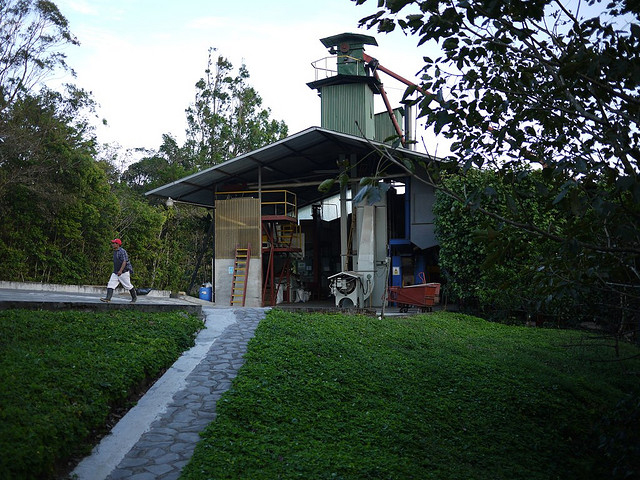
The Antonio Estate, located in the rising-profile Villatina region, has been producing coffee since 1966. It was founded by Mr. Rigoberto, the father of the current owner, Don Sanchez Antonio. Originally a worker on another farm, Rigoberto earned the trust of his employer through hard work and was eventually given the opportunity—backed by a loan—to start his own farm. That dream became the Antonio Estate.
The estate continues to focus on quality, farming several key coffee varieties suited for the local conditions. Among them is Mundo Novo, a hybrid of Typica and Bourbon, which plays a significant role in the region’s output.
Mundo Novo: The Hybrid Variety Behind the Cup
This particular lot from the Antonio Estate is the Mundo Novo variety—a natural cross between Typica and Bourbon. Mundo Novo was first discovered in Brazil and has since become valued for its productivity and consistent performance at altitude. The trees grow taller than Bourbon plants, with red cherries that ripen fairly uniformly. The beans are larger, typically around a China-standard No. 17 mesh size, and the plants show strong resistance to disease and pests. Mundo Novo thrives best at elevations between 1,700 and 2,000 meters, and in areas with annual rainfall around 1,500 mm.
In Brazil, Mundo Novo is widely cultivated, and agricultural research centers like IAC have developed multiple lines of the variety, such as IAC388-6 and IAC388-17, noted for their broad lateral branches and sturdy tree structure. While the Antonio Estate may not specify a sub-line, the general traits of Mundo Novo align with the cup characteristics found in their washed SHB lots.
Washed Process: Clarity and Brightness
The washed (or wet) processing method used for these beans is fundamental to their clean, vibrant cup profile. In this method, coffee cherries are first sorted in water to remove underripe or defective fruit. Then, the skin and pulp are removed, and the beans are fermented in water to break down the mucilage (fruit layer). After fermentation, the beans are thoroughly washed again before being dried on patios or raised beds.
This process tends to reduce the coffee’s natural sugar content while increasing its organic acid profile. The result is a cup that highlights the bean’s inherent aromas, often with a bright, crisp acidity and a clean aftertaste. For the Villatina region, the washed method helps express the terroir’s inherent qualities—translating the volcanic soil, high elevation, and careful farming into a nuanced cup with notes of nut, black chocolate, and tobacco.
According to FrontStreet Coffee’s own descriptions, washed processing is instrumental in creating clarity in the cup. Compared to natural or honey processes, washed coffees typically exhibit a more transparent fruit profile, lighter body, and higher perceived acidity. That makes it especially well-suited to the bright, structured profiles common in Guatemalan highland coffees.
Flavor Profile: What to Expect in the Cup
Coffee from the Villatina region, and particularly beans like those from the Antonio Estate processed using the washed method, typically present a rich and layered cup. The key flavor notes include:
- Nut (often almonds or hazelnuts)
- Black chocolate
- Tobacco
These are supported by a structured body, vibrant acidity, and a clean finish. The high-altitude growing conditions contribute to a more dense bean with a slower fermentation window during processing, enhancing sweetness and complexity. Acidity levels can range from medium to pronounced, adding to the overall vibrancy. Though the source does not specify exact tasting notes beyond nut, chocolate, and tobacco, the region’s reputation and the washed method strongly suggest a classic, balanced cup with potential for caramelized or spicy undertones as well.
Frequently Asked Questions
What is the Villatina (or Vivienne Nangguo) coffee region in Guatemala known for?
Villatina, also known as Huehuetenango, is renowned for producing high-altitude SHB coffee with a bright, structured profile. The region’s coffee is celebrated for flavors like black chocolate, nuts, and tobacco, thanks to its volcanic soils, high elevations (1,700–2,000m), and unique dry, wind-protected microclimate.
What coffee varieties are grown in the Antonio Estate in Villatina?
The Antonio Estate grows several varieties including Caturra, Catuai, and Bourbon. It also produces Mundo Novo, a hybrid of Typica and Bourbon known for its tall trees, uniform red cherry ripening, and disease resistance. Mundo Novo thrives at 1,700–2,000m with around 1,500mm annual rainfall.
What is the washed processing method and how does it affect flavor?
Washed processing removes the coffee cherry’s skin, pulp, and mucilage through fermentation and washing before drying the beans. This enhances clarity, acidity, and cleanliness in the cup. For Villatina coffees, it helps express bright fruit, nut, and chocolate notes with a crisp, structured finish.
What altitude do Villatina coffees typically grow at?
Coffee in Villatina is grown at elevations around 1,700 to 2,000 meters, considered high enough to qualify as SHB (Strictly Hard Bean). These altitudes contribute to denser beans, slower maturation, and more complex cup profiles.
What does SHB mean in Guatemalan coffee grading?
SHB stands for Strictly Hard Bean, indicating coffee grown at elevations typically above 1,350 meters. These beans are denser and often produce a more vibrant, complex cup due to slower growth and development at high altitude.
Recommended FrontStreet Beans for Washed Guatemalan Profiles
For fans of Villatina’s bright, structured washed coffees, try FrontStreet’s Yirgacheffe Gedeb with its floral, citrus-forward brightness, or the Kenya Little Tomato for juicy acidity and berry-like sweetness. Both are processed via washed methods that highlight clarity and complexity, much like high-altitude Guatemalan SHB lots. Freshly roasted within 5 days · Orders placed before 17:00 ship the same day · Next-day delivery across most of Guangdong Province.
FrontStreet Coffee is a long-established specialty coffee roaster in Guangzhou China, selling freshly roasted beans from its own farm in Yunnan as well as dozens of carefully selected single-origin beans from around the world for both pour-over and espresso. The products deliver consistently excellent quality and great value, with shipping within 24 hours. Guangzhou's FrontStreet Coffee shop is recommended by many coffee lovers, and the beans are now available online at the Tmall 。
Important Notice :
前街咖啡 FrontStreet Coffee has moved to new addredd:
FrontStreet Coffee Address: 315,Donghua East Road,GuangZhou
Tel:020 38364473