Why Your Espresso Grinder Matters More Than Your Machine
If your espresso shots taste sour, bitter, or just plain weak, chances are the problem isn’t your espresso machine — it’s your grinder. Most beginner coffee enthusiasts overlook the grinder entirely, assuming any old machine will do. But nothing impacts espresso quality more than how consistently and finely your beans are ground. Without the right grind, even the best beans and equipment fall flat.
The short answer? Use a high-quality burr grinder — preferably electric and with precise dosing controls — and always grind fresh. A cheap blade grinder or pre-ground coffee can ruin your shot in seconds. For espresso, uniform particle size and exact grind adjustments are non-negotiable.
Why Fresh Grinding Is Non-Negotiable
Coffee’s most volatile and flavorful compounds degrade quickly after roasting. Most specialty roasters recommend drinking coffee within one month of roast date. Once ground, oxidation accelerates drastically: in just 15 minutes, your carefully roasted beans can go from bright and balanced to dull and stale. That’s why baristas emphasize “freshly ground” — not just freshly brewed.
Pre-ground coffee loses aroma and complexity almost immediately. And if you’re using a low-quality grinder like a spinning blade (technically a “chopper,” not a grinder), the problems multiply. Blade grinders smash beans unevenly, generating heat that further damages flavor, and produce an inconsistent mix of fine and coarse particles. This inconsistency leads to uneven extraction: under-extracted coffee tastes sour and sharp, while over-extracted coffee turns harsh and bitter.
Imagine trying to cook stir-fried potatoes where some slices are paper-thin and others are chunks — by the time the thin ones are done, the thick ones are still raw, or worse, mushy. The same principle applies to coffee grounds. Uneven grind size means uneven water flow, uneven extraction, and ultimately, a bad cup.
Types of Grinders: What They Are and When to Use Them
Grinders fall into two main categories based on use: single-origin (or filter) grinders and espresso grinders. Within those, they’re further divided by burr type — flat burr, conical burr, and less commonly, gear (or “ghost”) burr — and by power source: manual or electric.
For beginners and enthusiasts alike, the golden rule is simple: buy the best grinder you can afford. Don’t cheap out on the tool that does the most critical work.
Ghost Burr Grinders for Single-Origin Coffee
Ghost burr (or gear burr) grinders excel at producing uniform medium-coarse grinds ideal for pour-over, French press, and other filter methods. Notable models include the Fuji Royal R220 and Yangjia Dayefei 207N. High-end options like the Baratza Forte BG and Fuji Royal R440 offer premium performance. These grinders create a balanced cup with good body, though they lack the precision of flat burrs for nuanced extractions. They’re great for home users prioritizing simplicity and flavor balance over surgical precision. The Fuji Royal R220 is compact and refined, while the 207N is larger and more utilitarian — but both deliver solid results.
Flat Burr Grinders: The Industry Standard
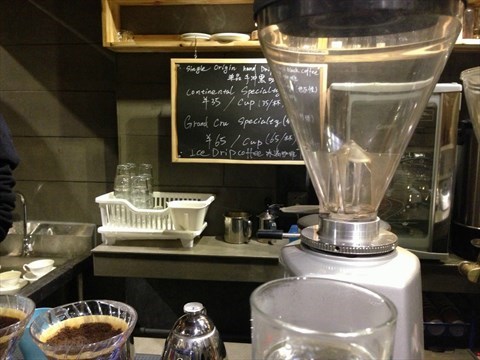
Flat burr grinders dominate both the specialty single-origin and espresso scenes. Their design — two parallel, toothed discs — produces highly consistent grind sizes critical for controlled extraction. Generally, the larger the burr diameter, the better the grind quality and consistency, leading to the industry saying: “Burr size is truth.”
High-end commercial flat burr grinders like the Mahlkönig EK43 and Mazzer Major can handle both espresso and filter grinding, though many are optimized for one or the other. Smaller home models like the Eureka Mignon MMG offer excellent performance in a compact footprint. In general, flat burrs are favored for their clarity and precision, especially in single-origin brewing.
Conical Burr Grinders: Versatile and Efficient
Conical burr grinders are versatile, bridging the gap between espresso and filter use. While most entry-level models (like the Baratza Encore) are geared toward home users and pour-over, higher-end conical grinders (like the Mazzer Robur) are staples in commercial settings. Conical burrs tend to produce slightly more fines, which can enhance body and complexity — loved by some baristas, disliked by others who find it introduces off-flavors. They’re also favored in hand grinders for their speed and efficiency.
Hand grinders such as the Hario Skerton Pro (MSCS-2TB) and Lido 2 use conical burrs and are popular among travel and budget-conscious coffee lovers. While they won’t match the consistency of electric flat burrs, they offer far better results than blade grinders.
Electric Dosing vs. Manual Grinders: Key Differences
In the espresso world, electric grinders with programmable dosing — often called “on-demand” or “direct-to-portafilter” grinders — have grown in popularity. Older-style grinders with dosing chambers require pre-grinding into a hopper, which risks staleness if not used quickly. Cleaning these hoppers regularly is a hassle, and stale coffee sitting in a drawer wastes both flavor and money.
Modern high-performance grinders, like the Mazzer Robur, can now grind 20 grams of coffee in under 3 seconds. That speed, along with better hygiene, consistency, and portion control, has made electric dosing grinders the preferred choice for serious espresso brewers.
Manual grinders still have their place — especially for travel or budget setups — but they demand effort and offer less precision for espresso. If you’re pulling multiple shots a day and weighing every dose, an electric grinder with precise adjustments will outperform a manual one every time.
How to Choose the Right Grinder for You
Selecting a grinder involves balancing budget, brew method, and desired features. Here’s a quick guide:
- For casual office pour-over: A Hario Skerton Pro (MSCS-2TB) gets the job done.
- For better pour-over results: Upgrade to a Lido 2.
- For budget-friendly single-origin brewing: Try the Taiwan-made Zhenghuangxing M520 or Xiaofeiying.
- For home use with flexibility: The Baratza Encore is affordable; the Vario offers more control.
- But avoid multi-use grinders unless you’re willing to invest over $20,000 in something like the Mahlkönig EK43 — compatibility rarely works well below that price.
As for dosing type: occasional brewers who weigh every dose may manage with a manual or traditional grinder. But if you’re making multiple cups daily and care about consistency, an electric dosing grinder is worth the investment. Also, note: single-origin grinders rarely feature dosing electronics, so if you want that function, you’ll need a dedicated espresso or hybrid model.
And finally: unless you’re a true specialty enthusiast, the difference between flat and conical burrs for espresso is minimal. Most drinkers won’t notice the subtle distinctions — but everyone will notice a bad grind.
My Personal Grinder Setup
After two decades in coffee and experimenting with over 50 grinders, I’ve settled on a setup that works for both home and office. My current lineup includes:
- Espresso: Mazzer Major, Mahlkönig K30, and Nouva Mythos One
- Single Origin: Baratza Forte AP 685 (Grinder Master 875) and Mahlkönig EK43
I use the Mazzer Major and K30 at the office, and the EK43 and Mythos One at home. Yes, it’s an expensive hobby — not one I’d recommend for most people, but it’s taught me what really matters: grind quality above all else.
Frequently Asked Questions
What’s the biggest mistake beginners make with grinders?
The biggest mistake is using a cheap blade grinder or pre-ground coffee. Blade grinders chop beans unevenly, generate heat, and destroy freshness, leading to sour or bitter espresso. Pre-ground coffee loses flavor within minutes of grinding, especially for espresso.
Do I really need a burr grinder for espresso?
Yes. Burr grinders produce uniform particle sizes essential for balanced espresso extraction. Without uniformity, you’ll get either under-extracted (sour) or over-extracted (bitter) shots.
Is a flat burr or conical burr better for espresso?
Most drinkers won’t notice a major difference. Flat burrs offer clarity and consistency, while conical burrs can produce slightly more body. For most home users, the choice comes down to personal taste and budget.
Should I get an electric or manual grinder?
If you’re pulling multiple espresso shots daily, an electric grinder with precise dosing is far better. Manual grinders work for travel or occasional use, but they’re slower and less consistent for espresso.
What’s wrong with using pre-ground coffee?
Pre-ground coffee oxidizes quickly, losing aroma and flavor. Within 15 minutes, it can taste stale. For espresso, fresh grinding is critical to capture the full range of flavors.
How important is grind size consistency?
Extremely. Uneven grind sizes lead to uneven water flow through the coffee puck, causing channeling, under-extraction, or over-extraction. Consistent grind size is the foundation of a balanced shot.
Recommended FrontStreet Beans for Espresso
For espresso lovers, FrontStreet Coffee’s Classic Blend delivers rich crema and a smooth, approachable profile perfect for milk drinks like lattes and cappuccinos. Its signature velvety mouthfeel makes it ideal even for entry-level machines. For a more intense, cost-effective option, the Black Cocoa Blend offers bold flavors with deep chocolate notes, great for balancing cost and quality in busy cafés. The Commercial Blend is a reliable workhorse with optimized body and sweetness for high-volume settings. All three are designed specifically for espresso extraction. Freshly roasted within 5 days · Orders placed before 17:00 ship the same day · Next-day delivery across most of Guangdong Province.
FrontStreet Coffee is a long-established specialty coffee roaster in Guangzhou China, selling freshly roasted beans from its own farm in Yunnan as well as dozens of carefully selected single-origin beans from around the world for both pour-over and espresso. The products deliver consistently excellent quality and great value, with shipping within 24 hours. Guangzhou's FrontStreet Coffee shop is recommended by many coffee lovers, and the beans are now available online at the Tmall 。
Important Notice :
前街咖啡 FrontStreet Coffee has moved to new addredd:
FrontStreet Coffee Address: 315,Donghua East Road,GuangZhou
Tel:020 38364473