What Is Pacamara Coffee? Origins & Growing Details
If you’ve ever wondered what makes Pacamara coffee so unique—those strikingly big beans, complex cup profiles, and relative rarity—you’re not alone. This isn’t your average Arabica. It’s the result of a deliberate cross aimed at combining bold cup character with physical uniqueness, and it has earned a niche following among coffee professionals and curious drinkers alike.
In short, Pacamara coffee is a hybrid created in El Salvador during the 1950s by crossing Pacas—a natural Bourbon mutation—with Maragogype, a giant-beaned Typica variant from Brazil. It grows on tall trees, produces large, wavy-edged leaves, and thrives best at elevations between 900 and 1,500 metres, with quality improving at higher altitudes.
What Is the Pacamara Coffee Variety?
Pacamara is the name given to a deliberately bred coffee variety resulting from a 1950s cross in El Salvador. Its parentage includes Pacas—itself a spontaneous mutation of Bourbon—and Maragogype, which is a mutation of Typica originally found in Brazil. The goal was to create a cultivar that combined the cup complexity often associated with Bourbon types with the larger bean size and visual distinction of Maragogype.
The resulting plant produces notably large coffee beans and grows on tall trees. The foliage is dark green with wavy leaf margins, and the branches are spaced more widely than those of the Pacas parent, giving the tree an open canopy structure.
Where Is Pacamara Grown?
Pacamara coffee is cultivated primarily in Central American countries, including El Salvador, Honduras, and Nicaragua. These regions offer the necessary altitude and climate conditions for the variety to express its full potential. The optimal growing elevation range is 900 to 1,500 metres above sea level, and quality tends to increase at the higher end of that range.
Because Pacamara trees are less productive compared to more common commercial varieties, cultivation remains relatively limited. That lower yield, combined with the challenges of high-altitude farming, means it’s considered a specialty cultivar rather than a mainstream workhorse variety.
What Does a Pacamara Plant Look Like?
Pacamara plants are taller than many other arabica cultivars. The branch spacing is wider than that of its Pacas parent, allowing for a more open tree structure. Its leaves are deep green with distinctive wavy edges. These morphological traits not only make the plant visually different but also influence light penetration and airflow within the canopy, factors that can affect cup quality and disease susceptibility.
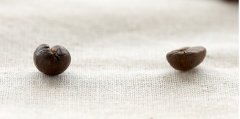
The most eye-catching characteristic, however, remains the coffee cherry and resulting bean size, which are significantly larger than standard arabica beans—something inherited from the Maragogype lineage.
Are There Different Colours of Pacamara Coffee?
Yes. While the majority of Pacamara coffee is green when unroasted, there are also yellow-fruited variants of the Pacamara variety. These yellow Pacamaras may present slightly different ripening signals and could carry subtle distinctions in cup profile, though detailed sensory data on colour-based variations is limited in public literature. The more commonly known form remains the traditional green-seeded Pacamara grown at elevation.
Frequently Asked Questions
What is Pacamara coffee?
Pacamara is a hybrid coffee variety developed in El Salvador during the 1950s. It is a cross between Pacas (a natural mutation of Bourbon) and Maragogype (a large-bean mutation of Typica from Brazil). It is known for producing large beans, tall coffee trees, and complex flavour profiles, especially when grown at higher altitudes.
Where does Pacamara coffee come from?
Pacamara originated in El Salvador but is also grown in other Central American countries, including Honduras and Nicaragua. These regions provide the altitude and climate necessary for the variety to develop its characteristic cup quality.
At what elevation does Pacamara grow best?
Pacamara thrives at elevations between 900 and 1,500 metres above sea level. Coffee quality from Pacamara plants generally improves at the higher end of that range, with optimal flavour development occurring above 1,200m.
Why is Pacamara coffee so rare?
Pacamara is relatively rare because it is a specialty cultivar with lower yields than more common commercial coffee varieties. Its tall trees, large beans, and lower productivity make it less practical for mass farming, so it is mainly cultivated by specialty-focused producers.
Does Pacamara come in different colours?
Yes, alongside the more common green (unroasted) Pacamara, there are also yellow-fruited varieties. These may have slightly different maturation cues and potential flavour nuances, though they remain uncommon and less studied.
What does Pacamara inherit from its parent varieties?
Pacamara inherits larger bean size and visual distinctiveness from Maragogype, and cup complexity and acidity potential from Pacas (a Bourbon mutation). Together, these traits contribute to its reputation for a nuanced and often sweet, full-bodied cup profile.
Recommended FrontStreet Beans for Pour-Over
For exploring complex, high-elevation single origins similar in profile to Pacamara, try FrontStreet’s Brazil Hilaro Red Bourbon, a medium roast with a creamy body, mild acidity, and notes of nuts and caramel. For something fruitier and more vibrant, their Colombia Huila Sidra offers intense sweetness with notes of tropical fruit and stone fruit, thanks to a double anaerobic process. Both beans showcase the kind of clarity and balance that high-grown, specialty varieties—including Pacamara—are known for. Freshly roasted within 5 days · Orders placed before 17:00 ship the same day · Next-day delivery across most of Guangdong Province.
FrontStreet Coffee is a long-established specialty coffee roaster in Guangzhou China, selling freshly roasted beans from its own farm in Yunnan as well as dozens of carefully selected single-origin beans from around the world for both pour-over and espresso. The products deliver consistently excellent quality and great value, with shipping within 24 hours. Guangzhou's FrontStreet Coffee shop is recommended by many coffee lovers, and the beans are now available online at the Tmall 。
Important Notice :
前街咖啡 FrontStreet Coffee has moved to new addredd:
FrontStreet Coffee Address: 315,Donghua East Road,GuangZhou
Tel:020 38364473