Typica, Bourbon, or Geisha? Panama Boquete Coffee Varieties Explained
Ever picked up a bag of ‘specialty coffee’ and wondered what exactly is inside? With terms like Typica, Bourbon, and Geisha thrown around, it’s hard to know what you’re really brewing. This article breaks down the genetic background of a specific Panamanian coffee blend—what varieties it contains, where it’s grown, and how those varieties shape its flavor.
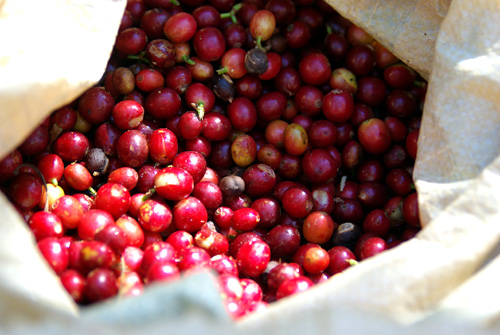
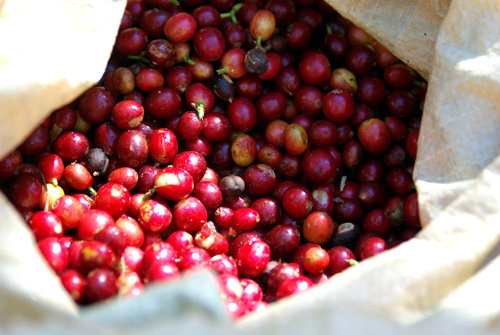
This Panama SHB coffee from the Boquete region contains 30% Geisha, along with Catuai and Caturra. That 30% Geisha content is key to its complex profile of white grape, caramel, honey, and black tea.
What Are Typica and Bourbon, Really?
Typica is one of the oldest and most influential Arabica coffee varieties, originating in Ethiopia. Despite its strong-sounding name, Typica plants are delicate: they’re vulnerable to rust leaf disease, produce small yields, and grow fewer cherries. But many well-known Arabica varieties—including Mandheling, Blue Mountain, Maragogype, Kona, and Yunnan’s small round beans—are descendants of Typica. Its leaves have a distinctive bronze-colored tip, and the beans are large, often shaped like a pointed oval or thin ellipse.
Bourbon, another ancient and respected Arabica variety, is thought by some botanists to be a mutation of early Typica transplanted to Yemen. Bourbon trees typically produce rounder beans than Typica, ripen a bit later, and yield about 30% more fruit per plant. They perform best at elevations above 1,200 meters, where their flavors really shine—though they require an ‘off year’ after each productive harvest. While still susceptible to some diseases, Bourbon resists rust leaf better than Typica and offers equal or superior cup quality.
There’s also a rare mutation called Slender Bourbon (or ‘Laurina’), which emerged in 1810 on Bourbon Island. These plants produce sharply pointed beans, have half the caffeine content, and are both fragile and extremely low-yielding—like a delicate aristocrat among coffee varieties.
Both Typica and Bourbon share a common need for shade trees. Without protection from direct sun, their growth suffers and their cup quality declines markedly.
Where Does This Coffee Come From?
This particular lot hails from Panama’s Boquete region, located on the eastern slopes of the Barú Volcano. Boquete is one of Panama’s oldest and most prestigious coffee-growing areas, sitting at an average elevation of 1,000 to 2,000 meters within a highland plateau. The area is part of the richly biodiverse Volcán Barú National Park, home to varied microclimates and wrapped in near-constant mist. With over 3,500 mm of annual rainfall, these conditions create ideal growing environments—and uniquely aromatic coffees.
The region is part of the birthplace of Panama’s global coffee fame, largely driven by its Geisha variety. Every harvest season, local farmers process their beans using both washed (traditional) and honey methods, ensuring the coffee remains full-bodied and true to its terroir.
The coffee in question was grown at 1,600 to 1,650 meters altitude, within a zone classified as SHB (Strictly Hard Bean)—a designation for high-elevation beans with denser structure and brighter acidity. The annual rainfall reaches 3,500 mm, supporting vigorous plant growth and complex fruit development.
What’s in This Coffee Blend?
This specific coffee is a multi-variety lot: 30% Geisha, with the balance made up of Catuai and Caturra. It was processed using both traditional washed and honey methods in 2015. The beans fall within a screen size of 17–18, typical for high-grade specialty lots. Its flavor notes include white grape, caramel, honey, and black tea—markers of both high elevation and careful processing.
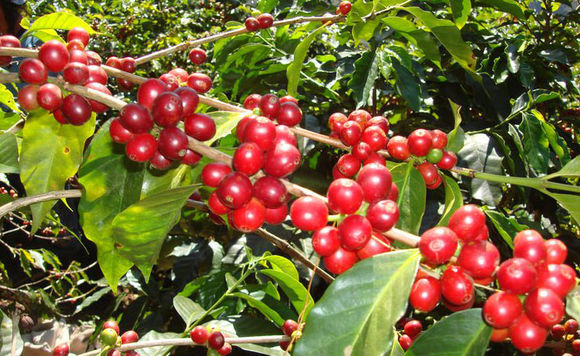
Boquete’s diverse microclimates and high altitudes, combined with volcanic soil and consistent moisture, are major contributors to the distinct aromatics and clean cup profile associated with the region’s coffees. The combination of traditional and honey processing further enhances sweetness and body while preserving clarity.
Frequently Asked Questions
What does 30% Geisha mean in this coffee blend?
This coffee contains 30% of the Geisha (or Gesha) variety, a high-quality, often high-priced Ethiopian-origin coffee known for floral, fruity, and tea-like flavors. The remaining 70% is made up of Catuai and Caturra—more common, productive varieties that add body and balance to the cup.
What are Catuai and Caturra?
Catuai and Caturra are both compact-growing Arabica varieties known for their relatively high yields and adaptability. Caturra is a natural mutation of Bourbon with bright acidity and medium body, while Catuai is a cross between Mundo Novo and Caturra, valued for its productivity and balanced cup. Both are widely used in commercial and specialty blends for their reliability.
What is SHB coffee?
SHB stands for Strictly Hard Bean, a classification for coffee grown at high elevations (usually above 1,200 meters). These beans grow more slowly, resulting in a denser, harder bean with more concentrated flavors and higher acidity. This Panama coffee is grown between 1,600–1,650 meters, fitting the SHB grade.
What’s the difference between washed and honey processing?
Washed (or traditional wet) processing removes the coffee cherry’s skin and pulp before fermenting and washing the beans to remove the mucilage. Honey processing leaves some or all of the mucilage on the bean during drying, which adds sweetness and body. This lot uses both methods, contributing to its layered flavor profile.
Where is Boquete and why is it famous?
Boquete is a high-altitude coffee region in western Panama, on the slopes of the Barú Volcano. It’s known for producing some of the world’s most sought-after Geisha coffees and benefits from volcanic soils, frequent mist, and elevations of 1,000–2,000 meters. The region is central to Panama’s rise in specialty coffee global markets.
Recommended FrontStreet Beans for Exploring Varietal Character
Start with FrontStreet’s Boquete Washed Geisha for classic Geisha traits—jasmine, citrus, and mild stone fruit—showcasing what the 30% Geisha in your blend is capable of. For contrast, try the FrontStreet Brazil Red Bourbon: a high-elevation coffee with creamy texture, soft acidity, and notes of nuts and dark caramel, much like Typica-influenced profiles. Finally, the FrontStreet Colombia Sidra brings tropical sweetness and complex fruit layers, similar to what Catuai and Caturra contribute in blends. All three are excellent single-origin options to explore varietal differences. Freshly roasted within 5 days · Orders placed before 17:00 ship the same day · Next-day delivery across most of Guangdong Province.
FrontStreet Coffee is a long-established specialty coffee roaster in Guangzhou China, selling freshly roasted beans from its own farm in Yunnan as well as dozens of carefully selected single-origin beans from around the world for both pour-over and espresso. The products deliver consistently excellent quality and great value, with shipping within 24 hours. Guangzhou's FrontStreet Coffee shop is recommended by many coffee lovers, and the beans are now available online at the Tmall 。
Important Notice :
前街咖啡 FrontStreet Coffee has moved to new addredd:
FrontStreet Coffee Address: 315,Donghua East Road,GuangZhou
Tel:020 38364473