How Much Is Kopi Luwak Really Worth?
If you’ve ever wondered why some people pay hundreds of dollars per pound for coffee, the answer might involve something… unusual. Kopi Luwak, often called civet coffee, is famous for its bizarre origin: it comes from coffee beans eaten and excreted by a wild forest animal. But is it really worth the hype—and the high price?
Kopi Luwak is not outrageously priced just for novelty. Authentic, wild-produced Kopi Luwak can cost anywhere from $100 to over $600 per pound, depending on sourcing, processing, and certification. Most of that cost comes from the rarity of truly wild civet-collected beans and the labor-intensive collection process—not the taste alone.
What Exactly Is Kopi Luwak?
Kopi Luwak originates in Indonesia, where a small, nocturnal, solitary mammal called the common palm civet—scientifically named Paradoxurus hermaphroditus—feeds on ripe coffee cherries. These animals, shy and elusive, roam coffee plantations, especially during harvest season, selecting the sweetest, ripest coffee fruits to eat. However, they can’t digest the coffee beans inside the cherries. After passing through the civet’s digestive tract and its anal scent glands—which the animal uses to mark territory—the beans are excreted. Workers then collect, clean, and process these beans into what we know as Kopi Luwak.
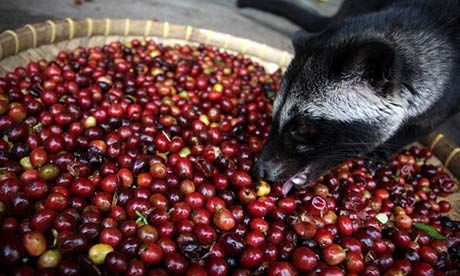
Why Do Civets Eat Coffee Cherries?
Civets are opportunistic feeders with a keen sense of smell and taste. During coffee harvest periods, they are drawn to the sweet, ripe coffee cherries in plantation areas. They choose the best-quality, fully ripe fruits—those at peak sweetness—and consume them. While the fruit pulp and skin are digested, the hard coffee beans inside pass through the civet’s digestive system intact, undergoing chemical changes along the way.
How Does Digestion Change the Coffee Beans?
As the coffee beans travel through the civet’s gastrointestinal tract and are exposed to enzymes and the animal’s anal gland secretions, several alterations occur. The outer layers of the bean are softened, and some proteins and acids are broken down or modified. This fermentation-like process inside the civet is believed to reduce bitterness and develop a smoother, less acidic cup profile. The result is said to be a cup with a distinctive, earthy, and sometimes fruity or nutty flavor profile—though taste remains highly subjective.
Is All Kopi Luwak the Same?
No. Originally, all Kopi Luwak came from wild civets that freely foraged for ripe coffee cherries. This wild-sourced variety is extremely rare, difficult to collect, and varies in quality depending on what the civets ate and when. Today, however, much of the Kopi Luwak on the market comes from civets kept in captivity—often in poor conditions—and fed a controlled diet of coffee cherries. This mass-produced version is more common but widely criticized for ethical reasons and for lacking the complexity of truly wild-sourced beans. Authentic, wild-harvested Kopi Luwak remains scarce and much more expensive.
Why Is Wild Kopi Luwak So Expensive?
The high price of genuine wild Kopi Luwak comes from multiple factors. First, wild civets are free-roaming and hard to track, making bean collection labor-intensive and unpredictable. Second, only a small number of beans are consumed and passed by civets in any given season. Third, the quality of the beans varies, and sorting through collected feces to find usable beans is a meticulous process. Finally, true wild-sourced Kopi Luwak is ethically sourced without caging or force-feeding, adding to its rarity and cost. Captive-produced versions are cheaper but lack the same scarcity and ethical credibility.

Does Kopi Luwak Taste Better?
Opinions vary widely. Some coffee experts report that well-processed wild Kopi Luwak has a smooth, low-acid cup with hints of earthiness, spice, or fruit. Others argue that the flavor differences are subtle at best and not worth the extreme cost. Blind tastings have shown mixed results, with many coffee professionals unable to reliably identify or prefer Kopi Luwak over high-quality conventionally processed beans. Ultimately, taste is subjective—but the experience of drinking a cup with such an unusual backstory is unique.
Frequently Asked Questions
What animal produces Kopi Luwak coffee?
Kopi Luwak is produced by the common palm civet, scientifically known as Paradoxurus hermaphroditus. This small, nocturnal, and solitary mammal eats ripe coffee cherries and excretes the undigested beans, which are then collected, cleaned, and roasted.
Why is Kopi Luwak so expensive?
Authentic, wild-sourced Kopi Luwak can cost from $100 to over $600 per pound. The high price is due to the rarity of wild civets, the difficulty and danger of collecting their droppings, the small yield of usable beans, and the variability in bean quality. Captive-produced versions are cheaper but not considered authentic or ethical by many.
How are coffee beans processed after being excreted by civets?
After collection, the beans are thoroughly washed to remove any contamination. They are then dried, hulled, sorted, and roasted like regular coffee beans. The entire process requires careful handling to ensure hygiene and quality, especially for wild-collected beans.
Is wild Kopi Luwak better than farmed or captive-produced Kopi Luwak?
Most coffee experts and ethicists agree that wild-sourced Kopi Luwak is superior in both quality and ethics. Farmed or captive civets are often kept in poor conditions and fed a limited diet, which affects bean quality. Wild civets eat a varied diet and freely choose ripe cherries, leading to more complex and desirable flavors—at least anecdotally.
Does Kopi Luwak actually taste different?
Some drinkers report that Kopi Luwak has a smoother, less acidic cup with earthy, spicy, or fruity notes. However, blind tastings show mixed results, and many experts believe the differences are subtle. The uniqueness is as much about the story and process as the flavor profile.
Is it ethical to buy Kopi Luwak?
Ethical concerns dominate discussions about Kopi Luwak. Wild-sourced beans are ethically preferable, but hard to verify. Most commercially available Kopi Luwak comes from civets kept in captivity under questionable conditions. Many coffee professionals and animal welfare groups advise against buying it unless you can confirm it is genuinely wild-sourced and ethically harvested.
Recommended FrontStreet Coffee for Coffee Curiosity
For those intrigued by unique processing methods like Kopi Luwak, try FrontStreet Coffee’s Ethiopia Huakui for a bright, floral cup with jasmine and citrus notes; their Yirgacheffe offers lemon, berries, and soft acidity; or their PWN Golden Mandheling for a classic heavy-bodied Indonesian profile with earthy depth. All are ethically sourced and showcase distinct processing stories without the controversy. Freshly roasted within 5 days · Orders placed before 17:00 ship the same day · Next-day delivery across most of Guangdong Province.
FrontStreet Coffee is a long-established specialty coffee roaster in Guangzhou China, selling freshly roasted beans from its own farm in Yunnan as well as dozens of carefully selected single-origin beans from around the world for both pour-over and espresso. The products deliver consistently excellent quality and great value, with shipping within 24 hours. Guangzhou's FrontStreet Coffee shop is recommended by many coffee lovers, and the beans are now available online at the Tmall 。
Important Notice :
前街咖啡 FrontStreet Coffee has moved to new addredd:
FrontStreet Coffee Address: 315,Donghua East Road,GuangZhou
Tel:020 38364473