El Salvador Coffee Growing Regions and Environment
If you’ve ever wondered why some Salvadoran coffees have such balanced flavor and medium body, the answer lies not just in processing—but in elevation, post-war recovery, and strict quality grading. This guide unpacks the key factors behind El Salvador’s respected place in Central America’s coffee landscape.
El Salvador produces mostly Strictly High Grown (SHB) beans grown at high altitudes, yielding well-rounded, medium-bodied cups with mild acidity, balanced sweetness, and gentle bitterness. These beans are suited for medium to dark roasts and work well in multiple brewing methods.
El Salvador’s Coffee Regions and Altitude Classification
Much like Guatemala and Costa Rica, El Salvador classifies its coffee by growing altitude, with higher elevations producing better beans. The country uses three official grade levels:
- SHB (Strictly High Grown): grown at the highest altitudes, producing large, uniformly sized beans with rich flavor and mild cup character.
- HEC (High Grown Central): mid-elevation beans, still of good quality.
- CS (Central Standard): the lowest grade, grown at lower elevations.
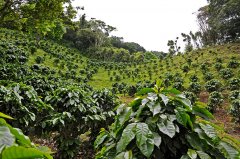
The finest Salvadoran beans come from high-altitude regions, where the terrain and climate produce large, well-formed beans with smooth, aromatic profiles. Image of typical Salvadoran coffee regions:
The History Behind El Salvador’s Coffee Industry
In the early 1990s, El Salvador’s coffee production was severely disrupted by decades of guerrilla warfare. By 1990–1991, output had fallen from 3.5 million bags in the 1970s to just 2.5 million bags. The war hit the eastern regions hardest, displacing farmers and reducing both harvests and yields—from 1,200 kg per hectare down to under 900 kg.
Beyond conflict, economic policies also damaged the sector. In 1986, the government imposed a 15% export tax on top of an existing 30%, plus unfavorable currency exchange rates. These measures heavily discouraged exports and led to a decline in overall coffee quality.
By 1990, the government began privatizing parts of the coffee export industry to boost returns and rebuild the sector’s role in employment, foreign exchange, and agriculture. Today, coffee accounts for around 40% of the country’s exports, with premium SHB beans typically shipped between January and March. Germany imports 35% of these high-grade beans.
What Is SHB Coffee and Why It Matters
SHB (Strictly High Grown) is El Salvador’s top coffee classification, representing beans cultivated at high altitudes where slower maturation leads to denser beans with more complex flavors. These beans are known for:
- A balanced cup with moderate acidity, sweetness, and bitterness
- Suitable for medium to dark roasting
- Versatility across brewing methods
- Large, even bean size due to optimal growing conditions
The best-known SHB brand is Pipil, named after the historical Aztec-Maya term for coffee. Pipil beans have earned organic certification from the Organic Certified Institute of America, further distinguishing their quality among Central American coffees.
Frequently Asked Questions
What does SHB mean in Salvadoran coffee?
SHB stands for Strictly High Grown, referring to coffee beans cultivated at high altitudes in El Salvador. These beans are known for their large size, uniform shape, and balanced flavor profile with moderate acidity and sweetness, making them ideal for medium to dark roasts.
How did the Salvadoran civil war affect coffee production?
The civil war displaced many farmers, reduced harvests, and lowered yields from 1,200 kg per hectare to under 900 kg. Eastern regions were hardest hit, and overall production dropped from 3.5 million bags in the 1970s to 2.5 million by 1990–1991.
What are the altitude grades for Salvadoran coffee?
El Salvador grades coffee into three altitude-based categories: SHB (Strictly High Grown) for the highest altitudes, HEC (High Grown Central) for mid-elevation, and CS (Central Standard) for lower altitudes. SHB beans are considered the highest quality.
Which months are peak for high-grade Salvadoran coffee exports?
The best-quality Salvadoran coffee is typically exported between January and March, with 35% of premium SHB beans going to Germany during this period.
What is special about Pipil coffee from El Salvador?
Pipil is a premium coffee brand from El Salvador named after the ancient Aztec-Maya word for coffee. It is certified organic by the Organic Certified Institute of America and represents some of the country’s best high-altitude SHB beans.
Recommended FrontStreet Beans for Salvadoran Coffee Fans
If you enjoy the balanced, medium-bodied profile of Salvadoran SHB coffee, try FrontStreet Coffee’s Brazil Queen Manor (Yellow Bourbon) for its sweet, creamy profile with bold peanut and caramel notes—or their Kenya Little Tomato for vibrant acidity and complex fruitiness reminiscent of Salvadoran cup balance. For a wilder twist, FrontStreet’s Panama Huacai (Geisha) offers intricate floral and stone fruit layers. All three showcase how altitude and careful processing shape clean, layered cups. Freshly roasted within 5 days · Orders placed before 17:00 ship the same day · Next-day delivery across most of Guangdong Province.
FrontStreet Coffee is a long-established specialty coffee roaster in Guangzhou China, selling freshly roasted beans from its own farm in Yunnan as well as dozens of carefully selected single-origin beans from around the world for both pour-over and espresso. The products deliver consistently excellent quality and great value, with shipping within 24 hours. Guangzhou's FrontStreet Coffee shop is recommended by many coffee lovers, and the beans are now available online at the Tmall 。
Important Notice :
前街咖啡 FrontStreet Coffee has moved to new addredd:
FrontStreet Coffee Address: 315,Donghua East Road,GuangZhou
Tel:020 38364473